Not Every Apple in the Barrel
May 17, 2026 2026-05-17 20:40Not Every Apple in the Barrel

A note from your Taoiseach about the cousins we would rather not claim – and why we list them anyway.
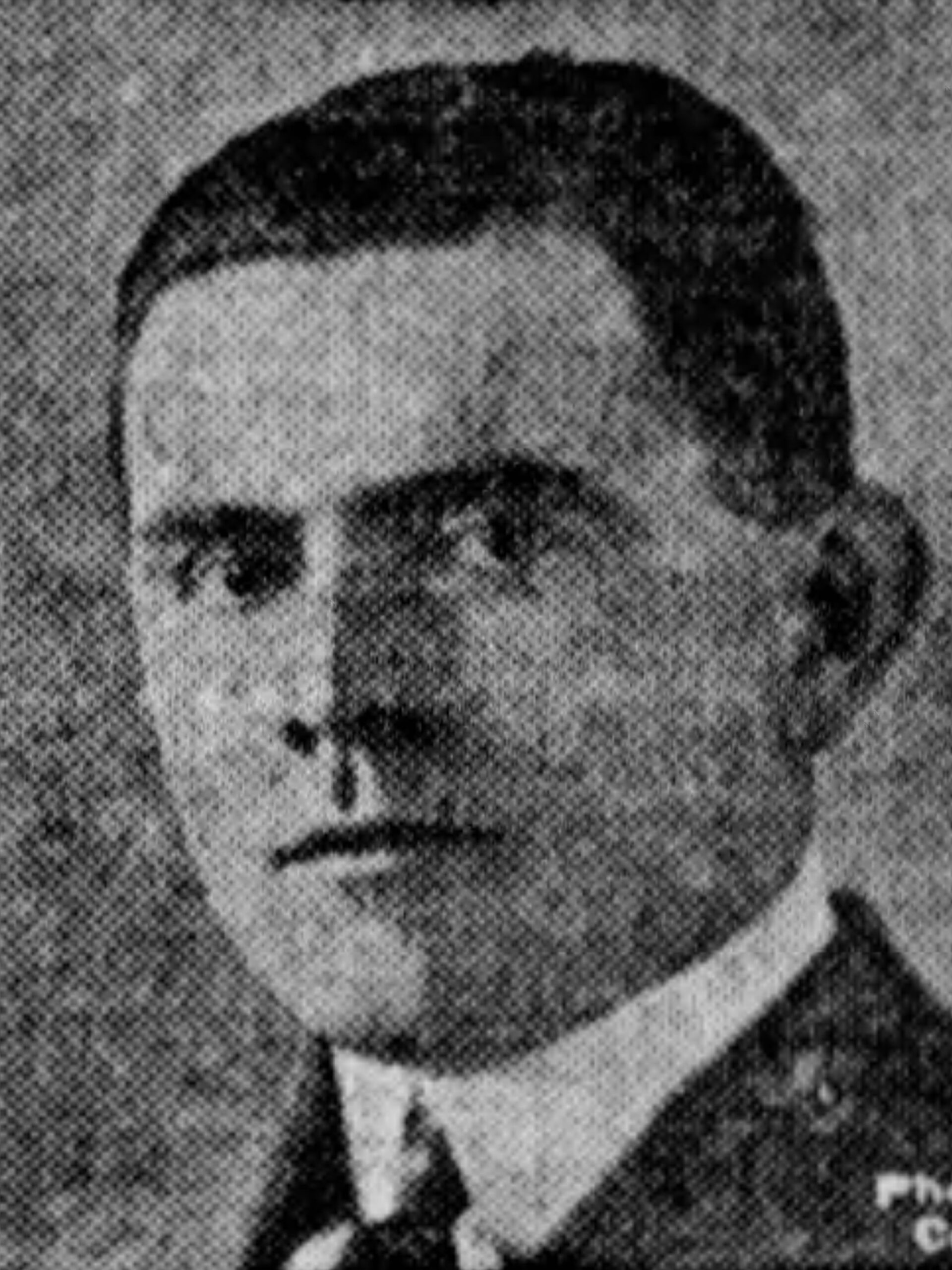
If there are half a million of us alive in the world, the laws of probability are not kind. A name carried that widely will sooner or later turn up in the kind of newspaper paragraph nobody wants to read at the kitchen table. We have produced saints, soldiers, poets, scientists, four Major League ballplayers and a fellow who climbed Everest. We have also produced a corrupt sheriff who fled the country, and a New York cop who sold cocaine out of his squad car.
I have been asked, more than once, whether the Notable Ó Dubhdas directory ought to be a roll of honour only. The answer I keep coming back to is no. A clan that lists only its best people is not a clan, it is a brochure. We are descended from chieftains who were inaugurated under an open sky at Carn Amhalghaidh and from emigrants who got off the boat at Boston with nothing in their pockets, and somewhere in that thousand-year line are a few who, frankly, let the side down. They are still cousins.
Two of them are worth telling you about.
The sheriff who fled to California
John F. Dowd was a Boston Democrat of the old school – Ward 8 Tammany, a thirteen-year city councillor, council president in 1934, and a protege of the legendary mayor James Michael Curley. In December 1938 he was appointed Sheriff of Suffolk County after winning the Democratic primary against a twenty-one-year incumbent who, conveniently, dropped dead on primary day.
He lasted eleven months.
What Dowd built inside the Charles Street Jail was less a corruption scheme than a price list. Deputies paid him $2,500 a year. Guards $500 to $2,500. Chorewomen $250. In return, prisoners who could afford the right favours were moved to the hospital wing, which had ping-pong tables, a solarium, radios and books. Their meals were brought in from the best restaurants in Boston. Their cell doors stayed open. They had unrestricted use of the telephone and the visiting room, and access to the cocktail bar in the sheriff’s own office. One inmate, a defrocked minister, was allowed to run a bookmaking operation from inside the jail.
It came apart by accident. A superior court auditor investigating a different official was tipped off by one of his employees. The Boston Bar Association petitioned the Massachusetts Supreme Judicial Court to remove Dowd in September 1939. Three days before his removal hearing, Dowd signed a letter of resignation, handed it to his lawyer, and got on a train to New York. The next day he turned up injured on a Manhattan sidewalk and was taken to Bellevue Hospital, from which he escaped through an emergency fire exit and into a car driven by his wife and brother-in-law.
He stayed gone for twenty-two months. His photograph and fingerprints were circulated nationwide. The trail led the FBI to Mexico City, then Honolulu, then California. He was finally caught on 22 September 1941, living in Ventura under the name John W. Norton, when a drunk-driving stop in San Luis Obispo produced a $50 fine and a fingerprint check. He pleaded guilty in Boston, served four years in prison, was paroled in 1945, and died quietly in Dorchester in 1961.
The cop from the 75th Precinct
Half a century later, in another Irish-Catholic neighbourhood, another Dowd worked the other side of the same equation. Michael F. Dowd was born in Brooklyn in 1961, third of seven children, raised on a block of Long Island filled with the families of cops and firefighters. He graduated from the New York City Police Academy in 1982, did eighteen months in Queens, and was reassigned to the 75th Precinct in East New York – which in the late 1980s was the busiest, poorest, and most corrupt precinct in the city.
What Dowd did there is by now the textbook case of American police corruption. He conspired with cocaine traffickers, tipped them off about raids, accepted regular cash from the Diaz organisation, and at his peak was earning more from drug dealers in a week than the NYPD paid him in a year. He was arrested by Suffolk County Police – not his own department – in 1992. The internal-affairs investigation that followed was so devastating that the city convened the Mollen Commission, whose findings re-shaped how the NYPD investigates itself. Dowd was sentenced to sixteen years, served twelve and a half, and cooperated with the Commission. He is the central figure of the 2014 documentary The Seven Five.
Why we still list them
I do not think it does us much credit as a clan to pretend these men are not ours. A family that quietly drops its embarrassments out of its archives is a family that has stopped being honest with itself. The honest position is the harder one – that the same surname which built the Augustinian friary at Rathfran also produced a Boston sheriff who turned a jail into a hotel for the wealthy, and a Brooklyn cop who sold cocaine in uniform. Both men paid their debts. Both men were once boys with the name we share.
I suspect there are more. Two examples is not a barrel of bad apples, it is a small bowl. Somewhere in the news archives of Manchester, Liverpool, Sydney, Chicago, or our own west of Ireland are stories of Dowds, Doodys, O’Dowdas and Duddys who got into the kind of trouble nobody wrote a hagiography about. If you know one – a great-uncle the family does not talk about, a cousin who left town in a hurry, a name that surfaced in a court report – tell us. The directory has room for them too.
A clan is not a brochure.