
- Home
- Ancient and Sacred Sites
Ancient and Sacred Sites
Ancient and Sacred Sites
A story carried by the landscape
From at least the seventh century until the late sixteenth, the Ó Dubhda governed a stretch of the Connacht coast reaching from the Erris peninsula in the west, across the mouth of the Moy, and east along the north Sligo shore as far as the Ox Mountains. Their authority was not invented in castles. It was performed on cairns, mounds and hilltops that predated Christianity itself — and it was ended, in 1585, by a single stroke of the Elizabethan pen. The sites remained. The ceremony did not, until it was renewed in our own time.
Where the Rite Was Performed
Four sites along the coast from Mayo to north Sligo — two principal inauguration mounds, one alternative shoreline candidate, and the Enniscrone ground where the tradition ended and was later renewed.
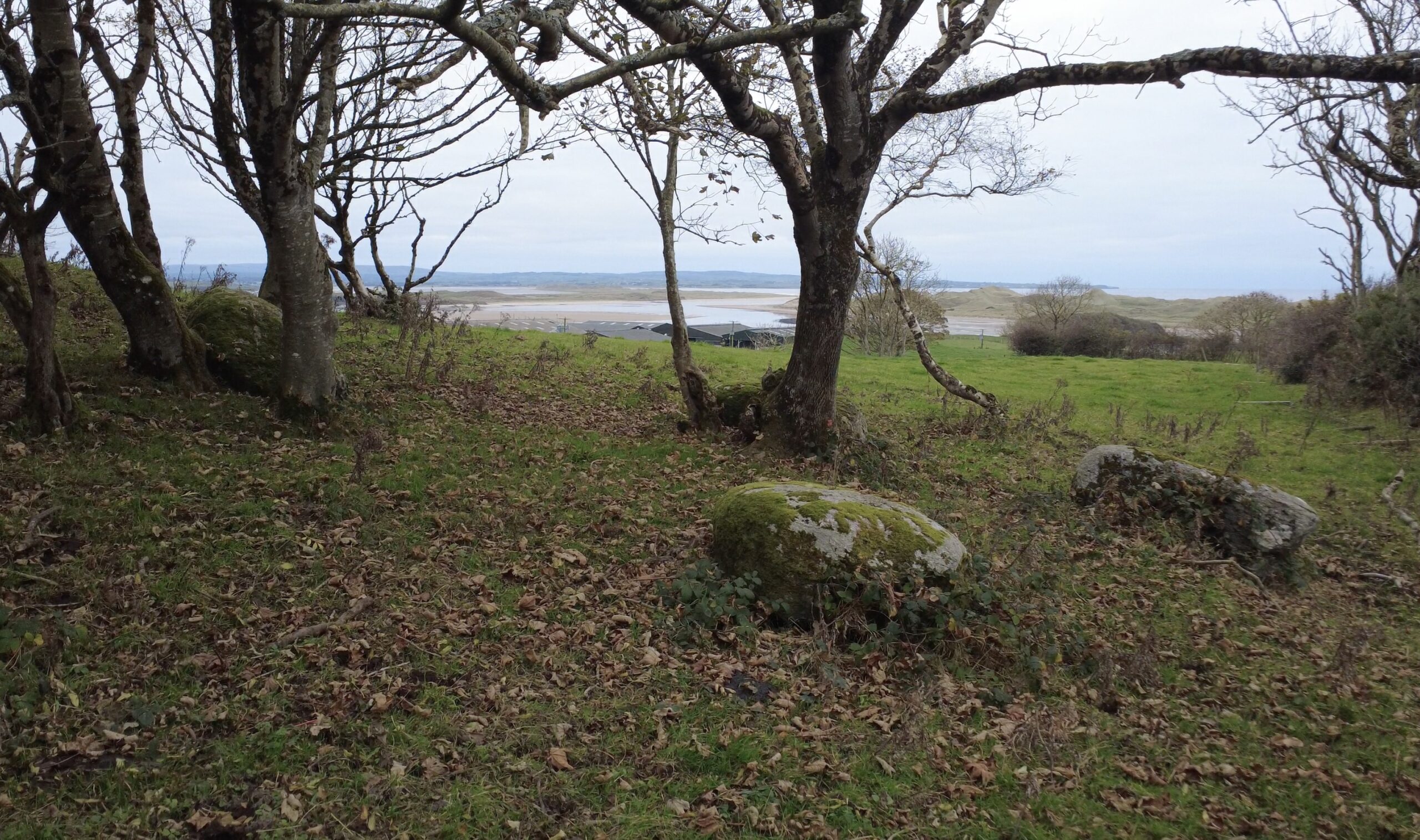
All four ceremonial sites sit along the Moy estuary and Killala Bay — from Carn Amhalghaidh west of the river, through Scurmore and the Enniscrone Mound on the east bank, to Carn Inghine Briain on Coggins’ Hill above Aughris. All sit on private farmland; visit only with the landowner’s permission.
The Ancient Sites Tour
A five-stop tour across the Ó Dubhda ceremonial landscape. Begin at the ancestral earthwork on the north Mayo coast where the family takes its name, move east to the pre-Norman inauguration mound of the Uí Fhiachrach west of the Moy, cross the river through the two eastern mound candidates at Aughris and on the Moy shore, and end at the Enniscrone ground where the medieval rite closed and the modern one began.
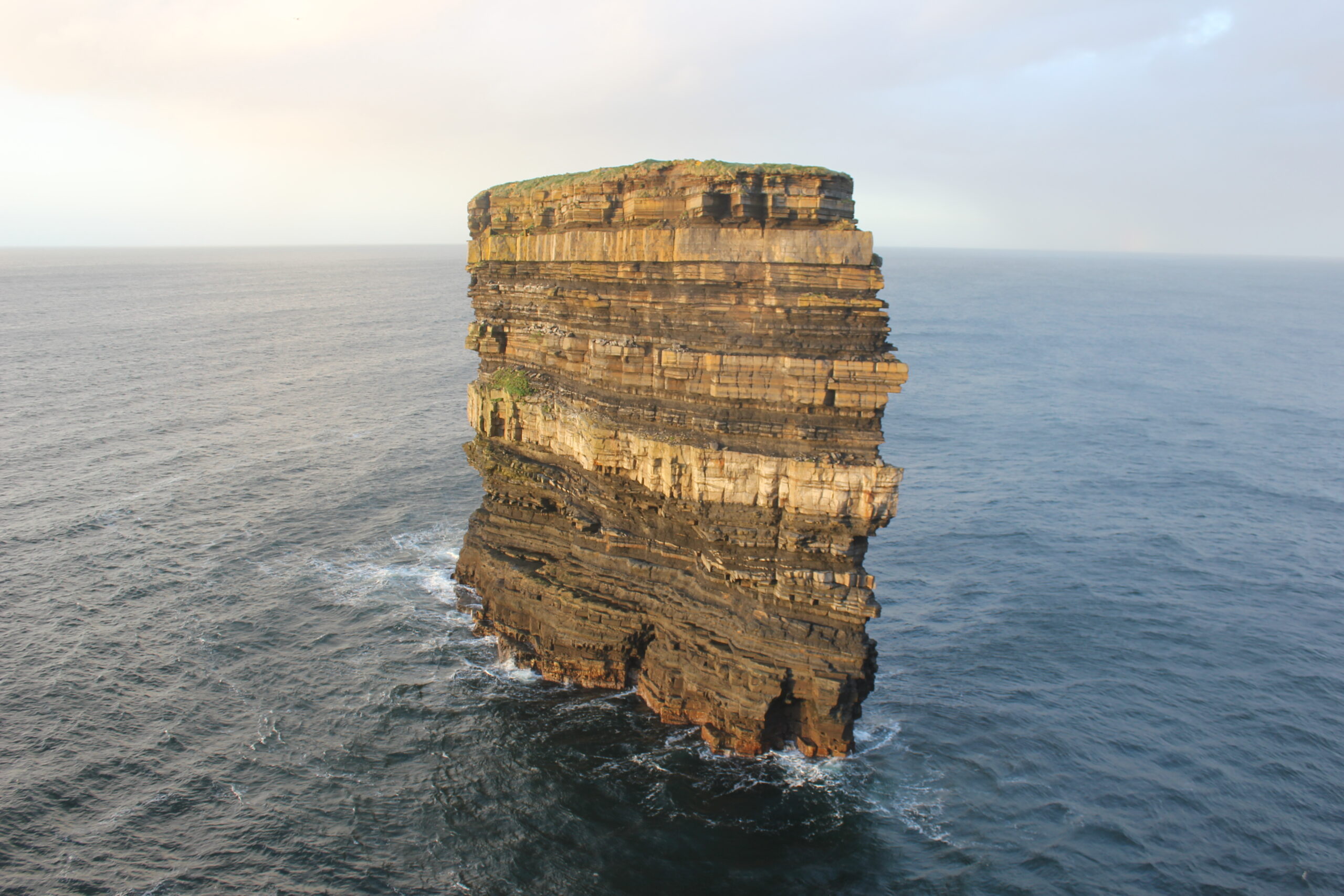


Why These Mounds Matter
Elizabeth FitzPatrick’s Royal Inauguration in Gaelic Ireland c.1100–1600 (Four Courts, 2004) treats both principal mounds — Carn Amhalghaidh in Mayo and Carn Inghine Briain on Coggins’ Hill — as part of a deliberate Ó Dubhda re-reading of its own landscape after the reconquest of Tír Fiachrach in 1371. The older western mound at Carn Amhalghaidh, associated with the ancestor Amhalghaidh mac Fiachrach, was paired with a new eastern mound whose two-tiered form consciously echoes Meadhbh’s Cairn on Knocknarea. This is what FitzPatrick calls an “invention of tradition”: not a fabrication in the modern sense, but a politically-motivated re-reading of the ground to match a renewed ruling claim.
Scurmore belongs to the same ritual geography but sits on a different axis. The Children of the Mermaid standing stones, attached in folk tradition to Tadhg Ruadh ó Dubhda and his sea-bride, anchor the Ó Dubhda line directly in the Atlantic — a rhetorical move typical of Gaelic ruling lineages whose prestige was coastal.
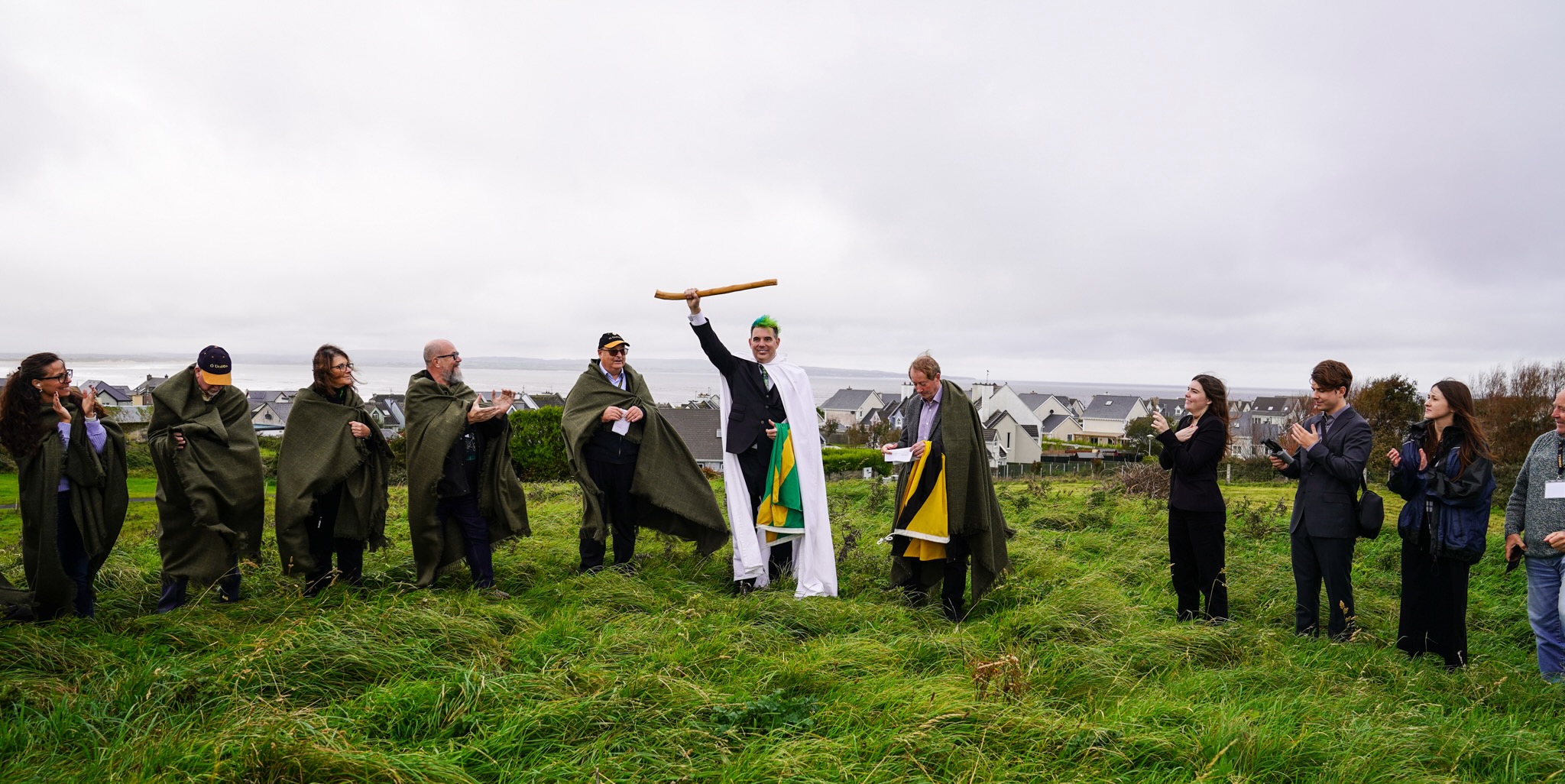
The Enniscrone mound is where these open-air traditions contracted. By the late 16th century the ceremony had been drawn back inside the fortified residence of the ruling branch; the Enniscrone mound, within the Castle Field beside Enniscrone Castle, is the site of the last Ó Dubhda inauguration in living memory — and, in 2025, of the reinauguration of Sean O’Dowda Stephens as Taoiseach of the Clan: the first time in more than four hundred years that an Ó Dubhda has been inaugurated on native ground.
In 1585 the Crown drew up the Composition of Connacht — the “Indenture of Sligo” — under which Ó Dubhda of Tír Fiachrach, together with every Gaelic lord of the province, formally renounced the right to inaugurate a successor under native custom.
From that year forward, no Ó Dubhda was proclaimed under the old rite — until 2025.
Visiting in Person
All four sites sit on private farmland. None is signposted; none is on the National Monuments Service public-access list. Please do not attempt to visit any of them without the explicit, local permission of the landowner.
The Enniscrone mound is the most readily glimpsed: the Castle Field and the surviving castle tower are visible from the public road, and the approach is described on the Enniscrone Castle page. The other three sites are working agricultural land with stock in the fields; treat them as you would a neighbour’s garden.
If you have a scholarly interest and would like to be put in touch with a landowner, please get in touch with the Clan — we try to help where we can, and we always ask first.