Parke’s Castle

Parke’s Castle

O'DUBHDA COUNTRY · ALLIED CASTLES

PARKE'S CASTLE

Loch Gile
“An Elizabethan plantation castle on the eastern shore of Lough Gill — the outer edge of the O'Dubhda world.”

Parke’s Castle

A plantation manor on an O’Rourke tower house — Lough Gill, Co. Leitrim

Parke’s Castle stands on the eastern shore of Lough Gill, eleven kilometres east of Sligo town in the parish of Drumlease, Co. Leitrim. It is a fortified manor house of the 1630s, built by an English planter — Captain Robert Parke — on the demolished foundations of a late-medieval Gaelic tower house that once belonged to the O’Rourkes of West Breifne. Meticulously restored by the Office of Public Works and now in the care of Heritage Ireland, the surviving building is not an O’Dubhda castle and never was. It is included in the clan tour as an allied site — the castle’s story is the story of the Gaelic order to which the O’Dubhda themselves belonged, and of its replacement.

I. Newtown Castle — the O’Rourke stronghold

The earlier castle on this site was known as Newtown. It was a rectangular tower house of the fifteenth or sixteenth century, set within a larger defended enclosure, and it belonged to the O’Rourkes — the ruling family of West Breifne, whose lordship reached west from Leitrim to the edge of the Ox Mountains. In 1580 Sir Brian O’Rourke, Lord of West Breifne from 1566, is said to have dismantled his own castles at Leitrim, Newtown and Dromahair rather than see them taken by an English garrison. The tactic was familiar across Gaelic Ireland in that decade; the consequences for Brian O’Rourke were not.

In September 1588 the Spanish Armada was scattered on the Atlantic coast of Ireland. Three vessels were driven ashore at Streedagh Strand in north Sligo, and the survivors — some eighty men, by later accounts — were sheltered by O’Rourke in his mountain fastness. The Dublin administration judged this high treason. O’Rourke was eventually pursued into Scotland, surrendered to King James VI in 1591, and extradited to London. He was imprisoned in the Tower, tried without counsel, and executed at Tyburn on 3 November 1591. His lands in West Breifne were forfeited to the Crown. His son Brian Óg continued the resistance through the Nine Years’ War.

II. Captain Parke’s house

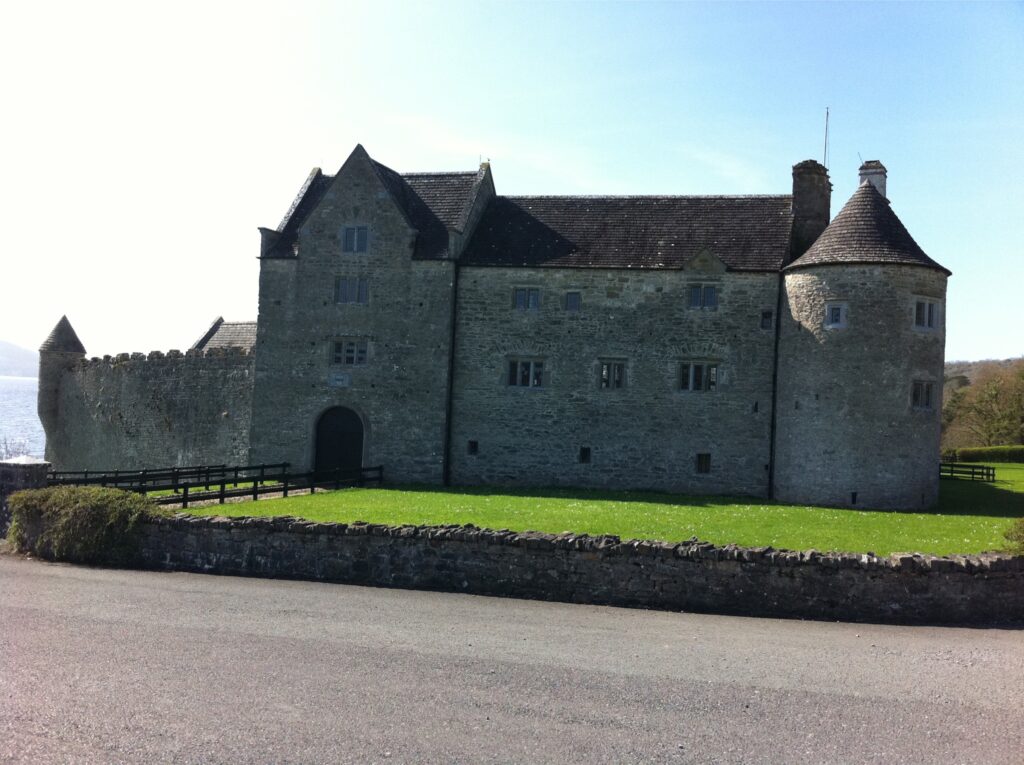
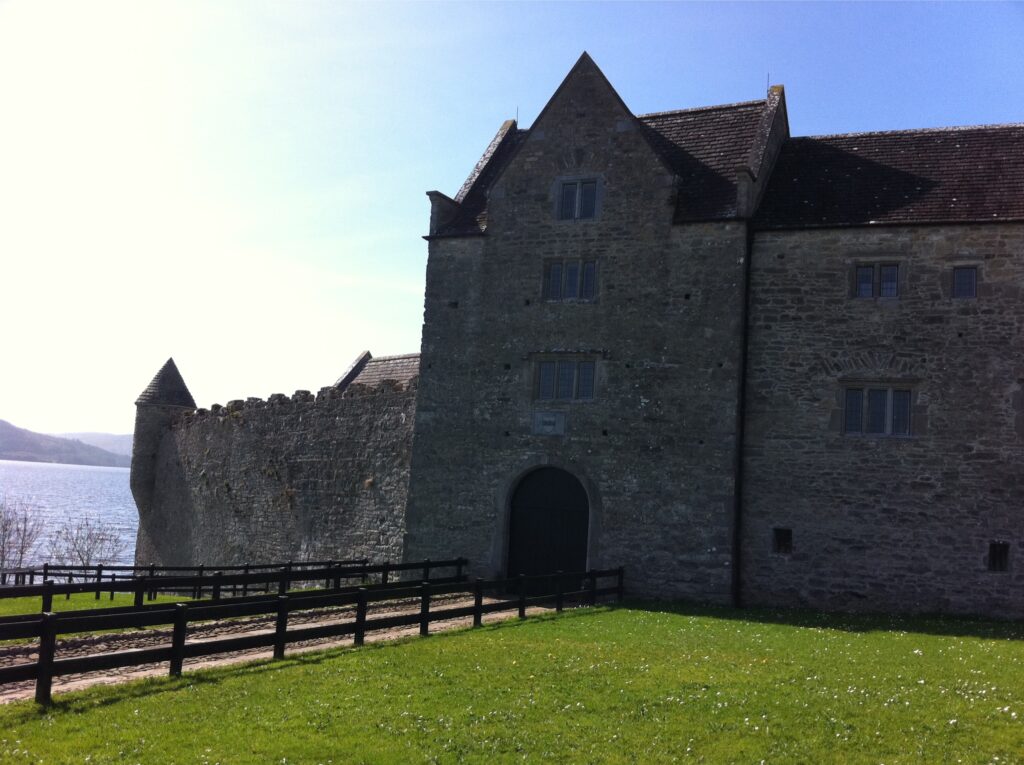
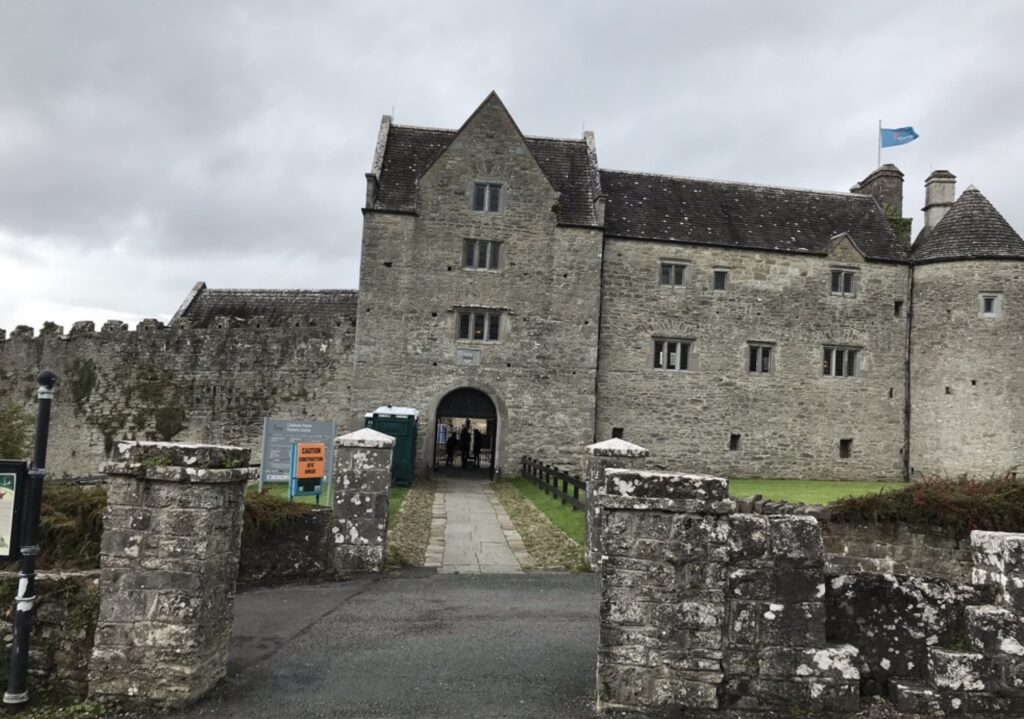
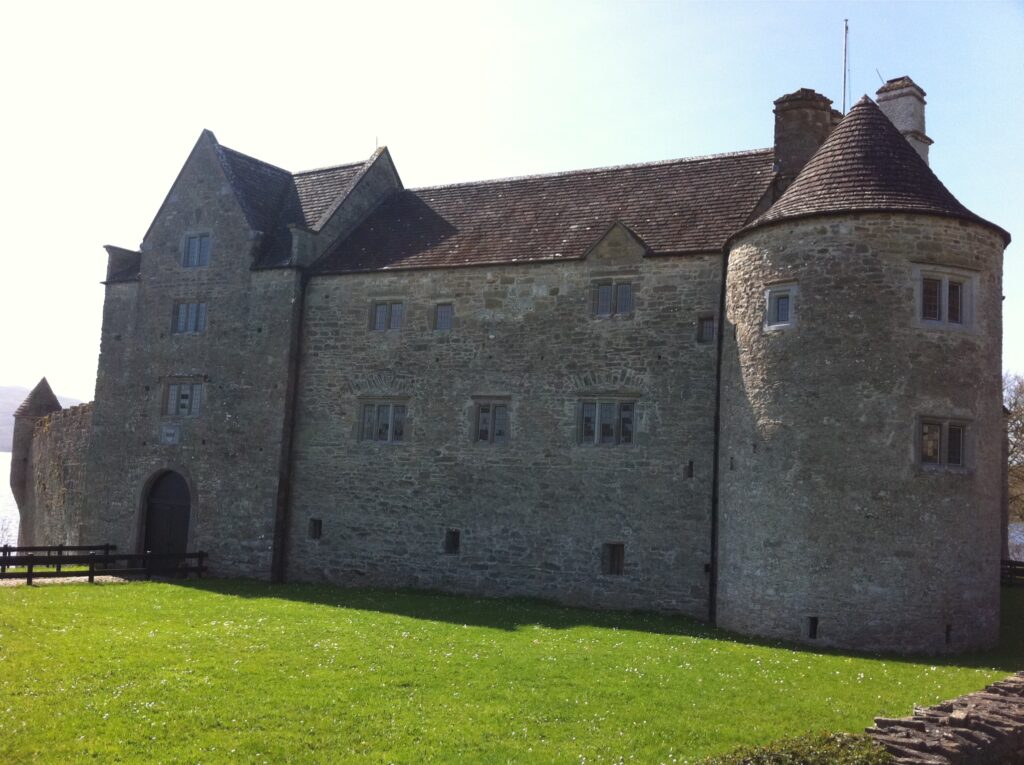
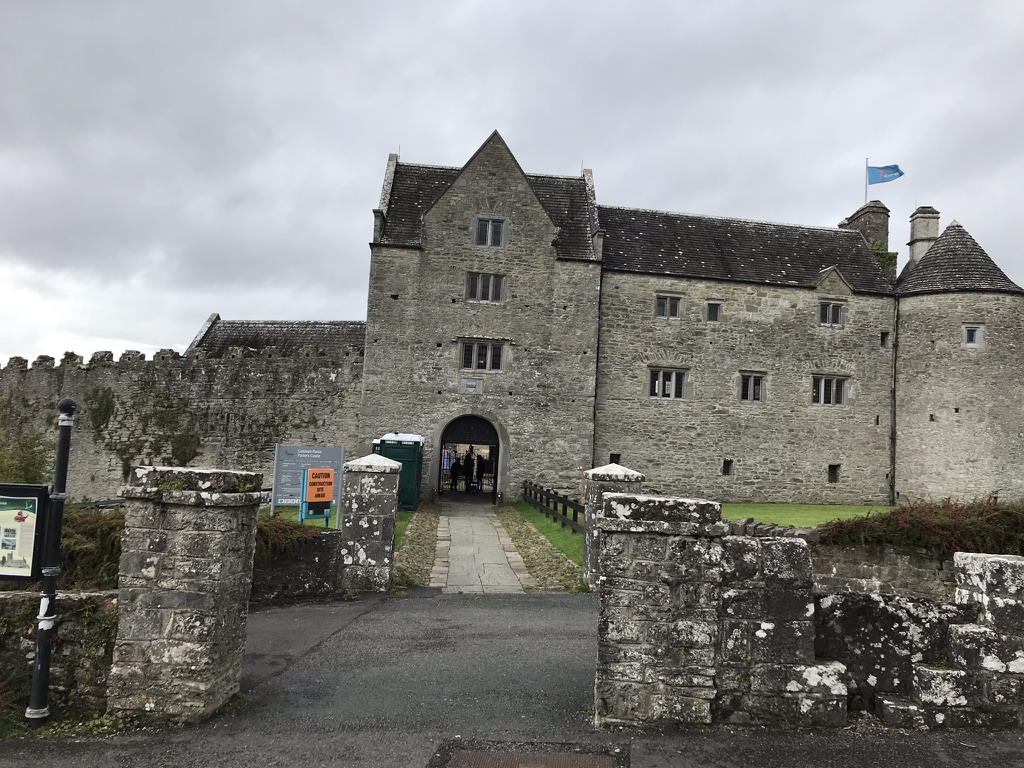
The site passed through the Plantation of Leitrim into the hands of Captain Robert Parke, an English planter who built the present house in the 1630s. Parke did not repair the O’Rourke tower — he pulled it down. The stones of Newtown were re-used in the new fabric, and the tower’s footprint was overlaid with cobbling. The plan that resulted is a three-storey manor block with a gatehouse, two corner flankers, a sally-port to the lake, and a bawn wall pierced for musket fire. It is a fortified gentleman’s residence of the early Stuart type rather than a military castle, and it reads as such: domestic windows on the upper floors, mullioned and transomed, sit above the defensive lower courses.

Parke prospered; he served as High Sheriff of Leitrim. Local tradition, recorded by the Office of Public Works, holds that two of his children drowned on the lake in 1677, and the family’s fortunes declined soon after. By the 1790s — the earliest period for which we have good visual evidence — the house was roofless and ruinous, and Samuel Lewis, writing in 1837, notes only that “by the side of Loughgill are the ruins of a fine old castle” in the parish of Drumlease. In the century that followed, the bawn was used as a farmyard; the castle itself stood empty.

III. Excavation and restoration

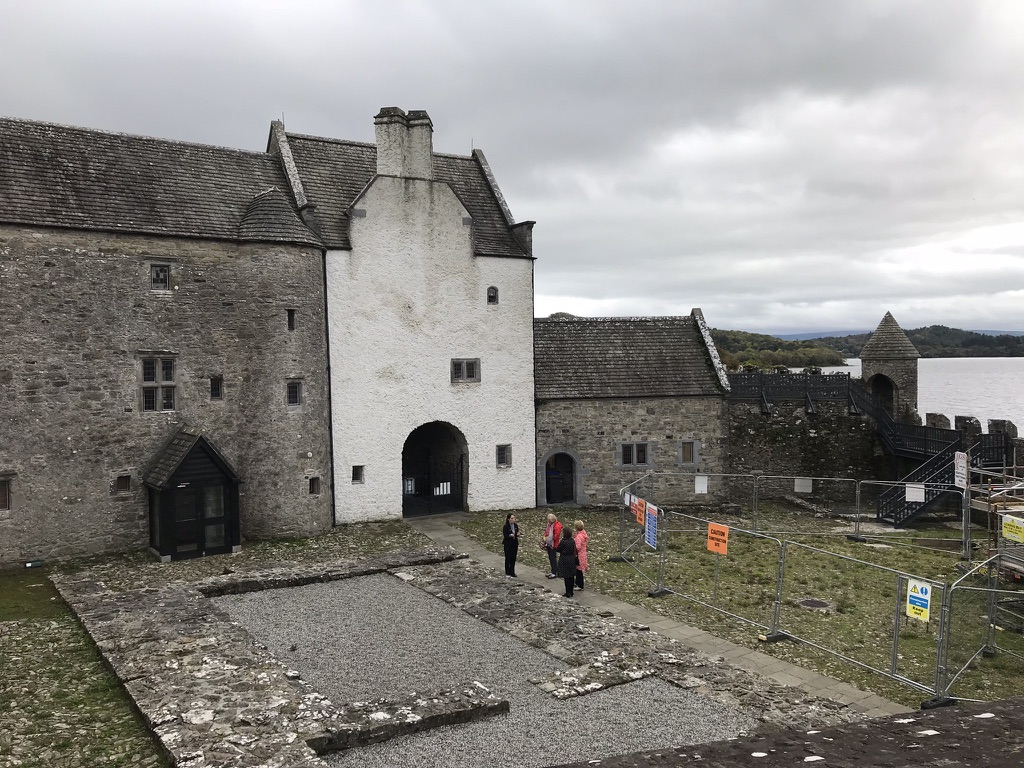
The Irish State took the site into care in the twentieth century. Archaeological excavation by the OPW in the early 1970s lifted the courtyard cobbles and recovered the footings of the O’Rourke tower house beneath, together with a rock-cut ditch and traces of the earlier bawn. The restored building visible today is Parke’s manor of the 1630s, reroofed in Irish oak to the original mortise-and-tenon technique; the exposed medieval footings are preserved in the courtyard under protective cover. The castle now operates as a Heritage Ireland visitor site with guided tours, an audio-visual presentation, and a small exhibition on seventeenth-century life on Lough Gill.

IV. Why this site belongs in the clan tour

Parke’s Castle was never an O’Dubhda stronghold. The O’Dubhda territory of Tíreragh lay west of the Ox Mountains, across the Sligo plain, bordering — but not overlapping — the O’Rourke lordship of West Breifne. Lough Gill itself sat on the Breifne side of that border. What the two families shared was a fate. The O’Dubhda, like the O’Rourke, held their ground through the sixteenth century and lost it in the seventeenth: the defeat at Kinsale in 1601, the Flight of the Earls, the confiscations and Cromwellian re-settlement left both houses dispossessed. Parke’s Castle — a Gaelic tower house pulled down by its planter successor and rebuilt with its own stones — is the clearest surviving image of that change. The O’Dubhda story was the same story, told on the other side of the mountains.

It is worth noting that Conor Mac Hale, in The O’Dubhda Family History (1990), listed a “Lough Gill” castle among the twenty fortifications associated with the clan’s wider sphere. The identification almost certainly refers to Parke’s Castle / Newtown — the one documented castle on the lake. The O’Dubhda did not own it; the inclusion marks the outer edge of the clan’s world, not its interior.

V. Visiting

Parke’s Castle stands on the R286 at Kilmore, Fivemilebourne — about eleven kilometres east of Sligo town and seven kilometres west of Dromahair. It is an Office of Public Works site managed under Heritage Ireland, open seasonally (typically March to November). Paid entry; guided tours; audio-visual presentation; wheelchair-accessible ground floor; tea room in summer. Current opening hours and last-admission times are best confirmed at heritageireland.ie. Boat trips on Lough Gill depart from the castle’s own jetty.

Sources

  • Heritage Ireland / Office of Public Works — site description and visitor information, heritageireland.ie/places-to-visit/parkes-castle
  • Samuel Lewis, Topographical Dictionary of Ireland (1837) — parish of Drumlease, Co. Leitrim: “By the side of Loughgill are the ruins of a fine old castle”
  • Annals of the Four Masters (CELT edition) — entries on Sir Brian O’Rourke’s resistance, extradition and execution, 1588–1591
  • Conor Mac Hale, The O’Dubhda Family History (1990) — listing of “Lough Gill” among castles in the wider clan sphere
  • National Monuments Service Historic Environment Viewer — monument record for Parke’s Castle / Newtown
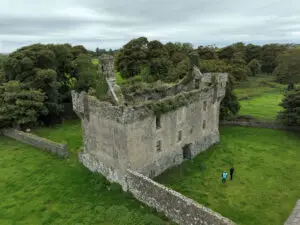
Parke's Castle from the south-east — a seventeenth-century fortified manor on the shore of Lough Gill, Co. Leitrim
Parke's Castle from the south-east, Lough Gill, Co. Leitrim.
54°15′52.9″N, 8°20′03.3″W

Parke's Castle

Caisleán an Páircéaligh

📍 Location

Kilmore, Fivemilebourne
Parish of Drumlease, Co. Leitrim
54°15′52.9″N, 8°20′03.3″W

🏰 Type

Fortified plantation manor, built on the footings of a late-medieval O'Rourke tower house (“Newtown Castle”).

📅 Date Built

c. 1630s (Captain Robert Parke); earlier O'Rourke tower house 15th–16th century.

🏕 Current State

Fully restored by the OPW (late 20th c.) with an Irish-oak mortise-and-tenon roof. Courtyard cobbles lifted in 1972–3 reveal the O'Rourke footings below.

🚶 Accessibility

Heritage Ireland / OPW site. Seasonal opening (Mar–Nov); paid entry; guided tours; ground floor wheelchair accessible. Confirm current hours at heritageireland.ie.

⚔️ Relation to O'Dubhda

Never O'Dubhda-owned. An O'Rourke stronghold in neighbouring West Breifne, across the Ox Mountains from O'Dubhda Tíreragh. Included in the clan tour as an allied site: the Gaelic-to-plantation transformation here mirrors the one the O'Dubhda also lived through.

📜 Heritage Note

Conor Mac Hale's 1990 listing of a “Lough Gill” castle in the clan's wider sphere almost certainly refers to this site — Newtown / Parke's. The O'Dubhda did not own it; the name records the outer edge of their world.

The gatehouse of Parke's Castle with Lough Gill visible beyond the bawn wall
The gatehouse and bawn, with Lough Gill beyond.
Photographs of Parke's Castle
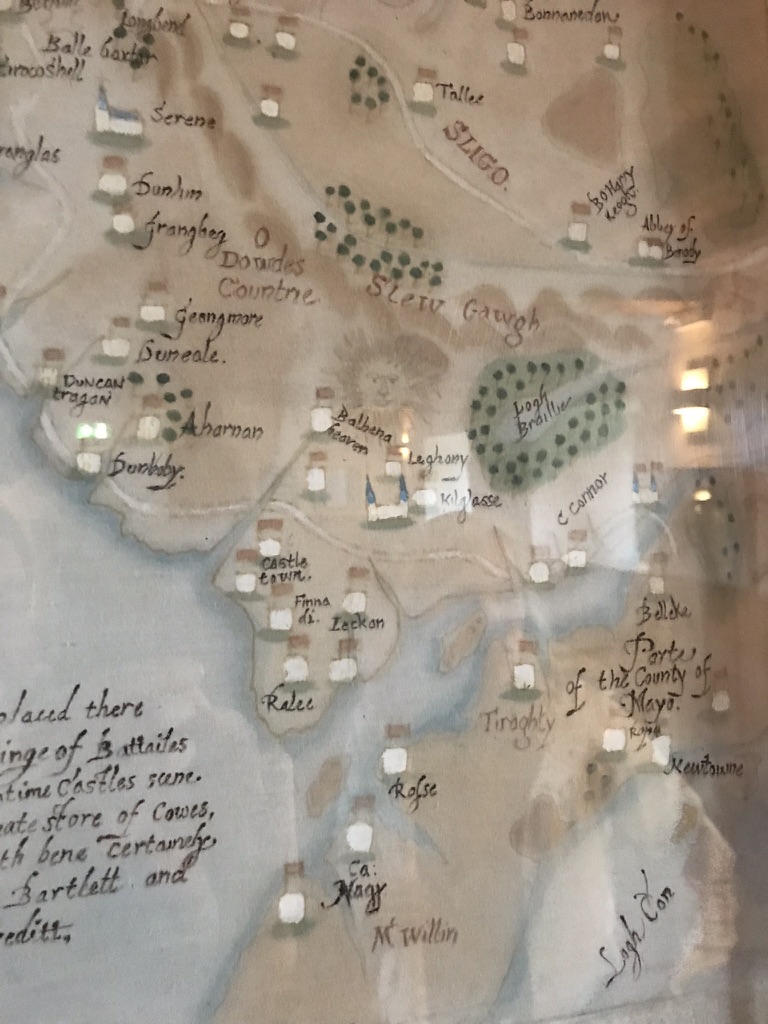
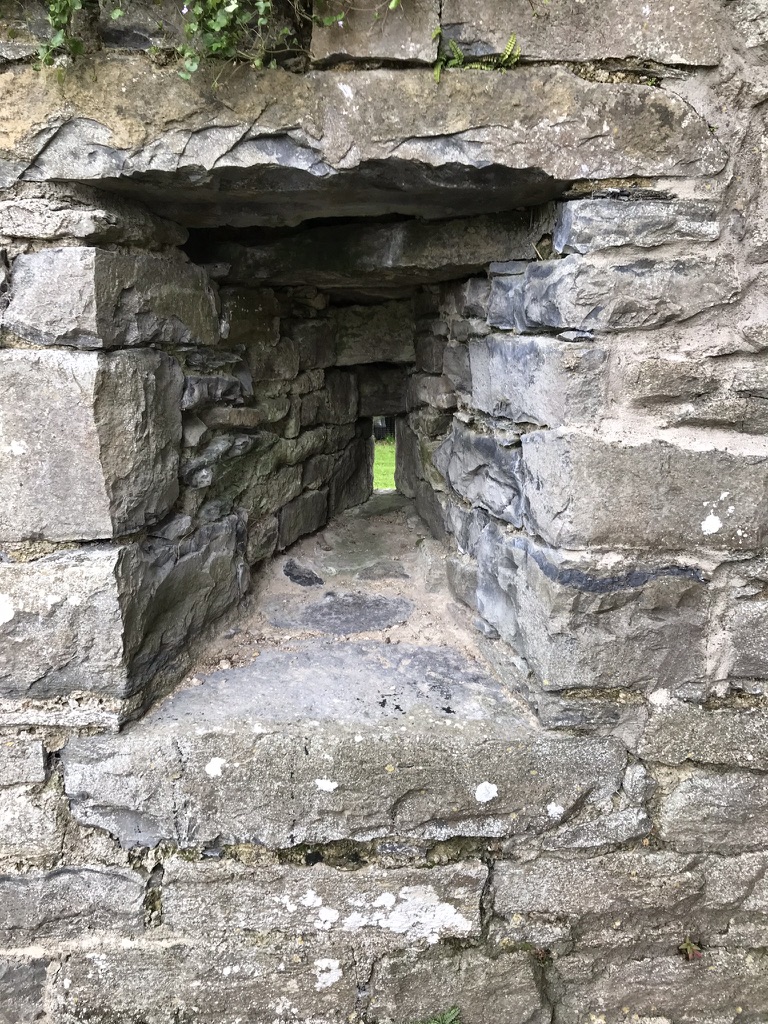
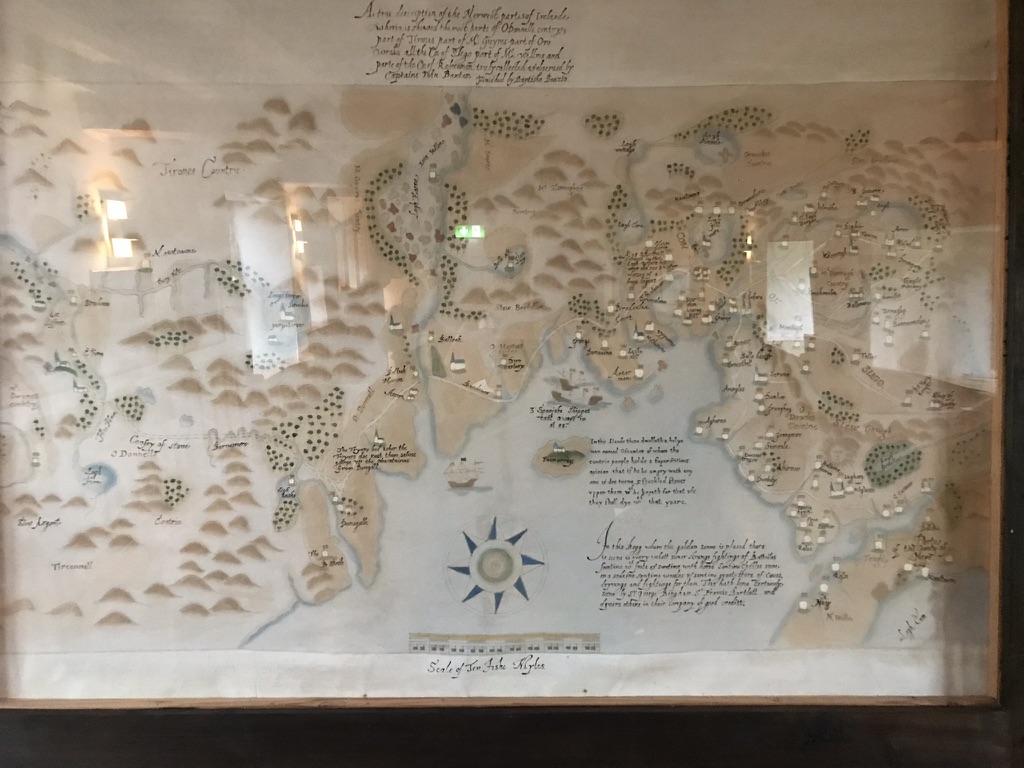
Views from the clan visit — exterior, gatehouse, courtyard, and an old map in the exhibition.
From the Seanchas

Latest stories tied to Parke’s Castle.

Tales, research and dispatches from the O’Dubhda journal.

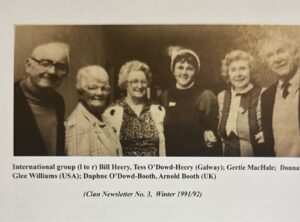
International group at the 1994 O'Dubhda Clan Rally
Rallies

The 1994 Rally — Archive Established

In September 1994, the clan returned to Enniscrone to a Certificate of Appreciation from Bord Fáilte, a new tour guide, a trip through famine-era emigration history, and a clan ready to elect its first Taoiseach in four centuries. At a glanceDates: 2 – 4 September 1994  ·  Base: Atlantis Hotel, EnniscroneNotable moment: Launch of Conor MacHale’s O’Dubhda Country — A Tour Guide to TireraghDecision: Rules agreed for the election of an honorary Chieftain and Tánaiste. The Gathering Clan members returned from Ireland, Scotland, Canada, the United States and further afield to find that the 1992 rally had been named among the most successful events of the Irish Homecoming Festival — a Certificate of Appreciation for that year’s rally now hangs in the Clan Archive. Registration was again at the Atlantis Hotel in Enniscrone, and among the new faces were Hilda and Jim Sayers from Canada, Brian Duddy, Rick Dowd and Tom Dowds from the United States, and a growing party from Australia. The Saturday evening session hosted the launch of Conor MacHale’s O’Dubhda Country — A Tour Guide to Tireragh, and a presentation on ‘the Dowds of Dublin’ — a fifteenth-century branch of the family whose descendants included Henry Dowd (emigrated to America in 1639) and, generations later, Mamie Doud Eisenhower, First Lady of the United States. Tours & Sites Culkin’s Emigration Museum at Dromore West — the very building from which emigrant ancestors would have bought a shipping ticket Strokestown Park Famine Museum and Foxford Woollen Mills Roscommon, burial place of Daithí, the 5th-century High King from whom the Uí Fiachrach descend A return to the Céide Fields; Yeats Country; and Parke’s Castle Decisions of the Clan The 1994 meeting set the voting rules that would elect the first Taoiseach in 400 years. Nominations required a seconder and the nominee’s acceptance. The member list was approved for publication. The elected Chief would use the title O’Dubhda, Taoiseach of Tireragh, with ‘O’Dubhda’ as the official surname on clan documentation. The next rally was set for 11 – 14 September 1997, when the election would take place. The weekend ended with a banquet in the hall of Belleek Castle, the castle now a private heritage hotel housing medieval armour and artefacts recovered from the Spanish Armada. Special thanks were recorded for Paddy Tuffy, Sheelagh Rafter and Pamela Cawley of the local organising committee. Further Reading Thomas J Dowds, The O’Dubhda Gatherings: A History (forthcoming) — chapter 3 Conor MacHale, O’Dubhda Country: A Tour Guide to Tireragh (1994) odubhdaclan.com archive entry for 1992–1994 ← Previous Rally The 1992 Rally — Irish Homecoming Year Next Rally → The 1997 Rally — First Taoiseach Elected

Read the seanchas →
! !

A Note from the Clan

This page is volunteer-authored, drawing on primary sources (Lewis 1837, the Annals of the Four Masters, Mac Hale 1990, and Heritage Ireland's own site text) together with photographs taken during the clan visit. We are careful to distinguish what the documentary record supports from what it does not — Parke's Castle was never an O'Dubhda stronghold, and we would not claim otherwise.

If you spot something amiss — an error of fact, a missed source, a caption that could be improved, or a photograph we might add — we would be glad to hear from you. Please get in touch.