Augustinian Abbey, Ardnaree
April 15, 2026 2026-04-18 19:01Augustinian Abbey, Ardnaree
Ardnaree Friary
Mainistir Muire Árd na Ría — the Augustinian Abbey of St Mary of Ardnaree
The ruins of Ardnaree Friary stand on the east bank of the River Moy in Ballina, Co. Mayo, in the shadow of St Muredach’s Cathedral. Of the four medieval religious houses on and adjacent to the lower Moy, this one alone was an O’Dubhda foundation — built by the chief of the O’Dubhda himself, in the heart of his lordship, and continuously patronised by his family until the Tudor suppression. It is, in the literal sense, the O’Dubhda abbey.
I. Name and Setting
The Irish form recorded by logainm.ie is Ard na Ría. The name has attracted more than one interpretation. John O’Donovan, writing the Ordnance Survey Letters in 1836, read it as Ard na Riagh, “the hill of the executions.” A parallel tradition, preserved in later popular usage, glosses it as Árd na Ríogh, “the height of the kings.” The scholarly consensus is cautious: the medieval spellings are ambiguous, and both readings have left their mark on local memory.
An earlier parish church stood on this site long before the Augustinian house was built: the Ecclesia de Ardnariu is recorded in a clerical taxation of 1306, valued at £4. The friary was raised over, or beside, this existing foundation in the early fifteenth century.
II. The O’Dubhda Foundation, c. 1427
Most modern authorities date the foundation of the Augustinian house at Ardnaree to about 1427, and name its founder as Tadhg Riabhach Ó Dubhda, Taoiseach of Tireragh and king of Uí Fhiachrach Muaidhe. Tadhg had succeeded to the chieftaincy in 1417 and was one of the most active O’Dubhda lords of the later middle ages — known also as a generous patron of the Mac Fhirbhisigh scholars at Lecan.
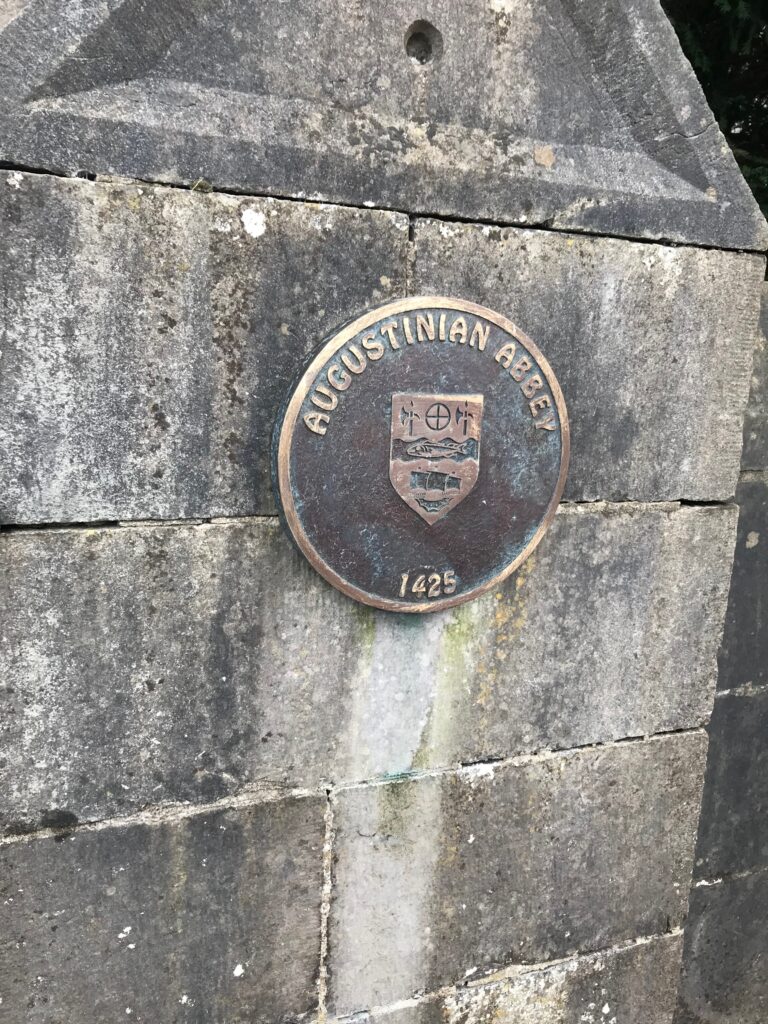
The house was built for friars of the Order of St Augustine — the Augustinian Friars or “Hermits” — and was known in the later record as the Augustinian House of St Mary of Ardnaree. A bronze plaque at the site gives the foundation date as 1425; the slight discrepancy is a matter of the tradition embedded in civic memory as against the date settled by historians in the twentieth century.
The O’Dubhda remained patrons of Ardnaree until the dissolution. Chieftains of the family were interred in the adjoining ground: Muircheartach Ó Dubhda, son of Donnchadh, was buried here in 1402 — at the earlier parish church that the Augustinian friary would later replace — which establishes Ardnaree as a recognised burial place of the family from well before the friary’s formal foundation.
III. A House of Learning
The friary became a centre of religious learning in north Connacht. Among the priests associated with the house was Gerald Martyn, O.S.A., who was appointed Bishop of Killala in 1452 — a measure of the abbey’s standing in the province. The abbey’s architectural fabric, with its carved doorways and wall tombs, also bears witness to sustained lay patronage: whole families paid to be buried in niches cut into its walls.
IV. Dissolution under Elizabeth I
The general dissolution of the Irish monasteries began under Henry VIII with the Act of 1537, but in remote Connacht it was enforced only slowly. Ardnaree was formally suppressed in the later sixteenth century; its lands were leased out during the reign of Elizabeth I, and the roofed community came to an end.
V. The Battle of Ardnaree, 23 September 1586
The event that lodged Ardnaree most deeply in the national record happened on the friary’s doorstep. On 23 September 1586, Sir Richard Bingham, Governor of Connacht, surprised and destroyed an Irish-Scottish mercenary army that the Mayo Burkes and the Mac Philbins had invited into Connacht to resist Elizabethan authority. The bloodletting was extraordinary: roughly a thousand fighting men killed in the field, and close to another thousand men, women and children put to the sword in the camp behind the lines.
Bingham afterwards hanged the leaders of the Burkes on the ground where they fell. An older Irish source gives the aftermath in language that has never quite worn off the place: “Every limb was struck off of them while they lived, and they were hung by the neck, and executed, and thence was Ard na Riag, the hill of the hangings, the name of the place thereafter.” Whether or not the name predates the battle, it is from 1586 that “the hill of the executions” becomes the name by which Ardnaree is remembered.
Four years later, in 1590, Bingham’s army returned to the lower Moy to burn the Franciscan houses at Moyne and Rosserk and the Dominican priory at Rathfran. The Augustinian abbey at Ardnaree had no roofed community left to burn, but the cumulative effect of these years was the end of monastic Christendom on the lower Moy.
VI. Titular Priors and a Persisting Graveyard
The Augustinian province continued to appoint titular priors to Ardnaree long after there was any house at Ardnaree for them to prior over: the line of appointments runs on into the nineteenth century. It is a Penal-era pattern known from many Irish houses: the superior was nominated, the faith was kept, the buildings stood open to the sky.
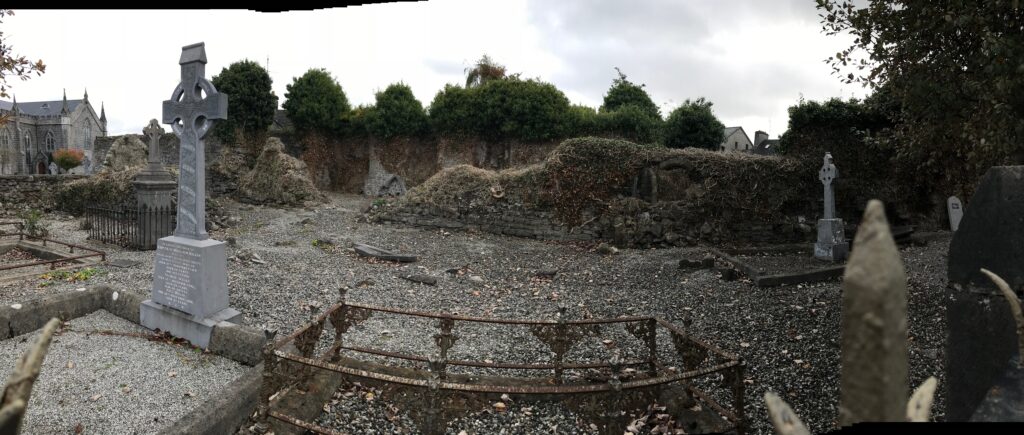
The graveyard around the ruins went on being used as the burying ground of Ardnaree. The Urban District Council formally closed it for new interments in 1930, though families with existing rights continued to bury their dead there into the 1950s. The headstones span several centuries.
VII. Surviving Fabric
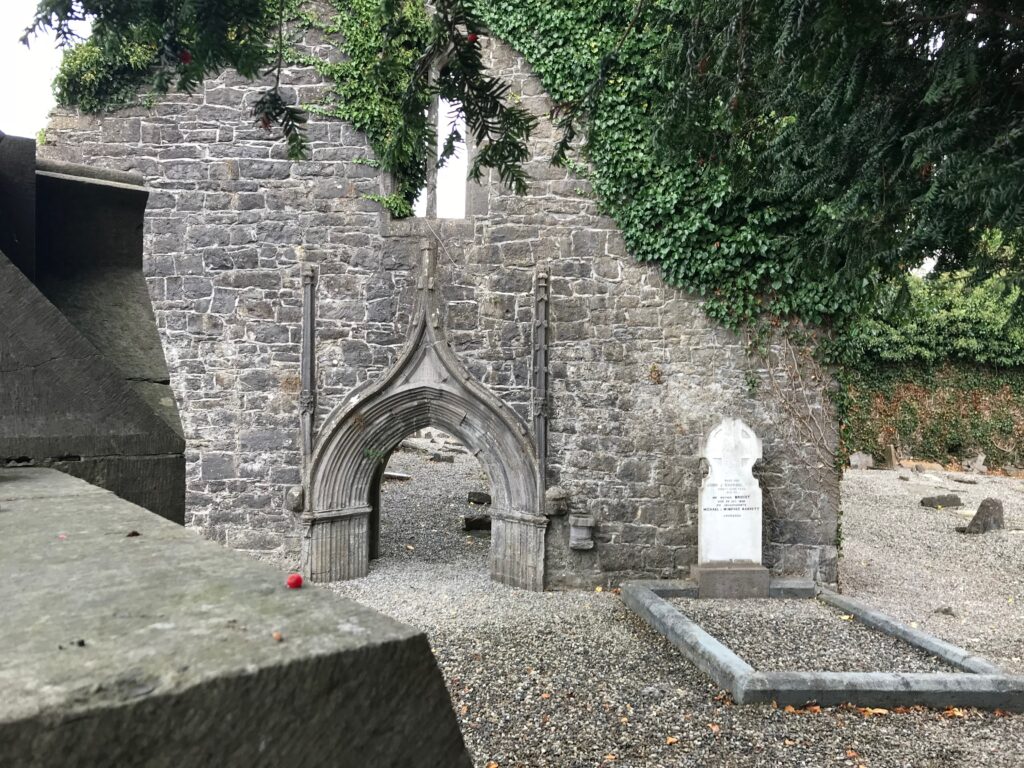
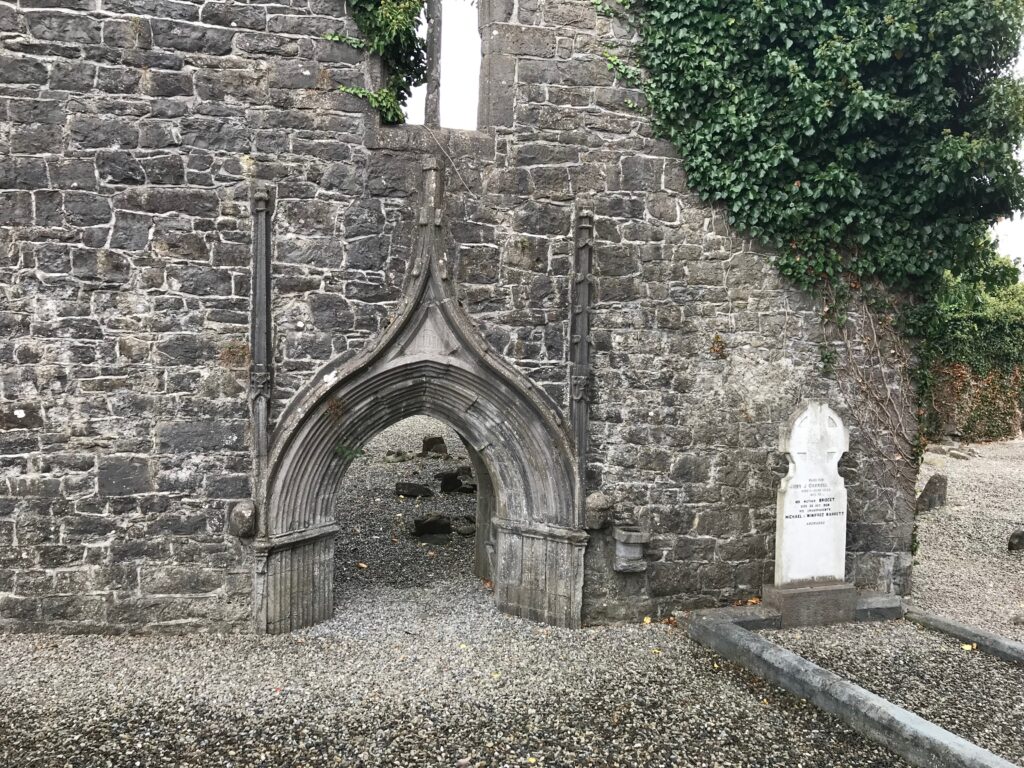
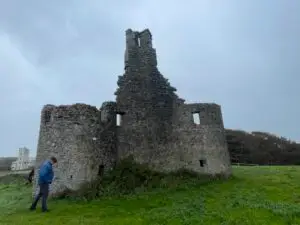
The most striking element to survive is a pointed Gothic arch with finely carved stonework, marking what was once a principal doorway of the abbey church. Sections of the church’s walls stand in places to a good height, and the churchyard around them preserves tomb niches cut into the stonework — a reminder that the abbey served, to the last, as a place of burial for the lay patrons who had kept it alive.
A bronze plaque at the site, cast with the arms of the borough of Ballina, gives the foundation date as 1425. The abbey is stop 14 on the Ballina Historic Town Trail, and an on-site information board sets out the history in Irish and English.
VIII. Visiting Today
The site is freely accessible on foot, just above the Moy and a short walk from St Muredach’s Cathedral. Those making a tour of O’Dubhda heritage around Ballina will find the abbey pairs naturally with Ardnarea Castle, built by Tadhg Riabhach’s grandson Brian in 1447, a few hundred metres further up the east bank. The three great friaries of Killala Bay — Moyne, Rosserk and Rathfran — are all within a short drive to the north.
Sources
- Placenames Database of Ireland (logainm.ie) — Ard na Ría nó Seanachaidh (Ardnaree or Shanaghy townland, Kilmoremoy, Tireragh).
- John O’Donovan, Ordnance Survey Letters, Co. Mayo (1836) — on the etymology Ard na Riagh.
- Dubhaltach Mac Fhirbhisigh, The Genealogies, Tribes and Customs of Hí-Fiachrach, ed. O’Donovan (Irish Archaeological Society, 1844) — for Tadhg Riabhach Ó Dubhda as patron of Lecan and founder of Ardnaree.
- Samuel Lewis, A Topographical Dictionary of Ireland (1837), s.v. Kilmoremoy.
- Gwynn & Hadcock, Medieval Religious Houses: Ireland (Longman, 1970), s.v. Ardnaree.
- Annals of the Four Masters, s.a. 1402 — burial of Muircheartach son of Donnchadh Ó Dubhda.
- Annals of the Four Masters, s.a. 1586 — the slaughter at Ardnaree (Ard na Riag).
- Conor Mac Hale, The O’Dubhda Family History (1990) — for the continuity of O’Dubhda patronage at Ardnaree.
Ardnaree Friary — east bank of the Moy, Ballina, Co. Mayo
Ardnaree Friary
54.1127° N, 9.1515° W
Dedicated to St Mary
By Tadhg Riabhach Ó Dubhda, Taoiseach of Tireragh
Titular priors continued to be appointed well into the 19th century
Surrounded by an historic graveyard; bronze plaque & information board on site

2025 Rally
O’Dubhda Clan Rally 7th to 10th October 2025 Programme of Events Dates:- 7th to 10th October 2025 with Farewell 11.00am on 10th October 2025Prices shown where applicable and in EUROS Day 1:- Tuesday 7th October 2025 Daytime Registration 10.00 am to 4.00pm at the Ocean Sands Hotel Foyer. Check in with the Clan, collect your Welcome Pack which will contain your tickets, Name Tag Lanyards and other information including a copy of the Programme of Events. We would ask that you record by Pin where you live now on the World map and where you originate from on the map of Ireland. The pins for the Ireland map are numbered and if you would, in the book provided put your Pin number and a contact email or phone number so that people from the same area can contact each other to discuss whether there is any family tree crossover. If possible we will have Clan merchandise available. Walking Tour:- O’Dubhda Castle Enniscrone Departure 1.00pm from the Ocean Sands Hotel F.O.C.The O’Dubhda Castle is about a ten minute walk from the Ocean Sands Hotel Genealogy Assistance:- 10.30 a.m. to 4.00 p.m. FOC (booking required) Day 1:- Evening: Welcome Reception 7.00 p.m. Location The Ocean Sands Hotel. Main Function Room: Welcome Introduction:- Presentations by:-Conor MacHale :-30 minute presentation on a particular item of Clan history Dr.Marion Dowd :-Mermaids, kings and castles: O’Dowd FolkloreThis talk explores the folklore and stories in the archives of the National Folklore Collection relating to the O’Dowds. AfterwardsMusic in Ocean Sands bar Day Two:- Wednesday 8th October 2025 Daytime Coach Tour :- O’Dubhda Castle – Tour Seat Price EUR 30.00Departure at 9.00 from the Ocean Sands Additional Midi Coach Tours (max 30 seats):- Seat Price EUR 20.00 Ceide Fields:– Also taking in Scudmore, and Ardnaree Abbey in BailanaDeparture at 9.00 from the Ocean Sands Heritage Tour:– Easkey Abbey (ruins), Rosslee Castle,, Split Rock, Easkey Heritage Centre, Dromore West PoorhouseDeparture at 9.00 from the Ocean Sands Genealogy Assistance 11.00 a.m. to 3.30 p.m. Evening :- 7.00p.m Ocean Sands Main Function Room 1:- Whiskey Tasting Price – EUR 6.002:- Learn how to pour a pint of Guinness Price – EUR 6.003:- Learn some everyday Irish Gaelic4:- Connect your Family Tree to the Clan tree5:- Enter members of your Family into the Clan Database6:- Clan Shop (Clan Merchandise etc.)7:- De Burca Rare Irish Books Afterwards:- Music in the Ocean Sands Bar Day Three:- Thursday 9th Oct 2025 9.30am Clan Council Meeting 11.00am Clan General Meeting An Agenda for this will be included in all Welcome Packs and this will also be discussed in the Welcome Intro on Day one. The main item on the Agenda will be the election of officers to the Clan Council:- including a new Taoiseach/Tanaiste. Please ensure you bring your Voting card with you (this will be included in your Welcome Pack). Only fully paid up members are eligible to vote, i.e. members that have paid their 10.00 Annual Membership fee via the website Voting cards will only be issued to fully paid up members. Inauguration of new Taoiseach :– Location and time to be decided 7.00pm:- Grand Banquet Location Belleek Castle 85.00 Euros: Transport will be provided from the Ocean Sands leaving at 5.30pm and returning between 11.00pm and 11.30pm. Belleek Castle is a beautiful picturesque castle about 15 minutes from Enniscrone. This is one of the highlights of the Rally and there will be music and Irish Dancers. Day Four:- Friday 10th Oct 2025 11.00 Farewell Glass In the Ocean Sands Hotel (Location to be decided) Final get together to join us in a toast to the Clan and everyone present. Also to say farewell to everyone you have met and. got to know during the Rally

2015 Rally
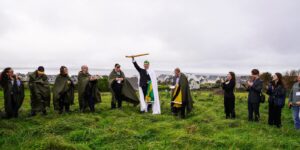
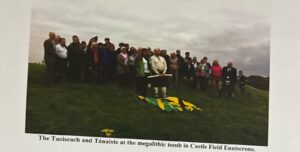
O’Dubhda Clan Gathering, 2015 In October, 2015, about 100 people bearing some variation of the Ó Dubhda name came to Enniscrone where visitors were welcomed from Ireland, England, Scotland, Northern Ireland, The Netherlands, South Africa, Qatar, Australia, USA and Canada – including for the first time French speaking Quebec. Among them was a representative of the Clans of Ireland organization, of which the O’Dubhda Clan was a founder member. The Gathering consisted of four days of tours, lectures, meetings, the election of Tánaiste and Inauguration of Taoiseach with lots of celebration and social interaction usually lasting into the early hours. The Clan were particularly grateful to Sligo County Council who in association with the National Roads Authority have erected a new chair to commemorate the life, death and extraordinary work of Dubhaltach Mac Fhirbhisigh (Duald Mac Firbis) at the N59 lay-by near Skreen Co. Sligo. They were addressed on the topic by Martin Wilson at the previous gathering in 2012, and it was nice to see the completed project. They are also very grateful to those who have begun work on the planned “Monasteries on the Moy” greenway from Ballina to Killala. This was the 25th or silver anniversary of the first Gathering of the modern era organized by Enniscrone man Conor Mac Hale who gave an excellent lecture on the Heritage of Ó Dubhda and conducted most of the tours. Dr. Nollaig Ó Muraíle gave a very illuminating lecture on the Great Book of Genealogies by Dubhaltach Mac Fhirbhisigh which he translated and published in 5 large volumes in 2004. Proinsias Mag Fhionnghaile gave an extraordinary illustrated talk on Ancient Gaelic Dress. Mike Dowd from Australia also gave a groundbreaking talk about A New History of St. Patrick and his connections to the clan and the local area. San Francisco born woman, Kieran O’Dowd was elected Tánaiste which means that the next Taoiseach of the Ó Dubhda Clan is to be a woman for the first time in history. The plan is for her to be inaugurated at the next event 4th-7th October, 2018. The Inauguration of Andrew Dowds from Glasgow as the new Taoiseach was conducted on the megalithic tomb in the Castle Field Enniscrone, replacing the previous incumbent Kilglass born Brendan O’Dowd who organized this year’s event. Andrew is the son of the first O’Dubhda Taoiseach of Tireragh to be elected in over four centuries, Thomas J. Dowds, who was elected in 1997 and inaugurated at the Millennium Gathering in 2000. The visitors toured the area to see some of the many notable sites such as forts, megalithic tombs, castles and churches including Carrowmore, The Beach Bar at Aughris, the Franciscan monasteries of Moyne and Rosserk and the Augustinian abbey at Ardnaree, and with views of The Black Pig, Castleconor Castle, Rathlee and Roslee castles and the newly erected Mac Firbis Chair at Skreen. They also stopped to view The Mermaid Rocks at Scurmore, and Rathmulcah Fort and Souterrain at Killanley, before finishing in the wonderful Beleek Castle. At the banquet visitors were particularly taken with the Irish dance and musical entertainment provided by members of the Tireragh Branch of Comhaltas Ceoltóirí Éireann: Siobhán Foy, Cillian Dalton, Sinéad Harte, Lorna McGuinness, Éabha McGowan and Elizabeth Dunphy. The facilities and service provided by the Ocean Sands hotel were excellent, and they and other accommodation providers, as well as Oisin Quinn and Magrath Coaches, made all guests feel truly welcome. Some of them have come to every single event organized since 1990, which is a truly remarkable thing since Ireland is by no means a cheap destination in the global tourist industry. An extraordinary and particularly mellow whiskey was specially blended for the occasion and the delightful, Irish produced but (unfortunately for Irish people) the “for export only”, O’Dowds Irish Cream liqueur were heartily enjoyed during the Gathering. As well as this a Californian white wine was specially produced and labelled for the gathering. The Clan continues to remain connected through Facebook, email and the O’Dubhda Clan website. They are looking forward to returning to Enniscrone in October 2018. “Ó Dubhda Abú!”

2012 Rally
9th O’Dubhda Clan Gathering at Enniscrone(11th – 14th October 2012) The 2012 O’Dubhda clan gathering kicked off with a tour to Rathcroghan in Co Roscommon to view the grave of King Daithi and visit the Heritage Centre, Owen na gCat souterrain and Strokestown Famine Museum. Websites are at Rathcroghan.ie and StrokestownPark.ie There was another tour to Castlebar, centre of the short-lived Republic of Connacht in 1798, which also visited the Museum of Country Life at Turlough House and Mayo North Heritage Centre at Enniscoe, as well as the ancient O’Dubhda Castle at Castletown (aka Cottlestown) Websites are at Museum.ie and Enniscoe.com Frank Tivan delivered a talk on ancient historical connections. The Council of Chieftains meeting was followed by an open Grand Council and Election of Tanaiste (successor to O’Dubhda): Andrew Dowds was chosen The Inauguration of Brendan O’Dowd as Taoiseach to succeed the previous incumbent Mike Dowd (Micheal O’Dubhda) was held in the Church at Enniscrone. The evening Inaugural Banquet was entertained by prize-winning Irish traditional musicians from Comhaltas Ceoltoiri Eireann. An address by Martin Timoney explained the decision to temporarily remove the 1931 monument to the MacFirbis historian of the clan (it was replaced in May 2015 by a new memorial) A final tour undertaken to view sites associated with the clan history via Ardnaree to Moyne, Killala and Foghill visited the memorial of St Patrick near Kilcummin, site of the French landing in 1798, and Beleek Castle Hotel to conclude the event.
A Note from the Clan
These pages are researched and written by volunteers of the O’Dubhda Clan Association. The record here reflects the best evidence we have been able to gather from primary sources — placename records, Lewis’s 1837 dictionary, the Mac Fhirbhisigh genealogies, and the standard monastic reference works.
If you know of a correction, a family tradition, a photograph, or a source we should have cited — please get in touch. We welcome additions, and we would rather be corrected than wrong.