
Ardnarea Castle
May 2, 2026 2026-10-14 22:23Ardnarea Castle
ARDNAREA CASTLE
Ardnarea Castle
Ard na Riagh ‐ “Hill of Executions” ‐ An Ó Dubhda Castle above the Moy
On the east bank of the River Moy, overlooking what is now Ballina, Co. Mayo, once stood a medieval castle held by the Ó Dubhda. Its exact site was lost to the archaeological record for almost two centuries before being identified afresh in 2024. The castle is listed by clan historian Conor Mac Hale among the twenty castles that ringed the kingdom of Uí Fhiachrach Muaidhe.
I. The Place: Ardnaree, Barony of Tireragh
The castle stood on the rise known locally as Palmyra Hill (also called Castlehill), in the townland of Carrowcushlaun West (as identified by the Ard na Riagh Preservation Group), in the Ardnaree district of Ballina, civil parish of Kilmoremoy, barony of Tireragh. Although the Moy is the traditional boundary between Mayo and Sligo — and the castle therefore lay on the old Sligo side — the townland was transferred to Co. Mayo under the Local Government (Ireland) Act, 1898.
The placename itself is one of the most contested features of the site. John O’Donovan, recording local tradition for the Ordnance Survey in the 1830s, and the Dinnseanchus place-lore tradition he drew on, interpret the name as Ard na Riagh — “the Hill of Executions” or “Gallows Hill,” from Old Irish riagh, a place of hanging. A second gloss, Árd na Ríogh — “Hill of the Kings” — is sometimes repeated locally, but that reading belongs properly to the separate Ardnaree townland in Co. Donegal (logainm entry 15852). The execution tradition is the one tied to this site, and it is rooted in the folklore of the Four Maols (see §IV).
II. The Castle: An Ó Dubhda Stronghold on the Moy
The castle is recorded by Conor Mac Hale in The Ó Dubhda Family History (1990) as one of the twenty castles the clan maintained across north-west Connacht. Mac Hale does not date its building; the castle was already standing when the clan recovered it in 1371, and the Ard na Riagh Preservation Group’s research places its construction in Anglo-Norman hands between 1235 and 1266.
The site had been in Anglo-Norman hands earlier: the cantred of Tireragh was granted in the 13th century to the de Berminghams (Mac Feorais), whose successors held Ardnaree into the 14th century. In 1371 the Ó Dubhda recovered Tireragh; the recovery of Ardnaree is credited to Domhnall Cléireach Ó Dubhda, who ‘took possession of the castles of Ardnarea and Castleconor’ (O’Donovan; AFM s.a. 1371). For the next century and a half the castle was contested between the Ó Dubhda and the Mayo Burkes. Held by the Burkes by the early 1500s, it was retaken by the sons of Ó Dubhda in 1532 and lost definitively to the Burkes the following year (AFM s.a. 1532, 1533), a loss that gave rise to the proverb Súil Uí Dhubhda le hArd na Ríogh (“the Ó Dubhda’s hope for Ardnaree”), remembered locally as a maxim for a hope never realised: ‘You will get it as soon as the O’Dubhdas get Ardnaree’, which meant never (O’Reilly and Mac Hale, 2018).
After 1533 the castle stayed with the Burkes, and the Ó Dubhda never recovered it. Thomas Bourke held it in 1614, the last known reference to its occupation (Ard na Riagh Preservation Group), and in 1668 the lands of Ardnaree were granted by Charles II to Sir Theophilus Jones (Landed Estates database). Later references place ruined fragments on the hill as late as 1829, after which the site passed out of the archaeological record entirely.
III. The Battle of Ardnaree, 23 September 1586
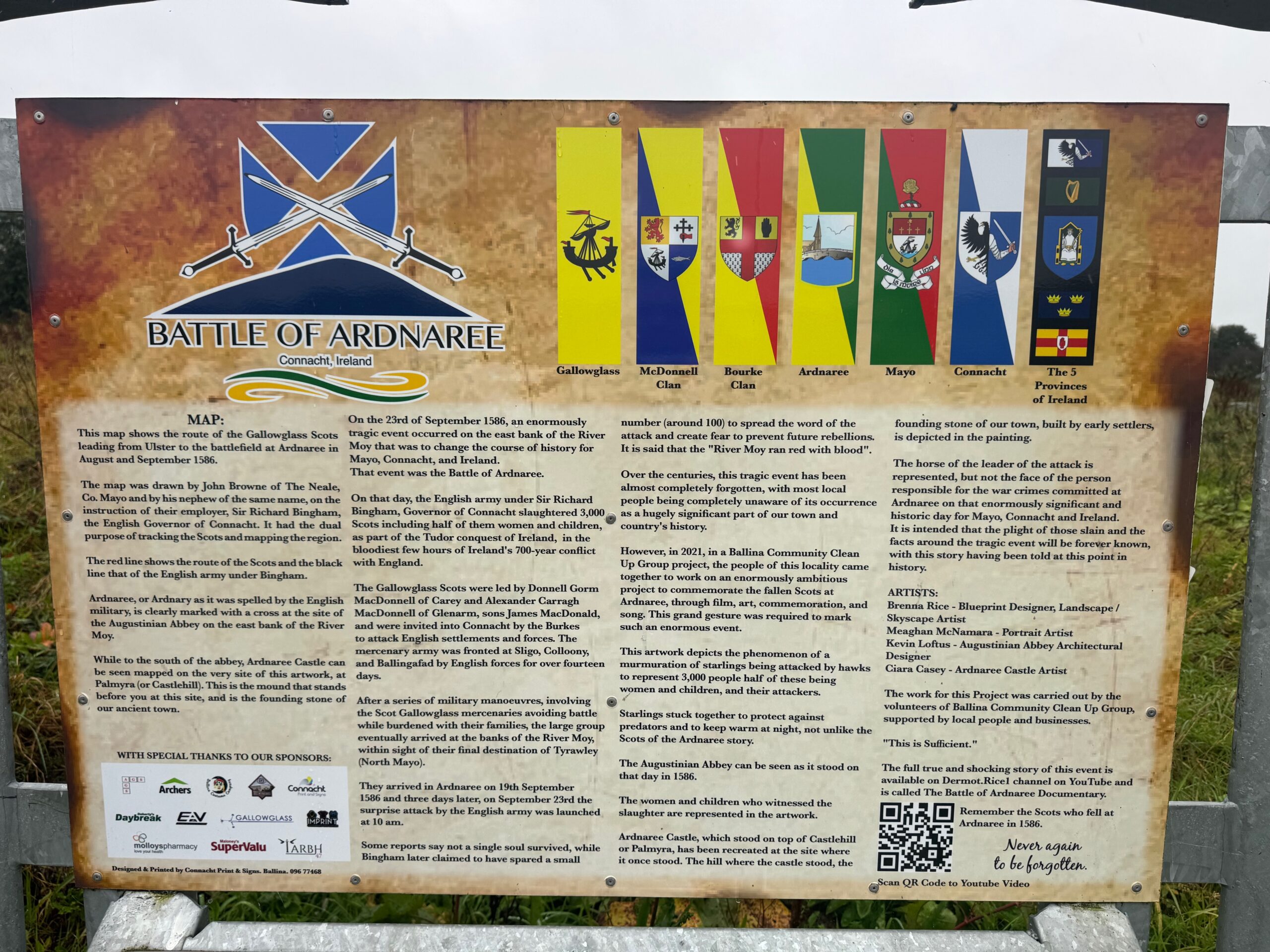
The best-remembered event at this site has nothing to do with the castle itself. In September 1586, during the Tudor conquest of Connacht, a Scottish Gallowglass army — led by Donnell Gorm MacDonnell of Carey and Alexander Carragh MacDonnell of Glenarm, sons of the late James MacDonnell, 6th of Dunnyveg — had been brought into Connacht by the MacWilliam Burkes and the MacPhilbins to resist the campaign of Sir Richard Bingham, Governor of Connacht. The mercenary column slipped away from English forces at Sligo and Ballinafad, was driven off the bridge at Collooney but crossed by the ford beside it, and made camp on the east bank of the Moy at Ardnaree, where it lay while Bingham spent some fifteen days gathering his forces.
Bingham force-marched his army through the night from the monastery of Banada in Leyny and fell on the sleeping camp about midday on 23 September 1586. Both MacDonnell leaders were killed. Estimates of the dead vary. The Annals of the Four Masters say ‘near two thousand of them were slain’; later accounts put the toll as high as 3,000, half of them women and children travelling with the camp (Ard na Riagh Preservation Group). But the outcome was unambiguous: the mercenary column was effectively destroyed, many were drowned fleeing into the Moy, and the Burke rising collapsed soon afterwards.
The battle took place at the foot of the hill on which the castle stood. The Augustinian Abbey founded by the Ó Dubhda across the river (see §V) would have been visible from the field, as it is today.
IV. Folklore of the Site: The Four Maols
Two older traditions belong to this stretch of the Moy. The first explains the name itself. The Dinnseanchus tradition, recorded by O’Donovan, tells of four foster-sons and pupils of the bishop, the Four Maols (Mael Mac Deoraidh, Maelcroin, Maeldalua and Maelseanaigh), who murdered Bishop Ceallach of Kilmoremoy, a prince of Connacht who had renounced the kingship for the religious life. The Maols were hunted down by Ceallach’s brother Cú-Coingelt and executed on the hill, from which it took the name Ard na Riagh. Their bodies were buried across the river at what is still known as the Dolmen of the Four Maols (the Ballina Dolmen), a Bronze Age portal tomb which predates the story by two thousand years but to which local tradition has long been attached.
The second tradition of the family and the sea belongs downstream: the story of Thady Rua Ó Dubhda and the mermaid, told of the shore at Scurmore near the mouth of the Moy, where the Mermaid Rocks still stand. It is told in full on its own page. What Ardnaree itself keeps is the proverb ‐ Súil Uí Dhubhda le hArd na Ríogh, the hope that was never fulfilled.
V. The Augustinian Abbey
Within sight of the castle, on the same east bank, stands the ruined Augustinian Abbey of Ardnaree, founded c. 1427 by Tadhg Riabhach Ó Dubhda, taoiseach of Tireragh, for the Augustinian Friars. A papal reference to an “Augustinian house of St Mary of Ardnaree” from 1410 suggests an earlier foundation on the site. The abbey is the only Ó Dubhda-patronised medieval structure in Ballina still standing; its graveyard remained in use into the mid-20th century. A separate page on this site covers the abbey in its own right.
VI. Rediscovery, 2024
For generations after the 1829 reference, the precise location of the castle was effectively lost. Work toward its rediscovery began not with ground-penetrating radar but with a community clean-up. In 2021, a group of Ballina residents working on the Ballina Community Clean-Up project and on the commemorative artwork for the Battle of Ardnaree began to investigate an old local tale of a castle on Palmyra Castle Hill — a tale preserved, among other places, in an entry by Joseph Kilcullen in the National Folklore Schools’ Collection of 1937–39.
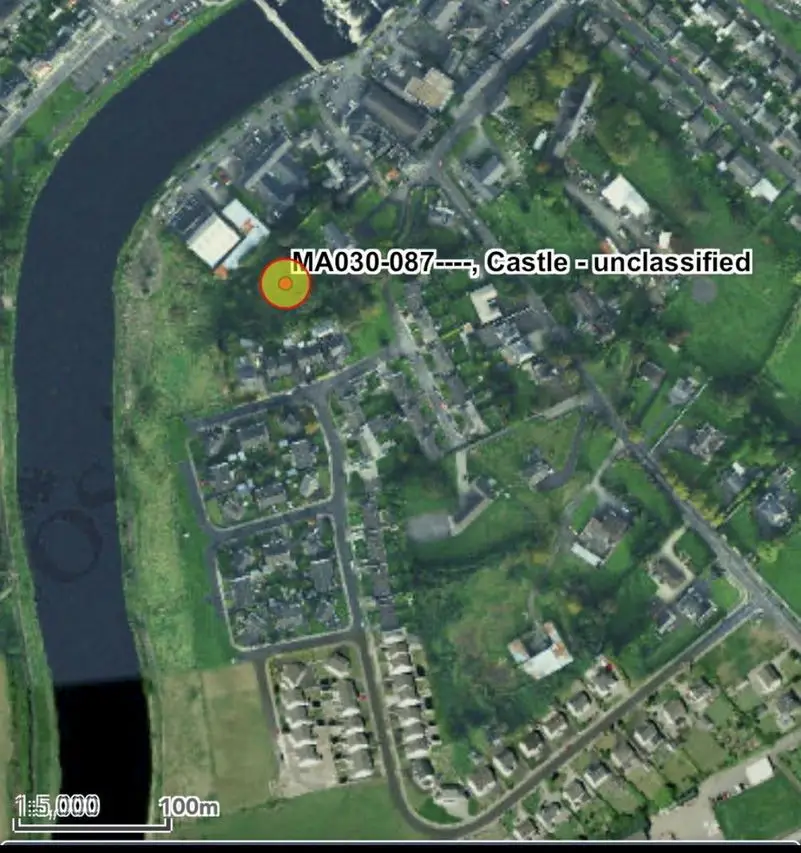
The Ard na Riagh Preservation Group — Martin Devaney, Dermot Rice, Colm McLoughlin (historian, Ardnaree Sarsfields GAA) and Thomas Joyce (archaeologist, MA in Landscape Archaeology) — assembled the documentary and folkloric evidence and submitted it to the National Monuments Service. On 6 June 2024, the site was added to the Historic Environment Viewer and brought under the protection of the National Monuments Acts 1930–2004. The castle stood roughly 100 m west of the present St Michael’s Church on Church Road.
The Group has described the site as “the foundation stone of Ballina” — a claim rooted in the castle’s pre-dating of both the Augustinian Abbey on its present site and the later town. That characterisation is theirs, and it is offered here as the language of the people who did the work of recovery.
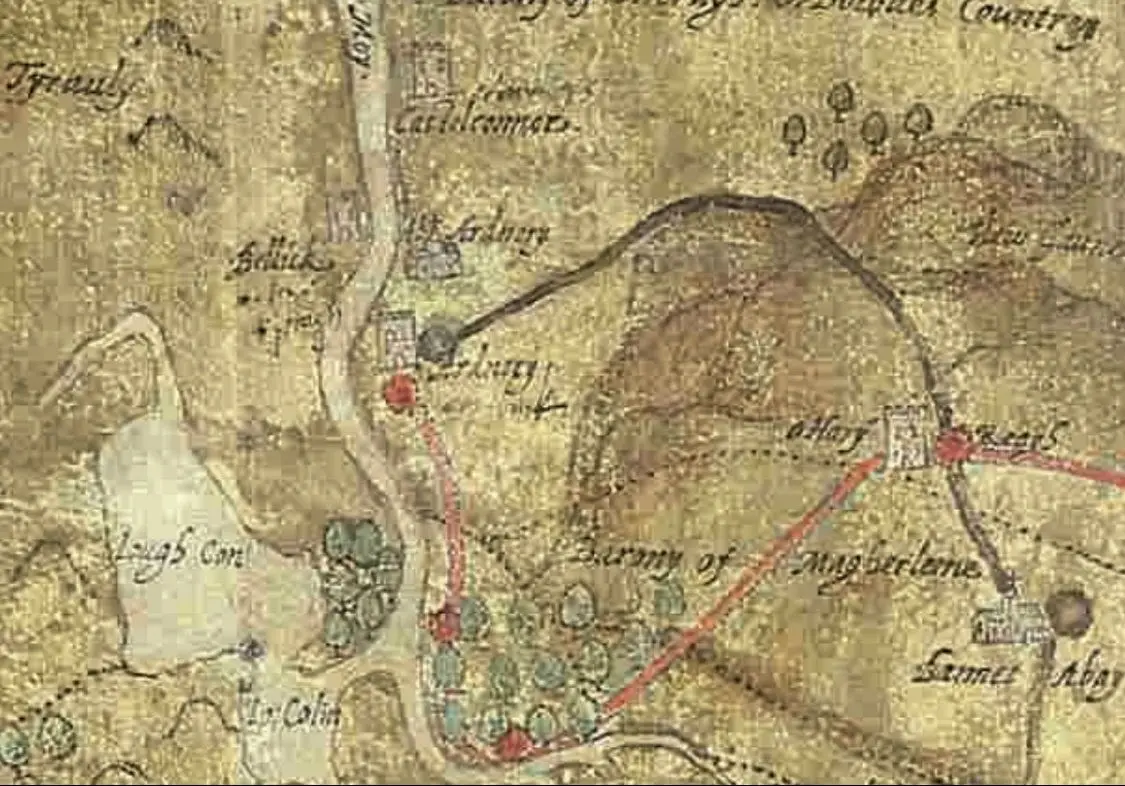
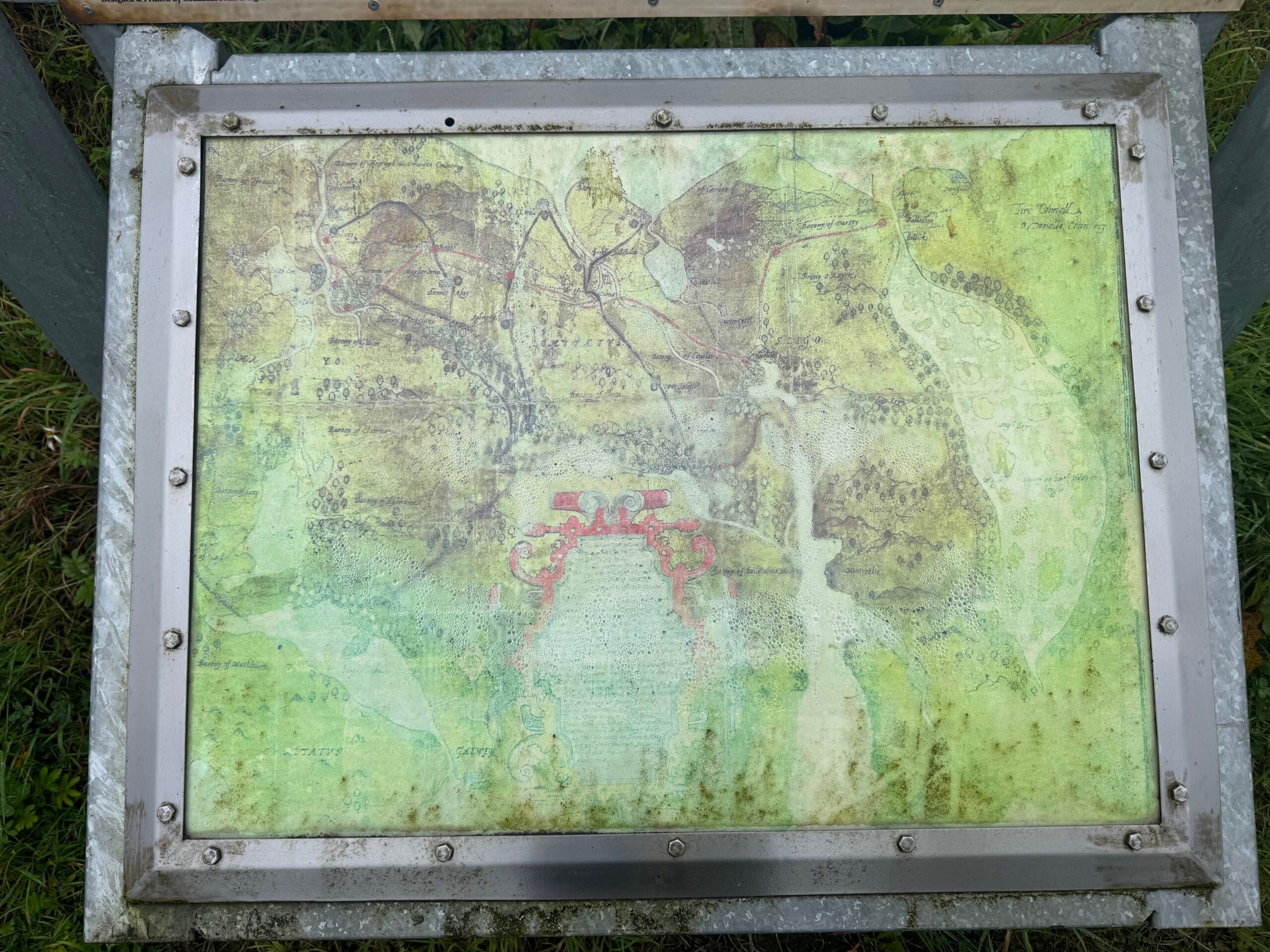
Cartographic evidence. The earliest surviving documentary record that fixes the ground of the castle in writing is Sir William Petty’s 1659 Down Survey parish map of Kilmoremoy, in the barony of Tireragh — one of the set of cadastral maps drawn to record the Cromwellian forfeitures. By 1659 the castle had been out of Ó Dubhda hands for more than a century, but Petty’s surveyors drew it on the east bank of the Moy, with a mill and salmon weirs beside it. The map joins a longer cartographic trail on which the family and its territory appear by name — from Ortelius (1573) and Boazio (1606) through Speed (1610) to Petty’s cadastral survey. See the Cartographic Record for the sequence in full.
VII. The Battle of Ardnaree Memorial
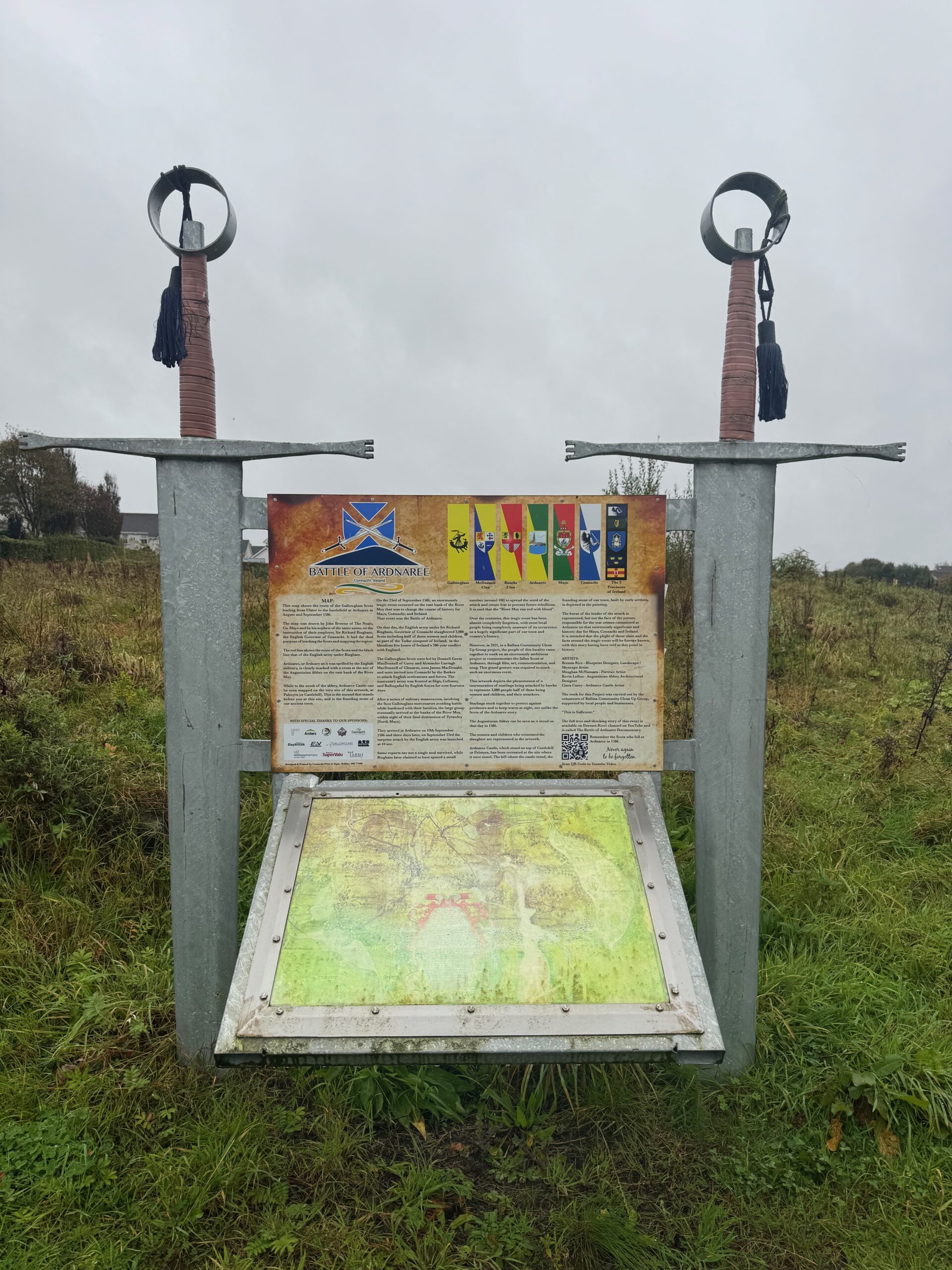
The memorial, painted in 2021 and unveiled in August 2022, stands close to the battlefield, at the bend in the Moy where the east-bank camp was overrun. Two sword-shaped pillars frame a set of interpretive panels describing the clans involved — MacDonnell, Burke, Gallowglass — and the broader course of the Tudor conquest of Connacht. The central artwork depicts a murmuration of starlings attacked by hawks, a figure for the mercenary column and their attackers. The artists were Brenna Rice (landscape design), Meaghan McNamara (portraiture), Kevin Loftus (the Augustinian Abbey panel) and Ciara Casey (the castle panel). The documentary The Battle of Ardnaree, by Dermot Rivel, records the project in full; a Midwest Radio interview with the Group covers the rediscovery.
VIII. What Remains Today
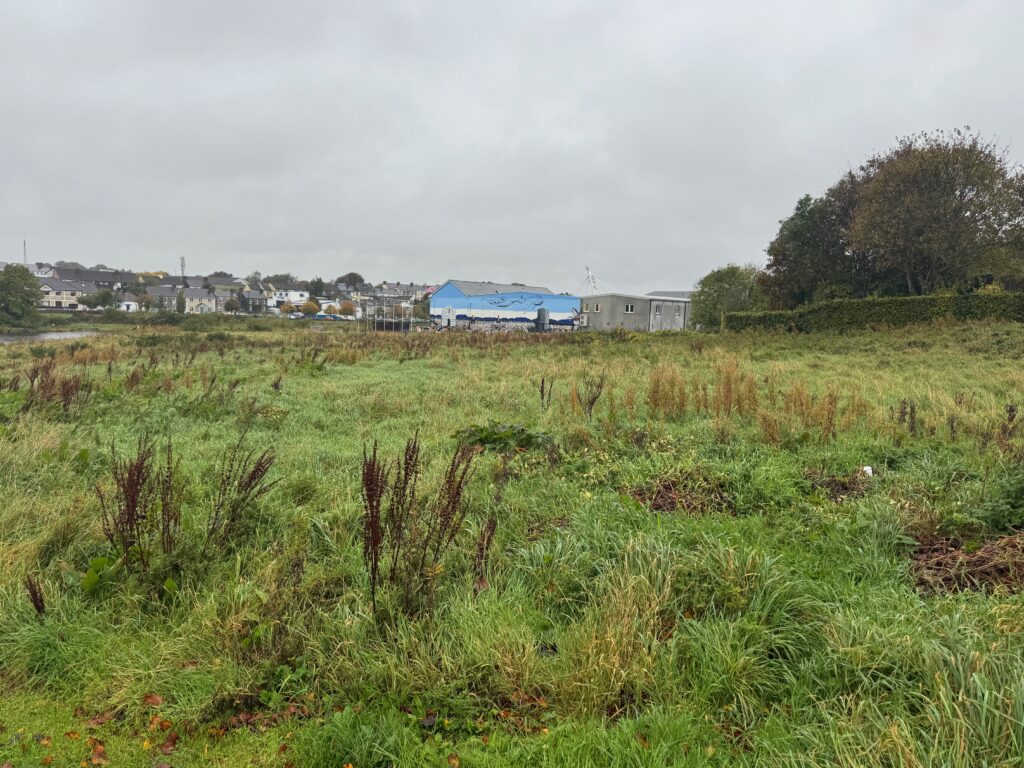
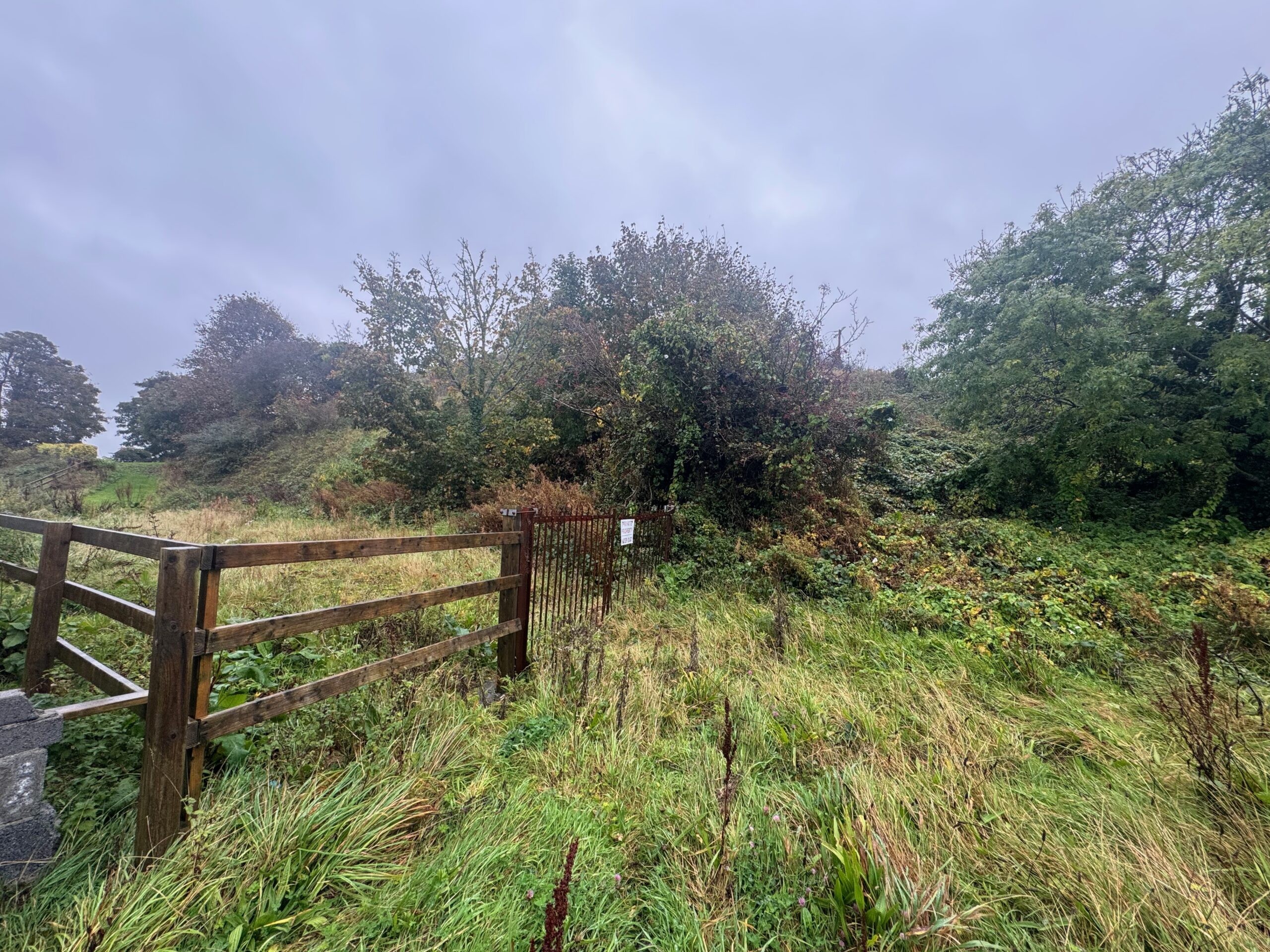
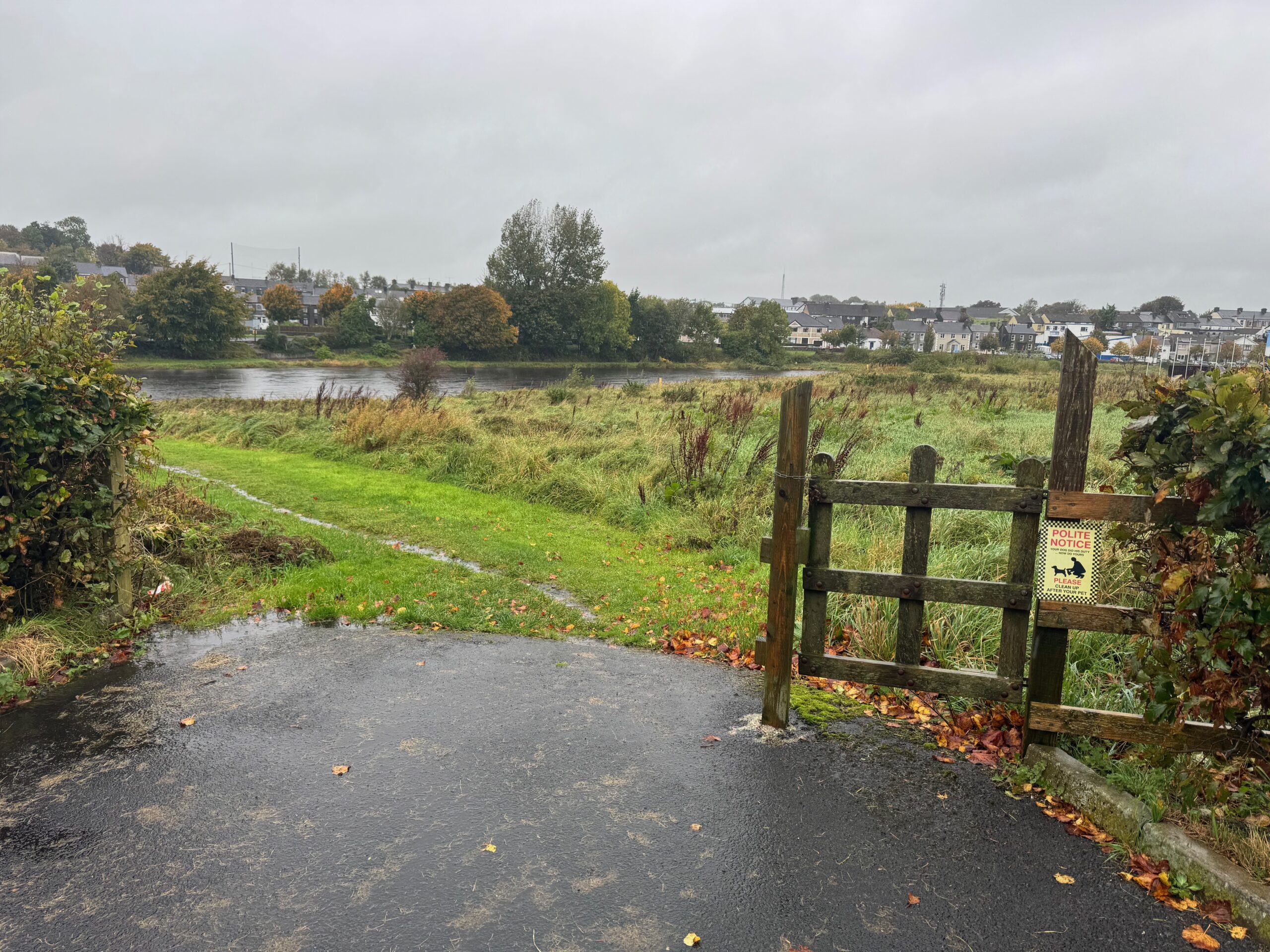
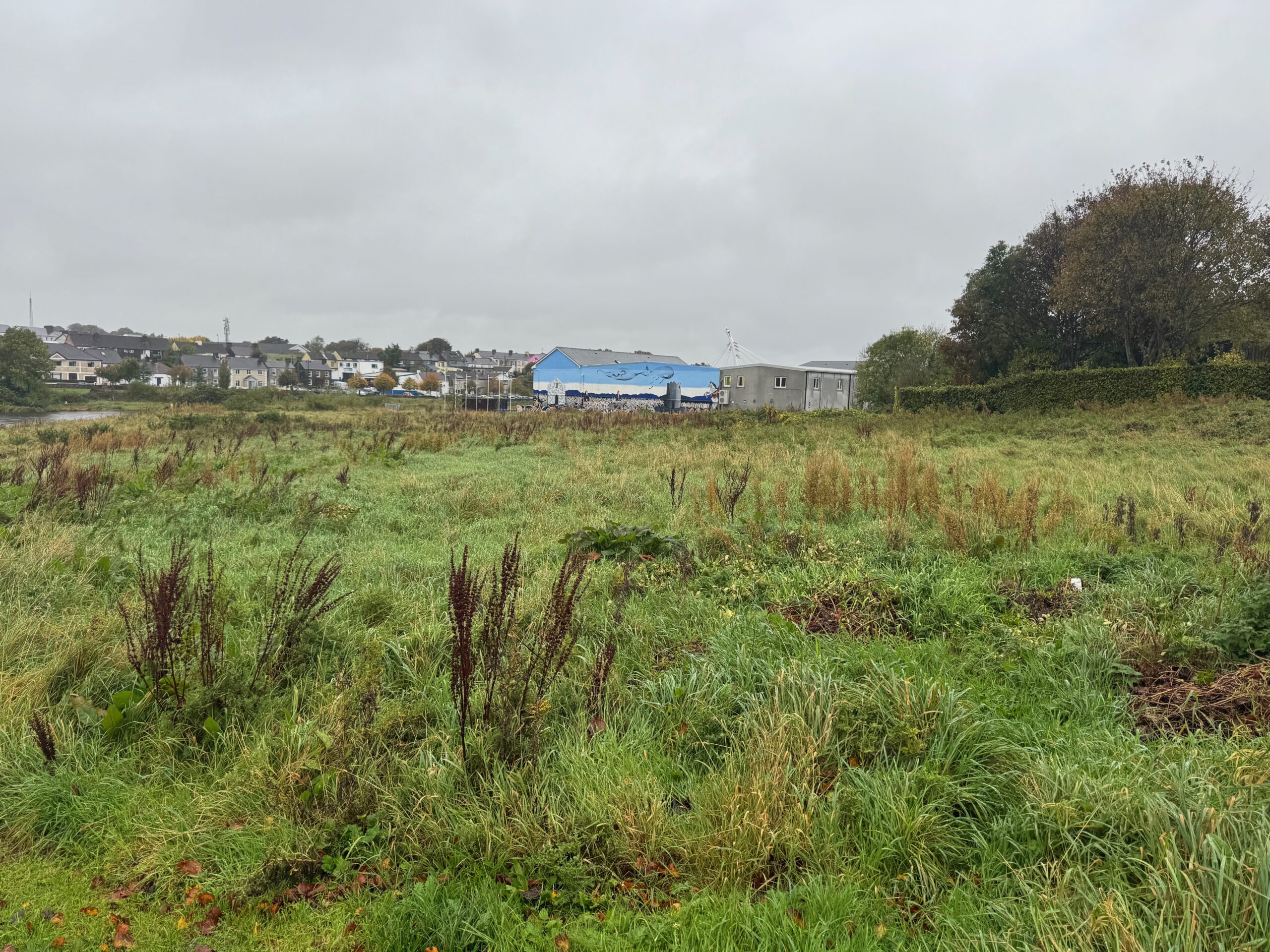
There are no standing remains of Ardnarea Castle. No detailed contemporary description of the tower — dimensions, plan, internal arrangement — has been located in the sources available at the time of writing. What is known is essentially negative: the castle stood on Palmyra Hill above the river, it was ruined by 1829, and the ground has since been built over and around. The Preservation Group’s identification is documentary and folkloric rather than archaeological; no excavation has yet been carried out.
This is consistent with the general caveat that applies across the Ó Dubhda castle circuit. The “twenty castles” are sites of memory as often as sites of masonry — and at Ardnaree, the site of memory has been recovered but the masonry has not.
IX. Visiting
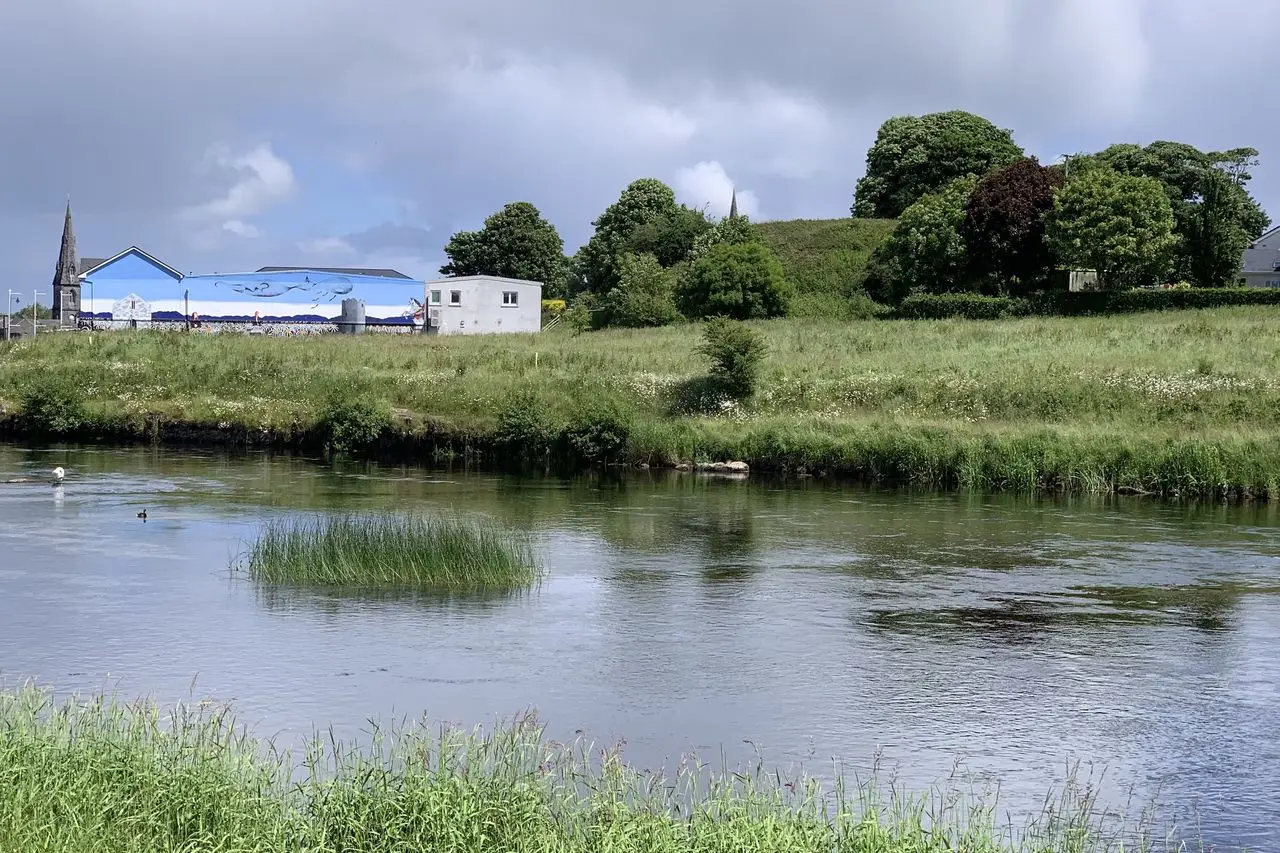
The site is on the east bank of the Moy, approximately 100 m west of St Michael’s Church on Church Road, Ballina, and a short walk from the Battle of Ardnaree memorial. Belleek Woods lies a short walk downstream to the north. The castle ground itself is private; visitors are asked to view it externally and to respect the memorial.
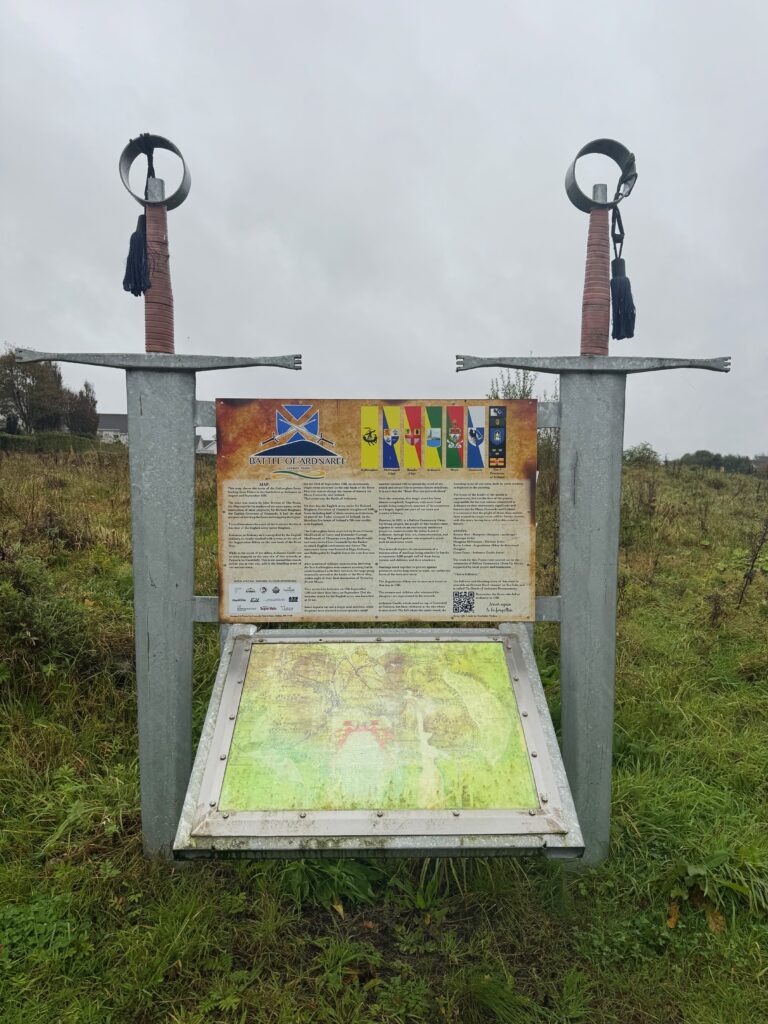
Ardnarea Castle site — east bank of the Moy, Ballina
Ardnarea Castle
Ard na Riagh (Hill of Executions)
54.10908°N, 9.15529°W
Palmyra Hill, east bank of the Moy
Carrowcushlaun West townland
Ballina, Co. Mayo, Ireland
Castle / fortification site
Among the 20 Ó Dubhda castles listed by Conor Mac Hale
Anglo-Norman in origin (13th century); held by the Ó Dubhda from 1371
Site in Anglo-Norman hands from the 13th century (de Bermingham)
Recovered by the Ó Dubhda in 1371
Castle standing by 1371; Anglo-Norman build, c. 1235-1266 (Preservation Group)
No standing remains
Ruined fragments last recorded 1829
Site identified by documentary and folkloric evidence and added to the Historic Environment Viewer on 6 June 2024
Protected under the National Monuments Acts 1930–2004
Palmyra Hill, approx. 100 m W of St Michael's Church, Church Road, Ballina
Castle ground is private — view externally
Battle of Ardnaree memorial (2021) on neighbouring ground
Recovered from Anglo-Norman tenure by the Ó Dubhda in 1371
Retaken 1532, lost to the Mayo Burkes 1533 - origin of the proverb Súil Uí Dhubhda le hArd na Ríogh
Lands granted to Sir Theophilus Jones, 1668
Augustinian Abbey (c. 1427), founded across the river by Tadhg Riabhach Ó Dubhda
Battlefield of the Battle of Ardnaree (23 September 1586). The castle site was lost to record for almost two centuries before its rediscovery in 2024 by the Ard na Riagh Preservation Group — a rare case of a medieval monument being added to the national record in our own time.
From the Clan
Photographs of Ardnarea Castle submitted by clan members.
A Note from the Clan
These pages are researched and written by volunteers of the Ó Dubhda Clan. Our history is vast, and our understanding of it grows with every correction, addition, and story shared by clan members and researchers.
If you have found an error, or have information that would improve this page, please get in touch.