Inauguration
February 17, 2025 2026-05-07 1:56Inauguration
Gairm Uí Dubhda
From the first known inauguration at Carn Amhalghaidh near Killala, to the renewal at the Enniscrone mound in October 2025 — the unbroken line of the Ó Dubhda Taoisigh.
A Ceremony Preserved in Writing
The Ó Dubhda are unusually well served by their own scholars. The Great Book of Lecan, compiled c.1417 by the Mac Fhirbhisigh — the clan’s hereditary historians at Lackan, just three miles south of Carn Inghine Briain — preserves the election law, the ceremony, the banquet order, and the closing oath exactly as they were practised. Few Irish lordships left so precise a record of their own inauguration; fewer still had their chroniclers living within walking distance of the inauguration mound.
And every king of the race of Fiachra that shall not be thus nominated, he shall have shortness of life, and his race or generation shall not be illustrious, and he shall never see the kingdom of God.
— Great Book of Lecan · Finit. Amen.
Election
Under Brehon Law the chieftainship passed to the oldest and most capable descendant of Fiachra Ealgach — not to the late chief’s son by default, but to the ablest man of his derbfhine, the four-generation kin-group. A candidate had to meet four conditions:
- I Descended in the direct blood of Fiachra Ealgach.
- II Free of physical defect or deformity.
- III Of age and fitness to lead the clan in battle.
- IV The support of the majority of sub-chieftains and freeholders.
It was unusual for a son to succeed his father directly. When a candidate lacked full support, he ruled as “Chief, with opposition” — a formulation that acknowledged his legitimacy while recording the dissent of his kin. In troubled decades the same formula appears repeatedly in the annals: the Ó Dubhda were elective, and the election did not always end in unanimity.
The Four Sacred Sites
The inauguration of an Ó Dubhda chief required a mound, a footprint stone, and the witness of the land. Four such places are remembered in the tradition — two historical mounds on either side of the Moy, a third shoreline candidate, and the Enniscrone mound where the rite was performed last in the old order and first in the new.
The pre-Norman inauguration mound of the Uí Fhiachrach, said by the Dindshenchas to have been raised by Amalgaid mac Fiachrach. Levelled c.1911 — the western enclosure scarp survives.
Visit the Site →A two-tiered mound on the Aughris headland, mirroring Meadhbh’s cairn on Knocknarea. FitzPatrick’s primary identification for the east-Moy inauguration site — the new tradition after the 1371 reconquest.
Visit the Site →An alternative candidate for the east-Moy site. Home to the ‘Children of the Mermaid’ stones and the Tadhg Ruadh Ó Dubhda folk-tale — a ritual shoreline with its own claim on the rite.
Visit the Site →The mound beside the Ó Dubhda stronghold at Enniscrone. Tradition places the last pre-1585 inauguration here; and on 9 October 2025, the first inauguration of the renewed line was performed on the same ground.
Visit the Site →A stone bearing the imprint of two feet — said to be those of Fiachra Ealgach himself — was set at the inauguration mound. The new chief stood his foot upon it as he swore the oath.
The Ceremony
The rite had four acts. Each had a hereditary officiant and a single, deliberate gesture. Together they moved the candidate from man to chief.
The Banquet
In Christian times the ritual was followed by the celebration of Mass and then a banquet — the new chief feasting his sub-chiefs, his freeholders, and the hereditary officers who had just installed him. The order of drinking at the banquet was itself part of the rite, and was recorded in the Great Book of Lecan with the same precision as the ceremony on the mound:
The privilege of first drinking was given to O’Caoimhín by Ó Dubhda, and O’Caoimhín was not to drink until he first presented it to the poet, Mac Fhirbhisigh.
— Great Book of Lecan
The order honoured the marshal and the historian in rank, made public the royal lineage all three houses shared from Fiachra, and served one further purpose the chroniclers do not spell out: if the cup had been poisoned, it was O’Caoimhín — not the new chief — who would drink first.
The Tánaiste
It was common to elect a Tánaiste — a named heir — at the same assembly that installed the chief. The word survives in modern Irish government as the title of the Deputy Prime Minister, but in the lordship it meant the man who would step in if the chief fell in battle or died before his son came of age: a precaution against leaderlessness in dangerous years. The Tánaiste did not undergo the full ceremony, but he swore his own oath with one foot on the inauguration stone — enough to bind him, not so much as to pre-empt the living chief.
Under the renewed line, Terry Rochford was elected Tánaiste in 2025, and is expected to be inaugurated Taoiseach at the 2028 Clan Rally.
After 1585
The Indenture of Sligo
Under the Composition of Connacht, the Gaelic lordships surrendered their elective chieftainships to the English Crown. Hereafter the title would pass by primogeniture in the English manner, not by the old assembly on the mound. Ruaidhrí Óg was the last Ó Dubhda inaugurated under Brehon law.
“For four hundred and forty years no one was made chief of the Ó Dubhda.”
Between 1585 and 2025 — the Rallies
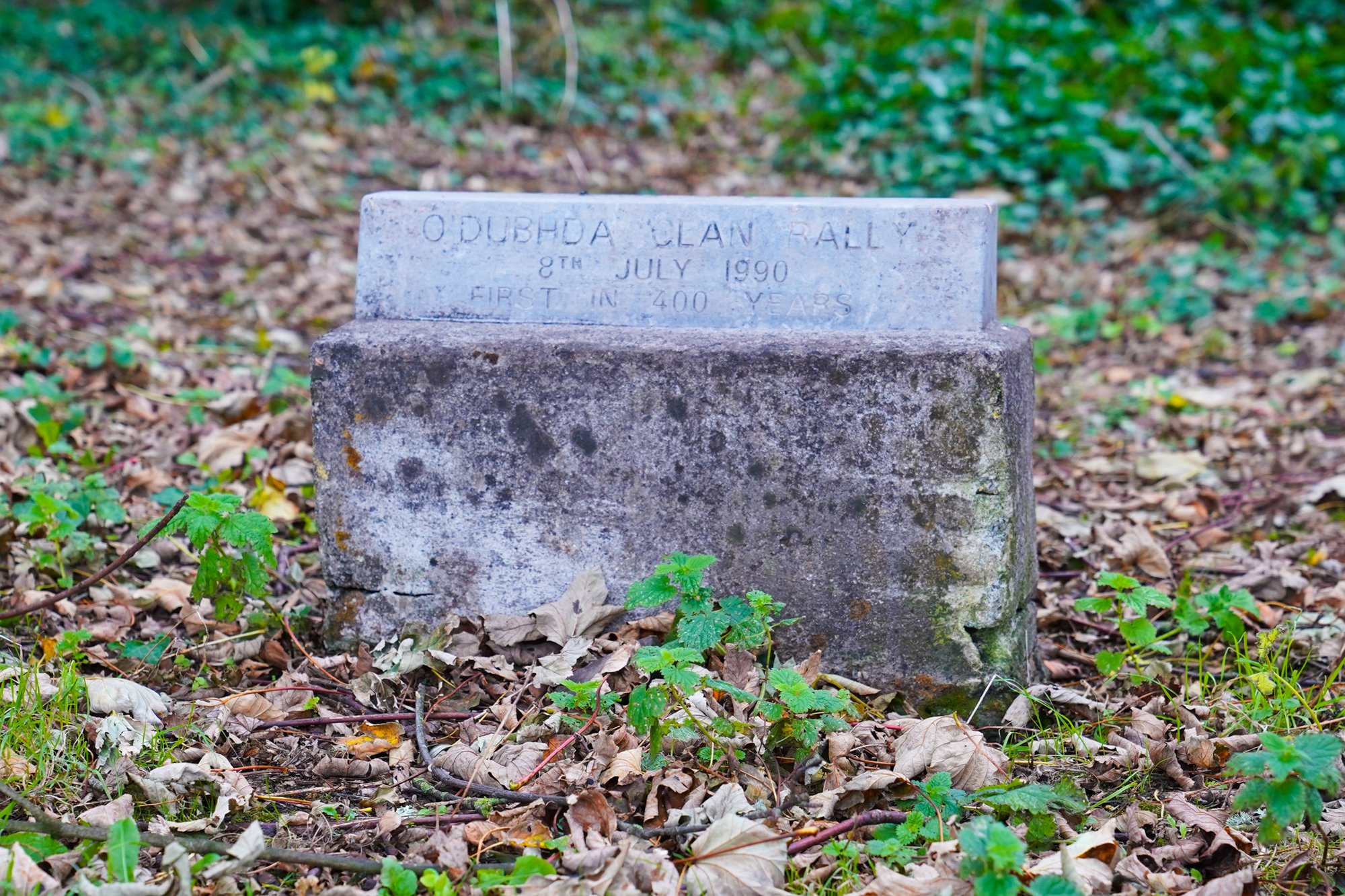
After the Indenture the rite was dormant, but the clan was not. In 1953 the diaspora came home to Inniscrone for the first modern Clan Rally. In 1990 a rowan was planted at the castle — the first echo of the old rite in living memory.
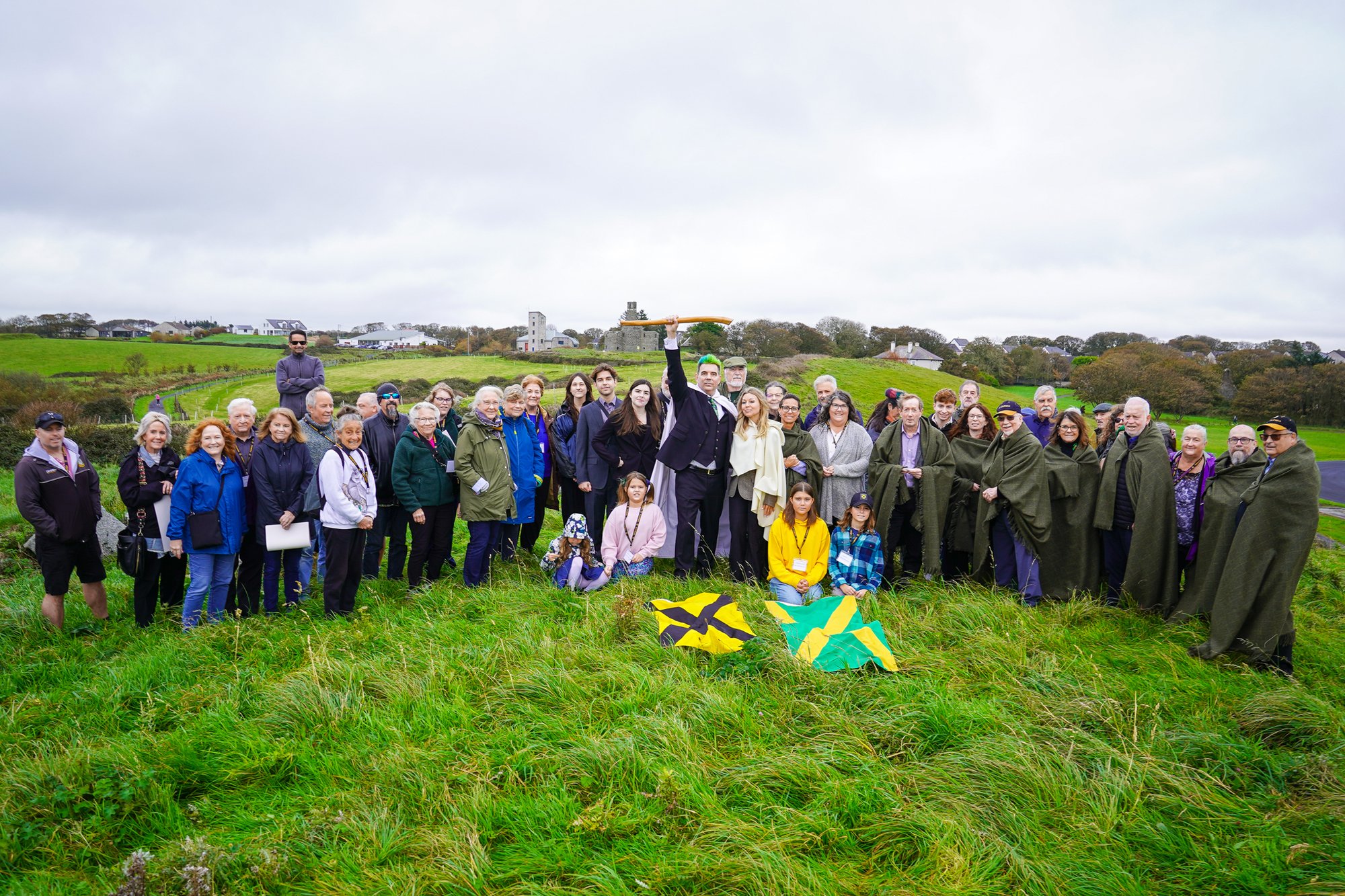
From 2000 onward the Rallies began installing modern Taoisigh again. Between the inauguration of Tom Dowds in 2000 and Sean O’Dowda Stephens in 2025, nine Taoisigh have been elected by the assembled clan — the living chain that carries the old line into the present.

Sean O’Dowda Stephens
the ninth modern Taoiseach
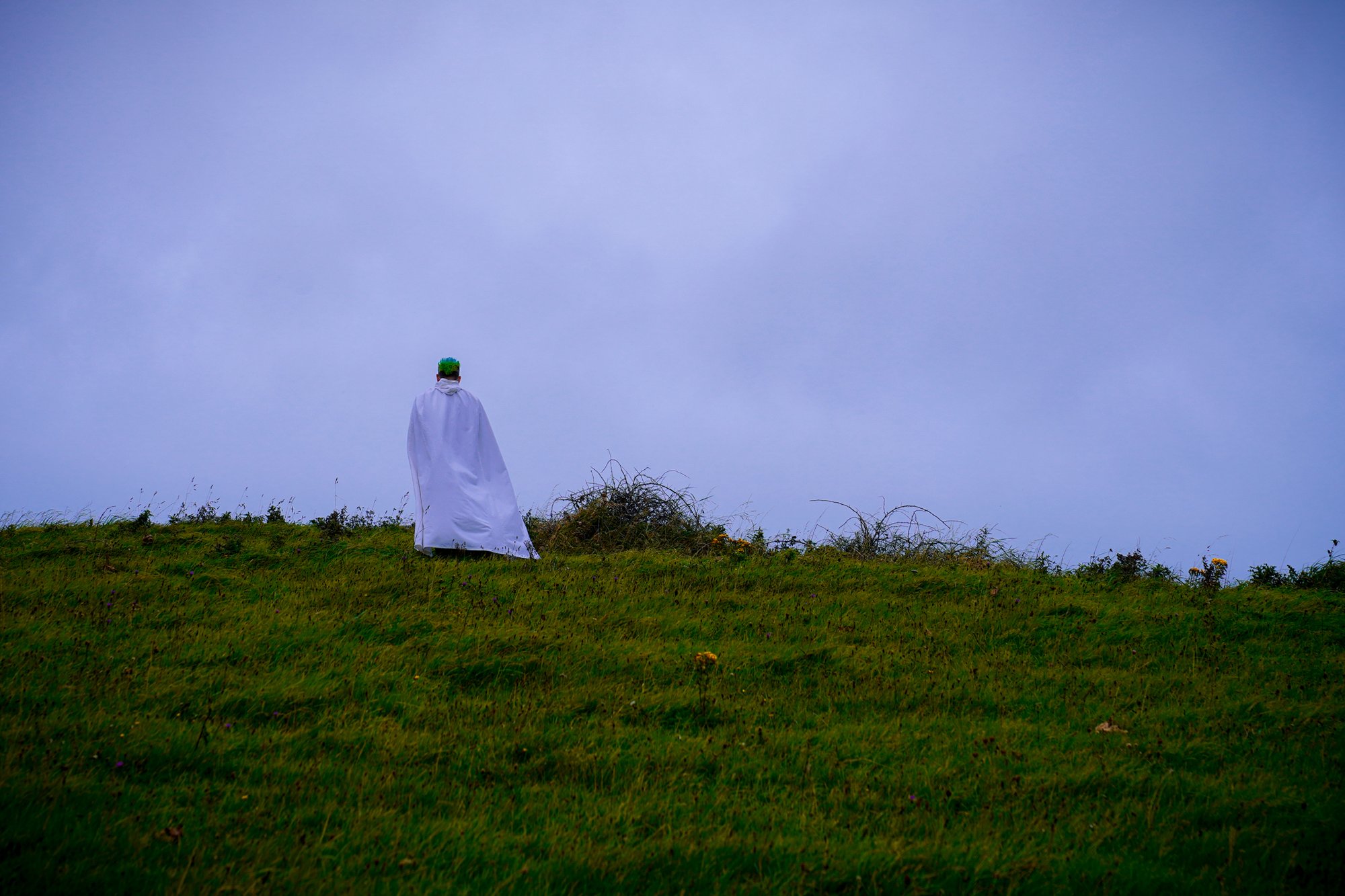
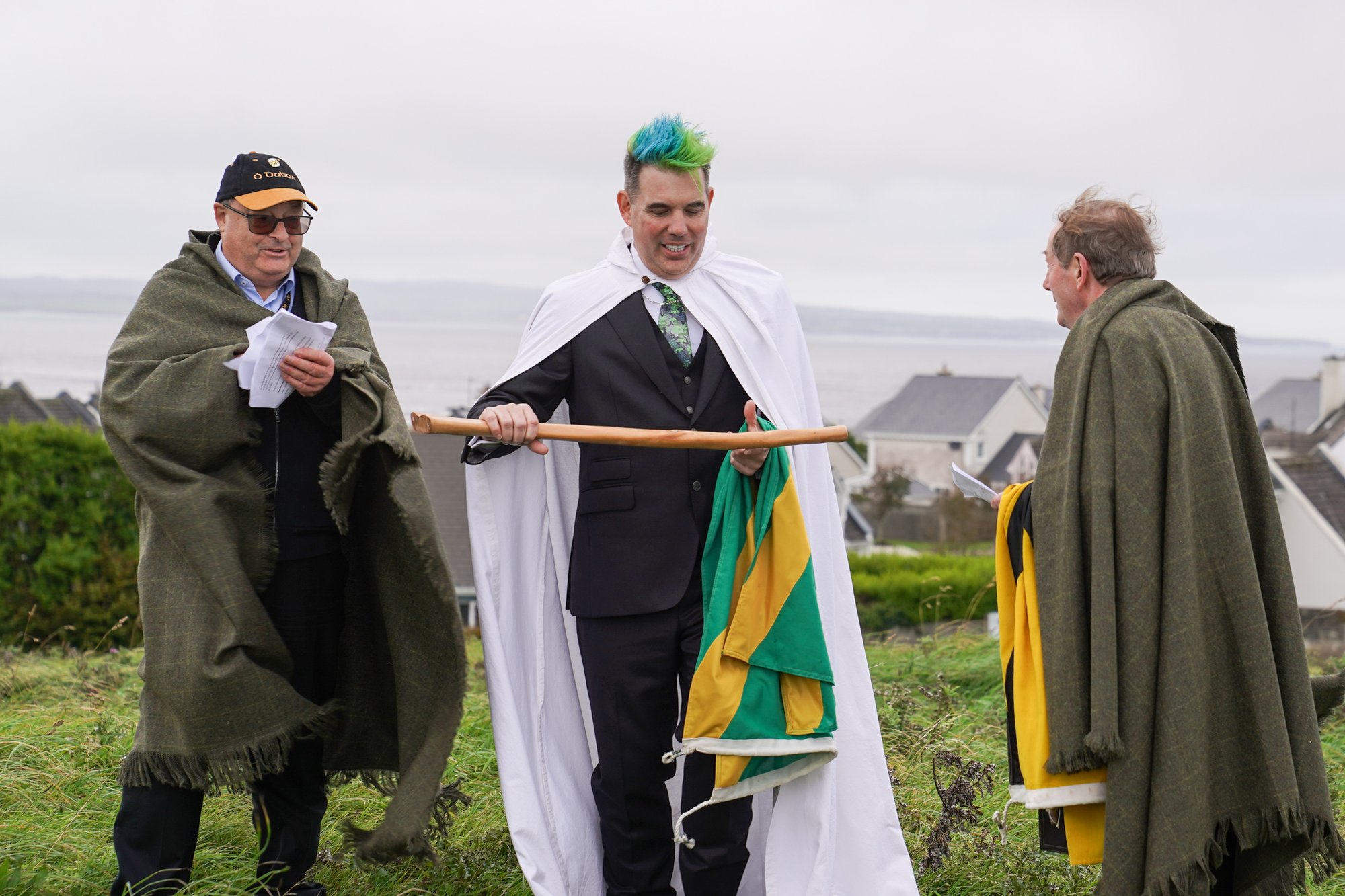
On a grey October morning at the Enniscrone mound in Castle Field, Sean O’Dowda Stephens was inaugurated Taoiseach of the clan — the first inauguration on the old ground in 440 years, and the ninth of the renewed line.
A young rowan — the caorthann of Tóraíocht Dhiarmada agus Gráinne — was planted at the rite, echoing the ancient Rowan of Dubhros Uí bhFiachrach. Tradition is not a monument; it is something that still takes root.
Continue Exploring
The mounds, the river, the hereditary seats.
The ceremonial landscape of the Ó Dubhda is still on the land, still walkable, and still recording the oldest of our lineages. Come and see it.
A Note from the Clan
These pages are volunteer-authored. We’ve tried to ground every claim in the historical record — the Great Book of Lecan, O’Donovan’s Hy-Fiachrach, FitzPatrick’s study of inauguration landscapes — but a rite that ran for eight centuries is carried as much in family memory as in manuscript, and family memory isn’t always tidy.
If you hold a photograph from a rally, a record from the 1990 rowan planting, or a story from your own family bearing on the rite, we’d love to hear from you — get in touch.