Templehouse Manor
May 2, 2026 2026-06-08 15:49Templehouse Manor
Templehouse Manor
A neighbour’s story — Knights Templar, Knights Hospitaller, an O’Hara castle, and an unbroken Perceval line
Templehouse Manor is not an Ó Dubhda castle. The present house and the ruin beside its lake stand in the barony of Leyny, civil parish of Kilvarnet, a short ride south of Ballymote in County Sligo — inland country that lay outside the Uí Fiachrach Muaidhe heartland of Tireragh, and historically within the lordship of the O’Haras of Leyny. We record it here as a sister story: the same sweep of medieval dissolution, plantation and Ascendancy that reshaped our own territory passed through this landscape too, leaving stone, family and memory behind.
I. The Crusader-Knights’ Grant
The townland carries its origin in its name. logainm.ie records the Irish form as Teach an Teampla — “the house of the temple” — and preserves an eighteenth-century note: “There was one House belonging to the Knights Templars, whence it was call[ed] Tagh-Tempull, or Temple House.” A nineteenth-century topographical source adds that the site was “founded for Knights Templars in the reign of Henry the 3d.” That reign began in 1216, the date consistently given by the present estate’s records for the Templar grant.
The Templars, a crusading military order, built a rectangular, keepless stone castle on the lake shore. The Perceval family’s own tradition places this foundation as early as 1181 — a generation before the documented grant — though we note that the earlier date is not corroborated by a contemporary medieval source and may be family memory rather than a dated construction.
When the Templar order was suppressed by Pope Clement V’s bull Vox in excelso on 22 March 1312 — the Irish arrests having begun in February 1308 — Templehouse passed, with much other Templar property across Christendom, to the Knights Hospitaller (the Order of the Hospital of Saint John of Jerusalem). Hospitaller building is said to survive in the vaulted chambers of the oldest stonework.
II. The O’Hara Castle, c.1360
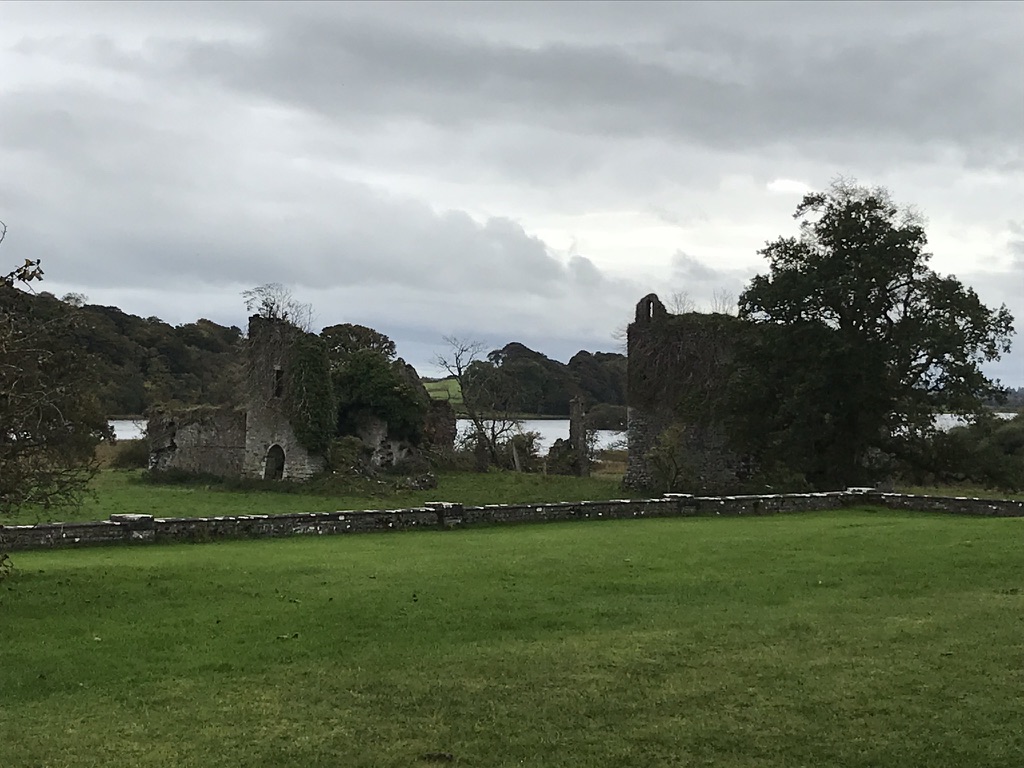
As English crown power waned in the remote west during the fourteenth century, the Hospitallers leased the property to local Gaelic lords — successively the MacDonaghs of Corran (the adjacent barony to the east) and the O’Haras of Leyny. The O’Haras, the principal native sept of the barony in which Templehouse stands, reoccupied the site and are credited with building a new castle beside the lake around 1360. The ivy-covered ruin visitors see today is most likely this O’Hara structure, not the Templar original.
Templehouse’s own Extended History preserves a further tradition: that an O’Hara may have been among the knights who received the Templar grant in the first place — a neat, if unprovable, loop. For the next two and a half centuries the site remained in Gaelic hands under Hospitaller nominal title, a pattern common across the late medieval west.
III. From Castle to Domestic House, 1627–1665
The castle was converted to a domestic residence in 1627, part of the widespread early-Stuart adaptation of tower houses to civilian use. In the rebellion of 1641 it was besieged and badly damaged.
Under the Cromwellian and Restoration redistributions that followed, Templehouse was acquired by the Perceval family, an English gentry line. The Percevals trace themselves to a Norman companion of William the Conqueror; a sixteenth-century Perceval was granted Irish land for service to Elizabeth I. George Perceval married Mary Crofton, heiress to the Templehouse lands, in 1665 — the date the family has always given. (The Landed Estates Database at the University of Galway dates the marriage slightly later, c.1669.) Either way, the continuity is unusual: the family is still there in 2026.
This is a Planter succession, not a Gaelic inheritance. The Percevals settled on land that had passed from the O’Haras through plantation and forfeiture. No Ó Dubhda hand touches this transfer.
IV. The Georgian and Victorian House
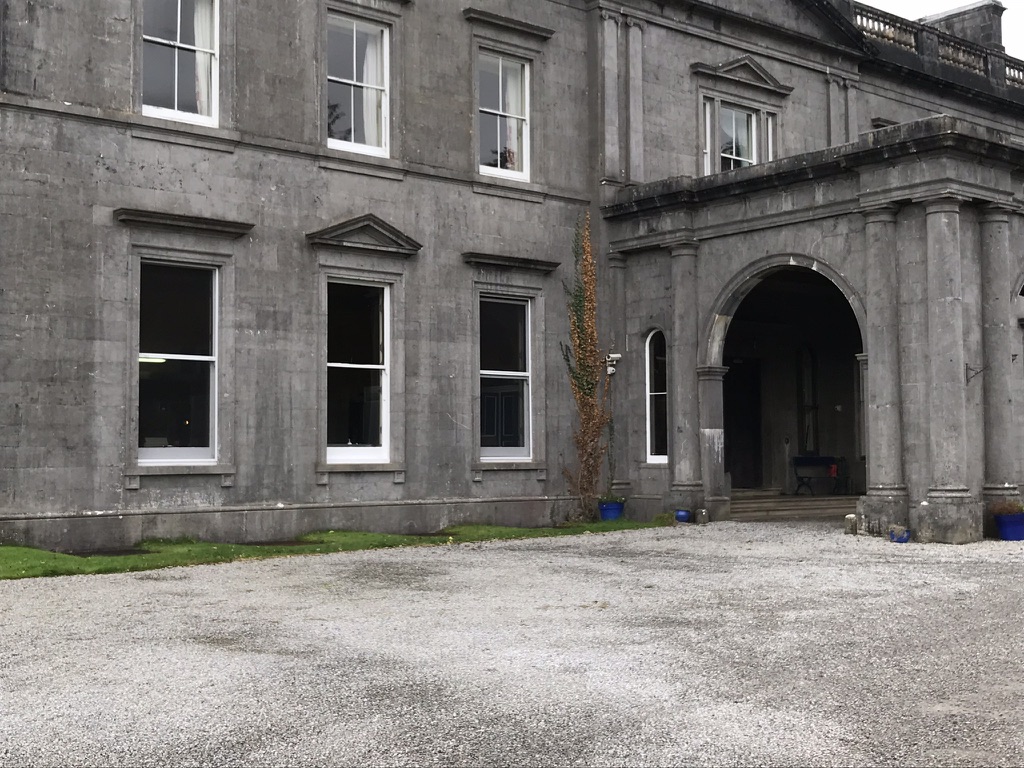
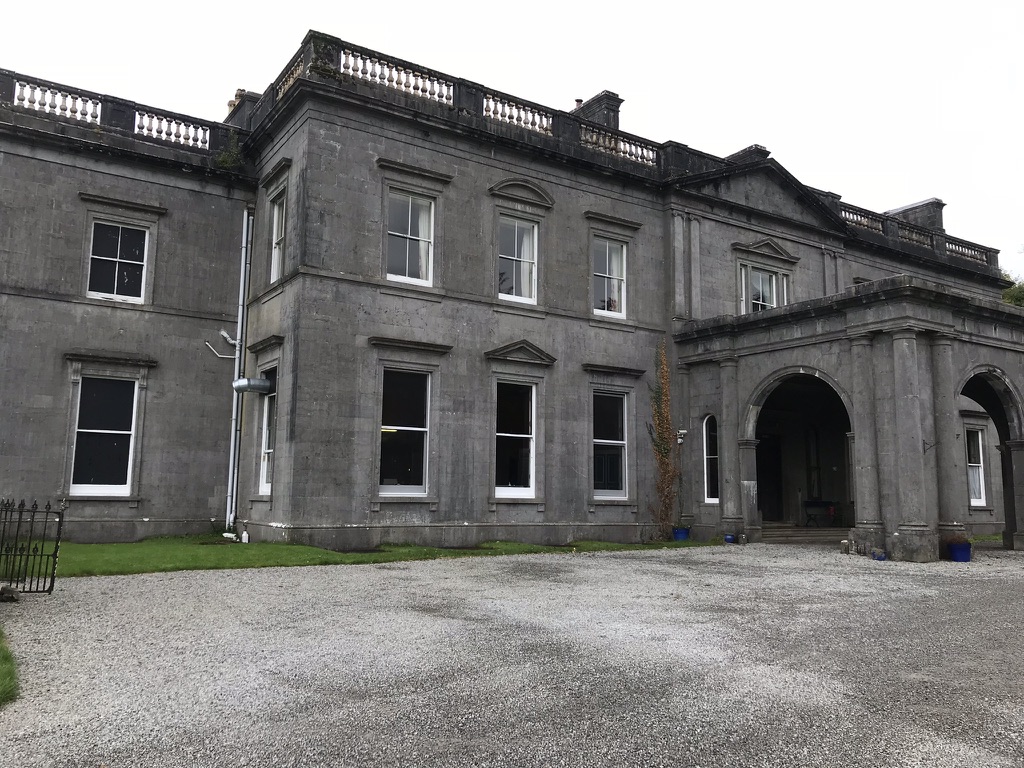
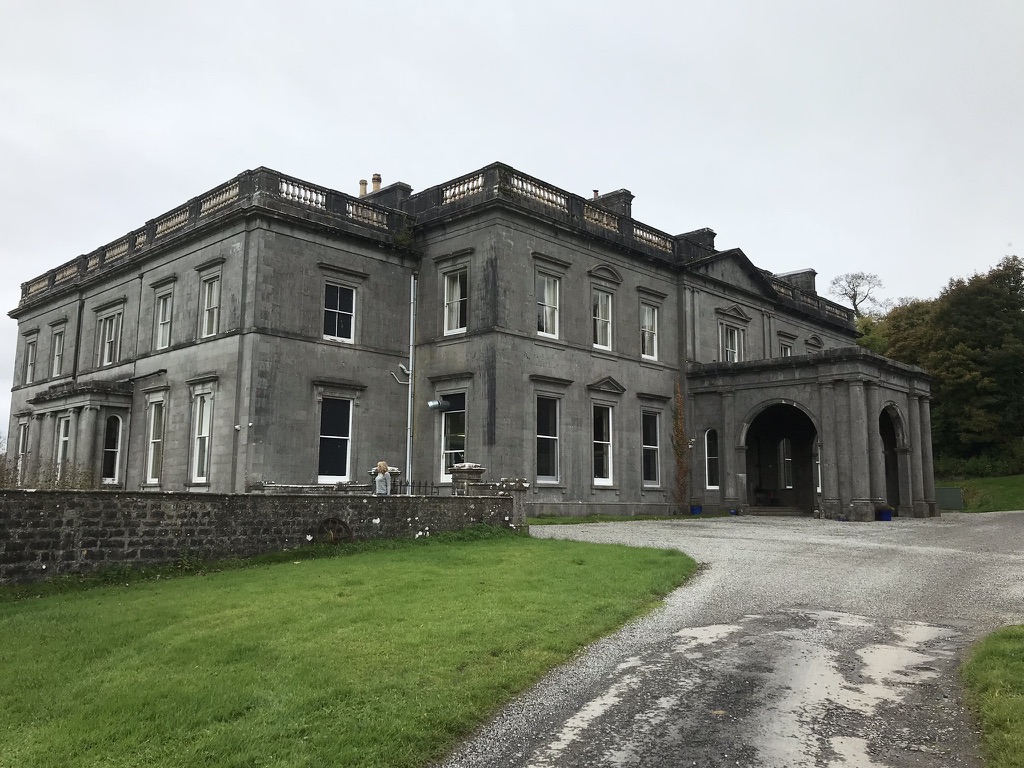
The Percevals occupied the adapted castle for almost a century before building a separate new house nearby around 1760. A generation later, Colonel Alexander Perceval (1787–1858) — Member of Parliament for County Sligo from 1831 to 1841, and Sergeant-at-Arms of the House of Lords — commissioned the architect John Lynn of Sligo to design the three-storey, five-bay Georgian house that stands today. Lynn’s drawings were completed and the house built c.1820–1825, replacing an earlier Gothic house on or near the same footprint.
A sober note from the famine years: Jane Perceval, wife of Colonel Alexander, died of famine fever in 1847 while assisting tenants. The family has kept this memory.
After Colonel Alexander’s death in 1858, inheritance taxes and reduced post-famine rents forced the estate’s temporary sale to the Hall-Dare family. His third son, also Alexander Perceval, returned from a mercantile career in the Far East with sufficient fortune to buy Templehouse back and, around 1864, to triple the house in size — adding a seven-bay block at right angles to Lynn’s original, with cut-stone façades, creating the combined Georgian-Victorian mass visitors see today.
V. The Estate Today
Templehouse is still in Perceval hands — now stewarded by Roderick and Helena Perceval — and operates as a private country guest house on approximately 1,000 acres, overlooking a lake and the lakeside ruins of the medieval castle. The Congested Districts Board acquired over 3,200 acres of the former estate in the early twentieth century and redistributed much of it to local tenants; the house and the land immediately around it remained with the family. Access today is by booking only; the castle ruins are viewable by guests and by arrangement.
VI. Why Templehouse Is On This Site
We include Templehouse on our Homelands pages as one of five Estates & Historic Houses — later big houses of allied, Cromwellian, or Ascendancy families that sit within or adjacent to the older Ó Dubhda territory. None of the five is a direct Ó Dubhda castle. Templehouse, specifically, is in O’Hara country and passed through Templar, Hospitaller, Gaelic and Planter hands without ever being ours.
What the site shares with our own story is its shape: a Gaelic lordship, a crown dissolution, a plantation family, and, in the end, a building and a lineage that survive. For visitors following the Ó Dubhda trail through Sligo, Templehouse is worth an afternoon.
Sources
- Landed Estates Database (University of Galway): Temple House and the Perceval estate record
- logainm.ie: Teach an Teampla / Templehouse Demesne — the authoritative Irish placename record, including the 18th-century Tagh-Tempull etymology
- Temple House official site: History and Extended History
- Lavender’s Blue magazine: The Percevals + Temple House Ballymote Sligo — John Lynn attribution and 1864 expansion detail
- Wikipedia: Temple House Manor and Castle
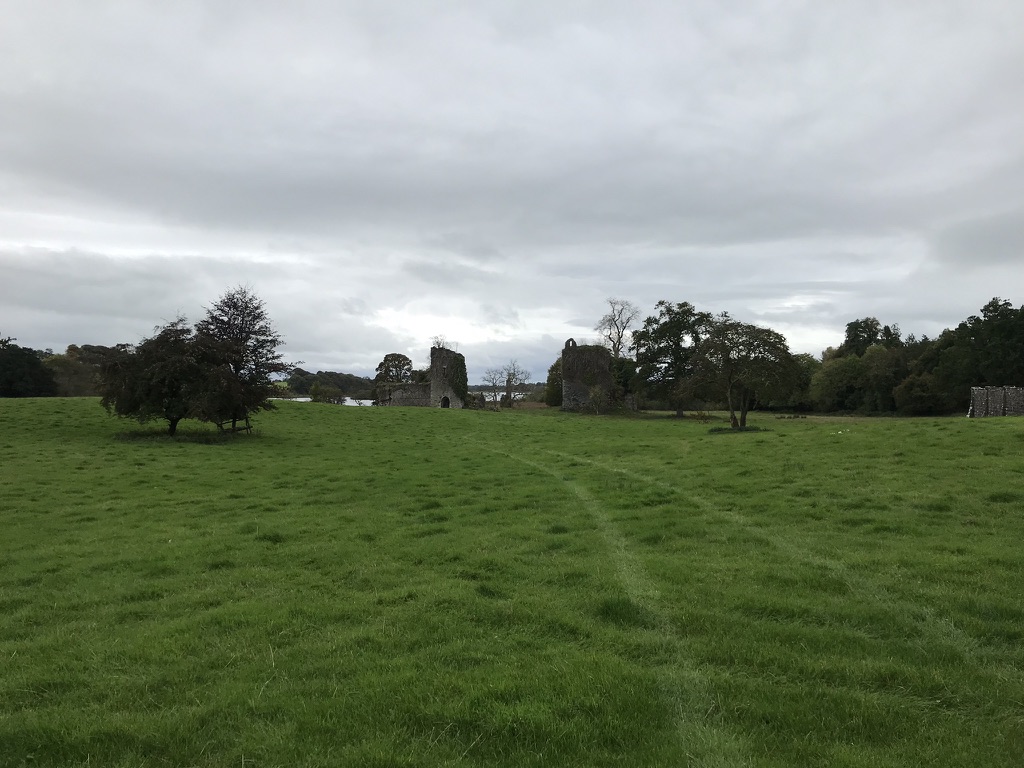
Templehouse Manor — Templehouse Demesne, near Ballinacarrow, south of Ballymote
Templehouse Manor
Teach an Teampla — “the house of the temple”
Templehouse Demesne townland
Civil parish of Kilvarnet
Barony of Leyny, Co. Sligo
Near Ballinacarrow, 3km south of Ballymote
54°06′48.8″N, 8°35′07.9″W
Three-storey Georgian country house (1820–25) extended to Victorian scale (1864), set above the ruin of a medieval castle beside the lake
1216 — Templar grant (reign of Henry III)
1312 — Templars suppressed; passes to Hospitallers
c.1360 — O’Haras build new lake-side castle (present ruin)
1627 — castle converted to domestic residence
1641 — besieged and damaged
1665 — Perceval marriage to Crofton heiress
c.1820–25 — present house built (John Lynn, architect)
1864 — house tripled in size
John Lynn of Sligo (1820–25 house)
Expansion of 1864: architect not securely attributed
Perceval — at Templehouse 1665 to present (with a brief mid-19thc interruption, sold to the Hall-Dare family and bought back). Currently stewarded by Roderick and Helena Perceval.
Private country guest house on c.1,000 acres. Access by booking only; castle ruins viewable by guests and by arrangement with the family.
Not an Ó Dubhda site. Templehouse lies in Leyny, historically O’Hara country, outside the Uí Fiachrach Muaidhe heartland of Tireragh. Included on the site as one of five Estates & Historic Houses — sister stories of medieval Gaelic lordship, plantation and Ascendancy in the wider Sligo-Mayo landscape.
The ivy-covered ruin at the lake is most likely the O’Hara castle of c.1360, built on the older Templar-Hospitaller site — not the Templar castle itself. Vaulted stonework attributed to the Hospitallers survives within.
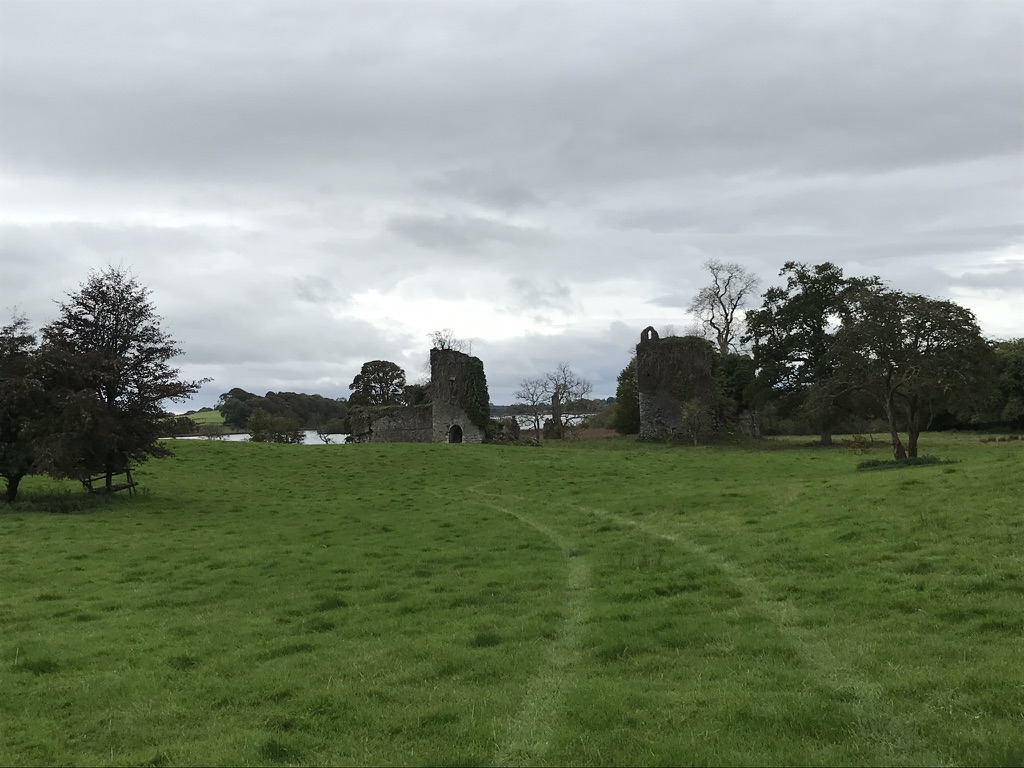
A Note from the Clan
This page is written and maintained by volunteers of the Ó Dubhda Clan. Templehouse is included here as a neighbouring site, not a clan property — and that distinction matters to us. If you are a Perceval family member, a local historian, or someone who has worked on the estate records and we have got a detail wrong, we want to hear from you.
Please tell us and we will correct it.
From the Clan
Photographs of Templehouse Manor submitted by clan members.