
Belleek Castle
May 2, 2026 2026-05-07 2:24Belleek Castle
Belleek Castle
Belleek Castle
A Tudor-Gothic manor at the mouth of the flagstones — in Ó Dubhda country, but not an Ó Dubhda house.
Belleek Castle stands on the east bank of the River Moy, two kilometres north of Ballina, within the wooded townland of Garrankeel. It is a nineteenth-century country house, not a Gaelic fortification, and its story is the story of a Restoration-era settler line raising a Tudor-Gothic pile on lands once held by the Ó Dubhda. The romantic name Belleek Castle is a twentieth-century rebranding; the building was first known to its architects and to the National Inventory as Belleek Abbey (NIAH 31303017). Before the manor was raised, local tradition speaks of a medieval tower house at the river ford, but no archaeological record confirms it.
I. The name
Belleek comes from Irish Béal Leice, ‘mouth of the flagstones’ (logainm 34192) — a name for the ancient crossing of the Moy that predates the town of Ballina itself. The townland lies in the civil parish of Kilmoremoy (Cill Mhór Mhuaidhe, ‘great church of the Moy’) and the barony of Tirawley — the northern wing of Uí Fiachrach Muaidhe, the historical Ó Dubhda kingdom. The parish church referred to in the placename stood at Leigue, west of the river, and not on the Belleek estate itself; the Ordnance Survey Parish Namebooks of 1836 describe it as ‘a large burying place and old church W. of Ballina and River Moy’. The tradition of a Patrician foundation attaches to Leigue, not to these grounds.
II. The Knox-Gore estate
The present house was raised between 1825 and 1831 for Lieutenant-Colonel Francis Arthur Knox-Gore (1803–1873), who had inherited the Belleek estate in 1818 at the age of fifteen and built the manor after his marriage to Sarah Nesbit Knox of Castle Lacken. The Knox-Gores traced back through the Gore Earls of Arran, whose Mayo lands were confirmed under the Restoration land settlement — the estate, like many in the west, was a post-Cromwellian settler holding, not a continuation of Gaelic tenure. Francis Arthur served as Lord Lieutenant of County Sligo from 1831 to 1868 and was created 1st Baronet of Belleek Manor in 1868. The family is recorded in the 1870s as holding roughly 22,000 acres in County Mayo (Landed Estates Database; Lord Belmont, 2016).
III. The building
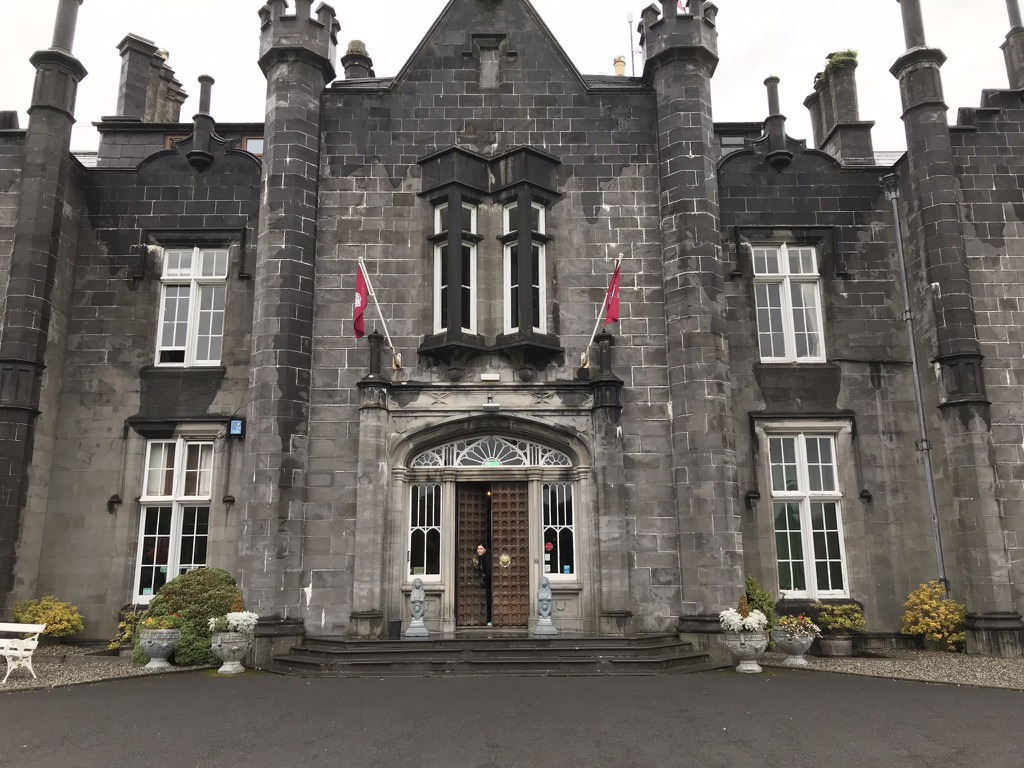
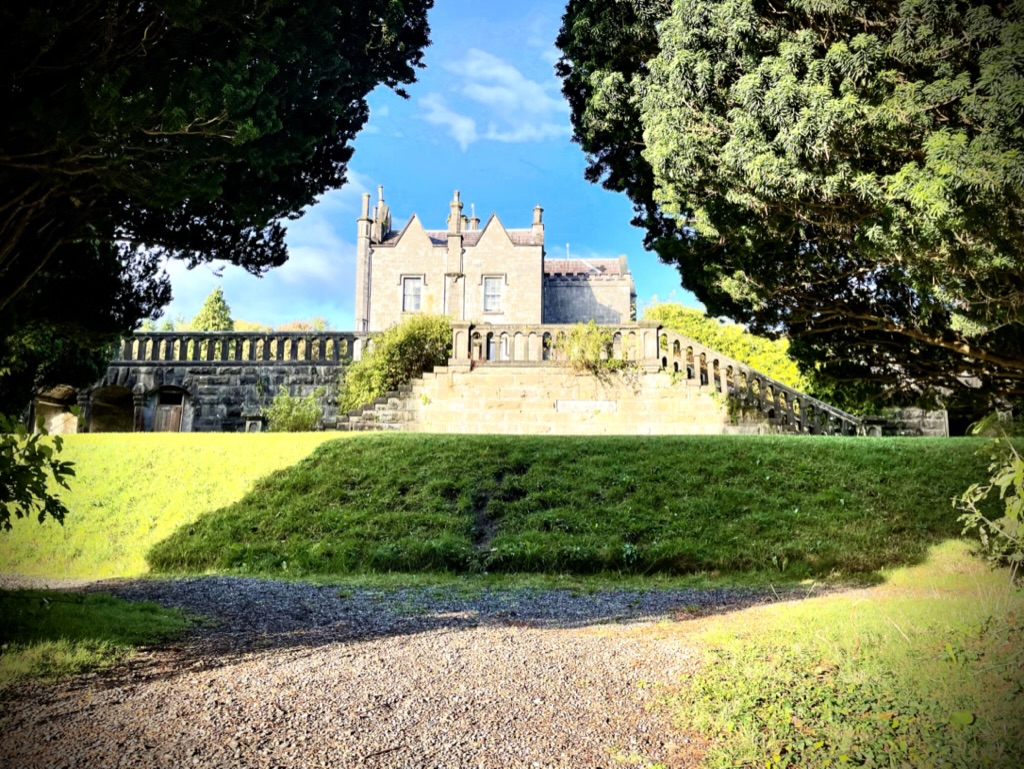
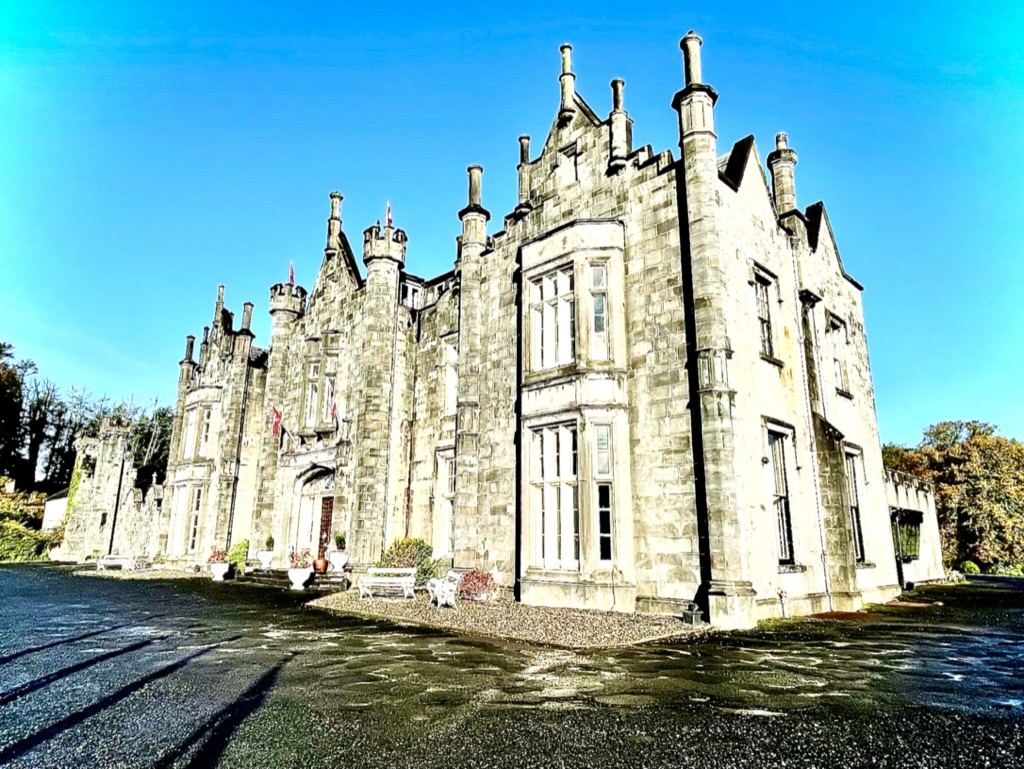
Belleek is a five-bay, two-storey-over-basement Tudor-Gothic country house in limestone ashlar, with a symmetrical front of three stepped gables flanked by slender polygonal battlemented turrets. It was begun in 1825, completed in 1831, and is recorded as having cost £10,000 (Archiseek). The design has traditionally been attributed to the Dublin architect John Benjamin Keane (d. 1859) of Mabbot Street. The National Inventory of Architectural Heritage, however, notes strong stylistic comparison with the contemporary Coolbawn House in County Wexford (1823–39) and describes Frederick Darley Junior (1798–1872) as ‘an equally likely design source’. The attribution remains open.
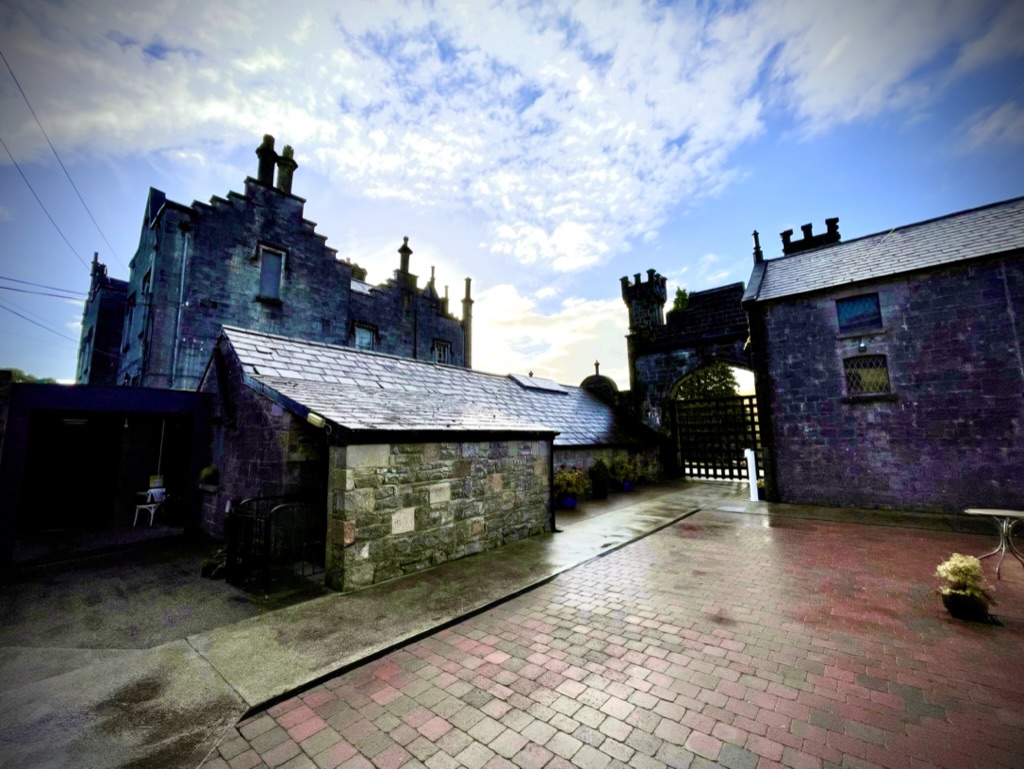
Later nineteenth-century additions on the estate include a cut-stone mausoleum for Francis Arthur Knox-Gore, set within a waterless moat in the woods, and a stone monument nearby; a gate tower and entrance archway from the 1870s are locally attributed to the Dublin architect James Franklin Fuller. The manor house, the mausoleum and the entrance archway are all entered on the Mayo County Council Record of Protected Structures.
IV. The Ó Dubhda connection — an honest statement
Belleek Castle is not an Ó Dubhda house, and we do not claim it as one. No written record places the family at this site; no archaeological evidence has been published for the thirteenth-century tower house reputed to have preceded the manor; and the house itself is the work of a Restoration-era settler line raising a Tudor-Gothic conceit in the 1820s.
What is true is that the estate lies in the heart of historical Ó Dubhda territory — the barony of Tirawley, northern wing of Uí Fiachrach Muaidhe — and that the foundations at Ardnaree, roughly two kilometres to the south on the same bank of the Moy, do belong to the clan. The Augustinian friary at Ardnaree was founded around 1427 by Tadhg Riabhach Ó Dubhda, king of Uí Fiachrach Muaidhe from 1417 until his death in 1432, and is treated elsewhere on this site. Readers who have seen claims that the Belleek grounds themselves once held an Ó Dubhda abbey should know that these appear to conflate Ardnaree’s genuine Ó Dubhda foundation with the Gothic-Revival name Belleek Abbey that the nineteenth-century owners gave to their new-built manor.
V. From estate to hotel
The Knox-Gore family left Belleek in 1942. The house passed through several hands, serving for a time as a hospital in the mid-twentieth century (NIAH), before being bought in 1961 by Marshall Doran, a retired merchant navy officer and antiquarian. Doran restored the building largely with his own hands, assisted by John Mullen, and reopened it as a hotel in 1970. It is run today by his son Paul Doran and Maya Nikolaeva.
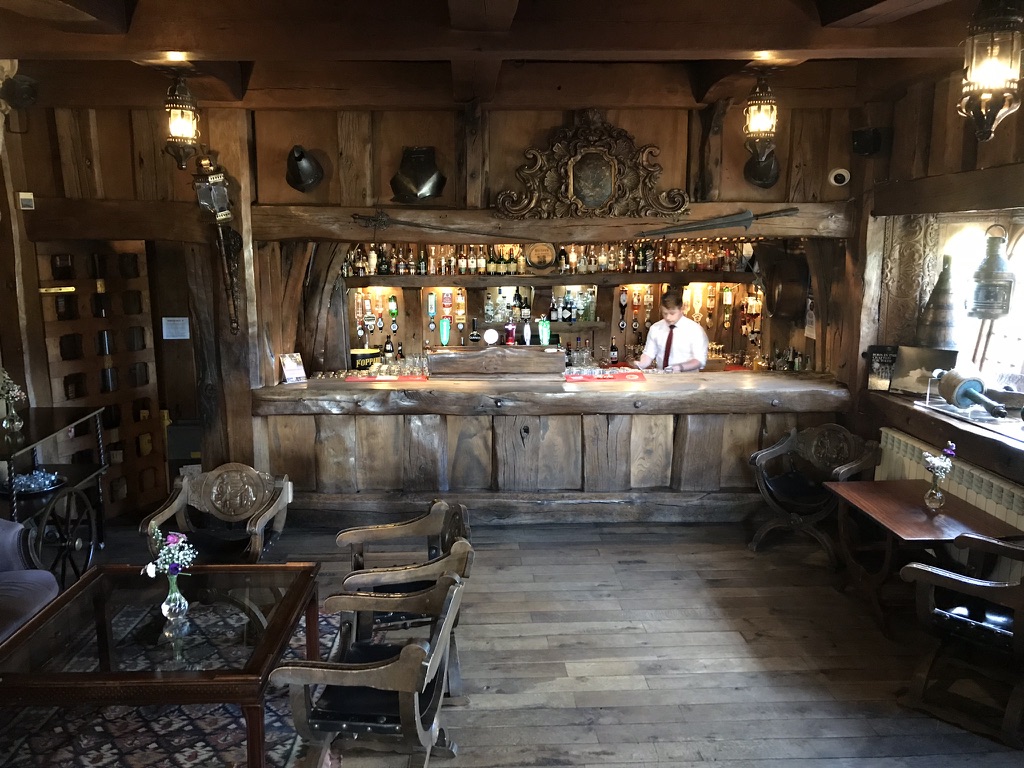
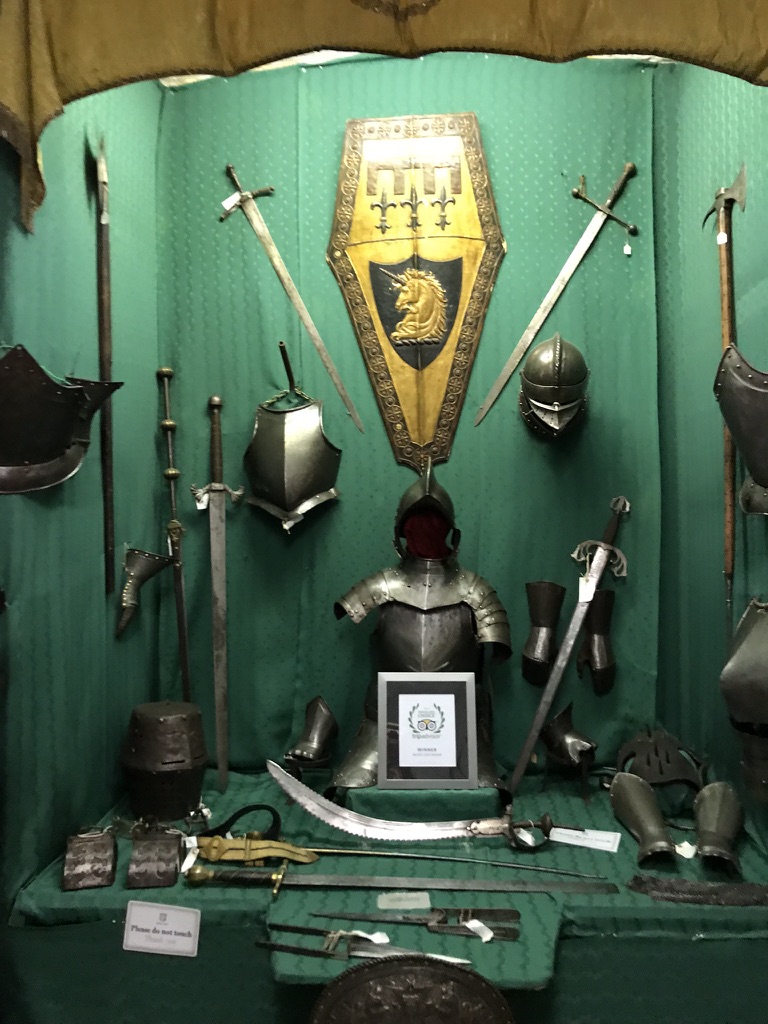
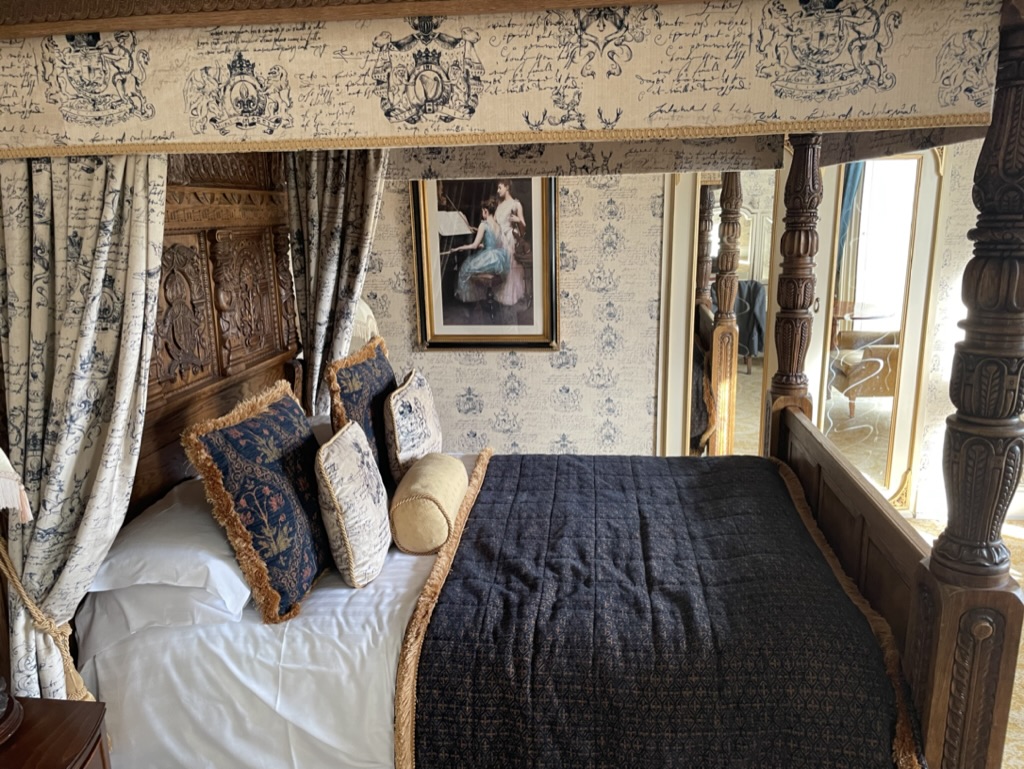
The hotel houses the Marshall Doran Collection — a private museum of medieval arms, armour and fossils, together with a four-poster bed traditionally identified as Grace O’Malley’s — and the Armada Bar, which the hotel reports was partly constructed from seventeenth-century oak timbers recovered from a Spanish Armada wreck off the Mayo coast. These attributions are the hotel’s own, and we repeat them here as its stated tradition rather than as independently verified fact.
VI. Visiting
Belleek Castle operates as a hotel and museum at Garrankeel, Ballina, Co. Mayo. Guided tours of the museum and the restored reception rooms are offered at scheduled times during the year; check belleekcastle.com for current availability. The adjoining Belleek Woods and riverside walks are publicly accessible.
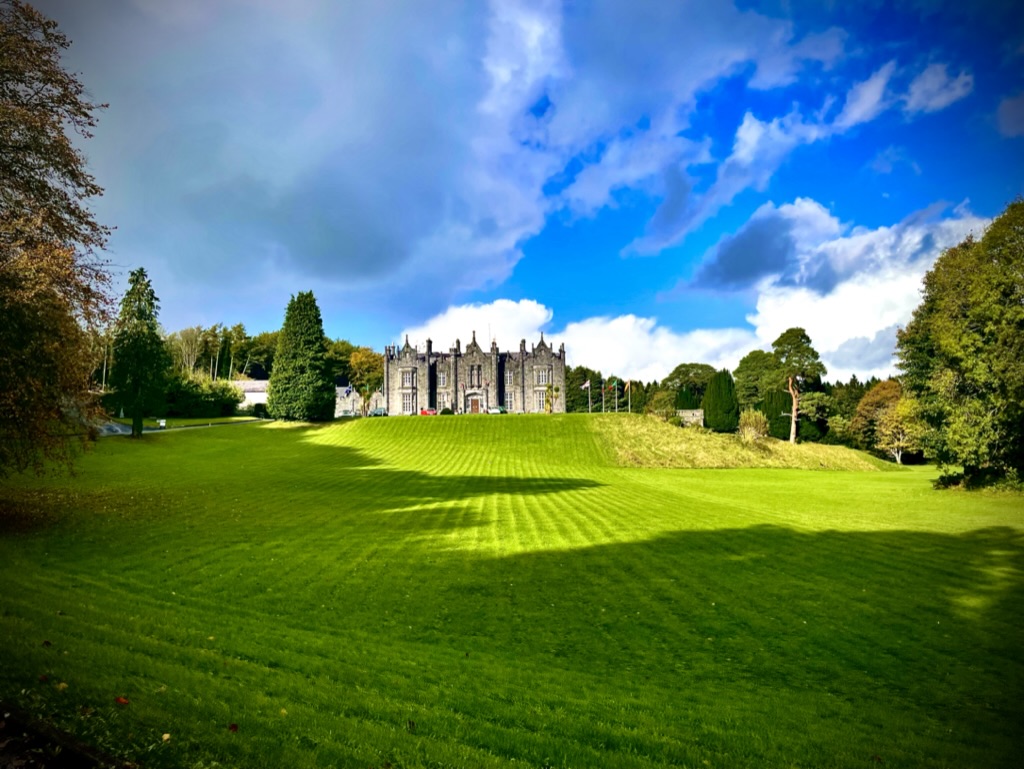
Belleek Castle — east bank of the Moy, 2 km north of Ballina.
Belleek Castle
Belleek Abbey (19th–c.) · Garrankeel, Ballina, Co. Mayo · F26 KV04
54.1333°N, 9.1455°W
Townland of Garrankeel, parish of Kilmoremoy, barony of Tirawley
East bank of the River Moy, c. 2 km north of Ballina
Tudor-Gothic country house in limestone ashlar
Five-bay, two-storey over basement
Begun 1825, completed 1831
Cost £10,000
Gate tower & archway 1870s
Traditionally John B. Keane (d. 1859)
Possibly Frederick Darley Jr. (NIAH)
Gate tower attrib. James Franklin Fuller
Knox-Gore (through Gore Earls of Arran), 1820s–1942
Then Beckett family, Mayo County Council, and others
Doran family, 1961–present
Hotel, private museum & wedding venue
The Marshall Doran Collection — medieval arms, armour, fossils
Armada Bar, Library Restaurant
Museum tours by schedule — check belleekcastle.com
Belleek Woods & riverside walks freely accessible
Distinct from Belleek, Co. Fermanagh (pottery)
Not an Ó Dubhda house. Built by a Restoration-era settler line on lands once held by the clan, in the barony of Tirawley. The nearby Augustinian friary at Ardnaree (c. 1427), roughly 2 km south, is the genuine local Ó Dubhda foundation — treated on its own page.
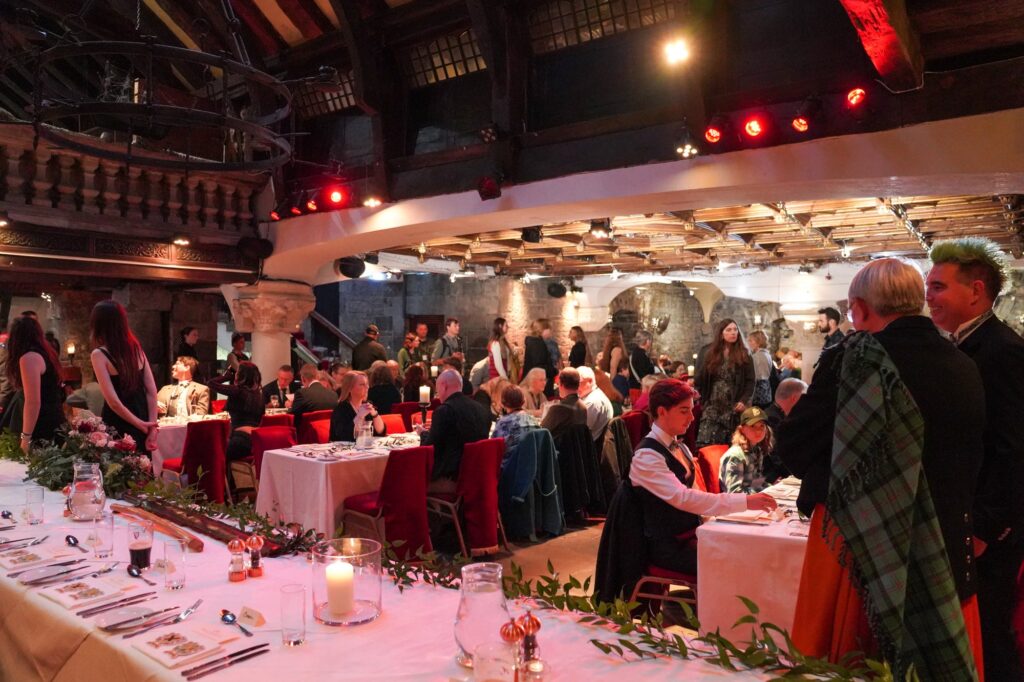
From the Clan
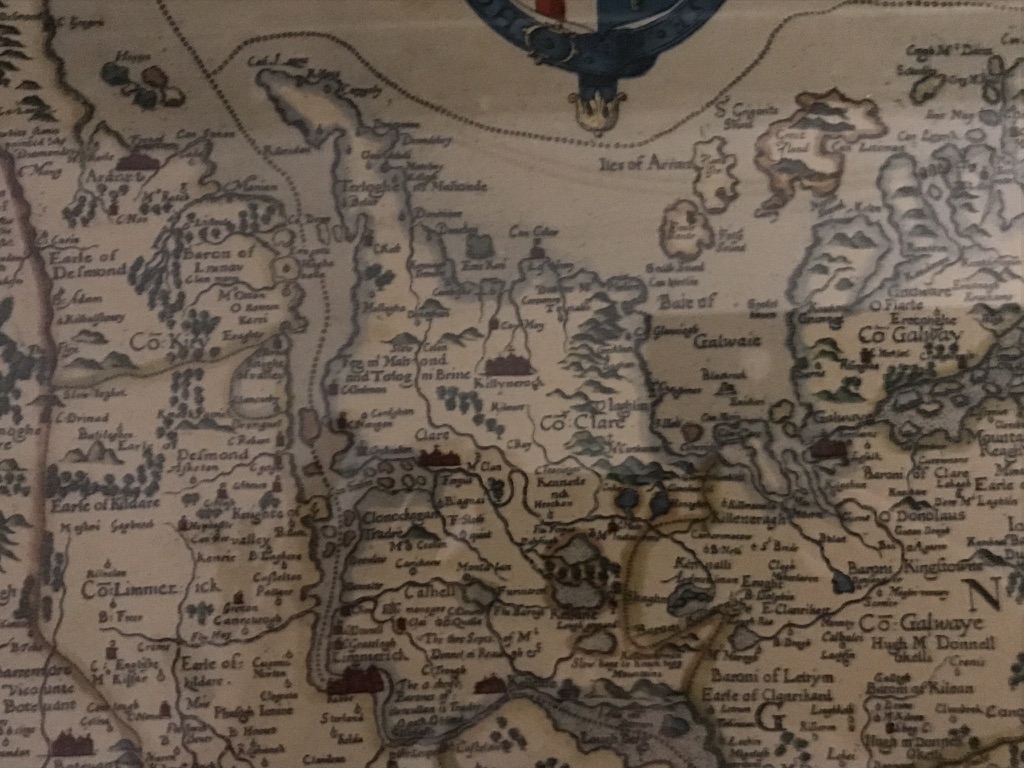
Photographs of Belleek Castle submitted by clan members.
A Note from the Clan
This page is volunteer-authored and assembled from published primary sources — the Landed Estates Database, the NIAH survey, Lewis's Topographical Dictionary, Bence-Jones's Guide to Irish Country Houses, and the current owners' own material. Belleek is a nineteenth-century country house, not a Gaelic castle, and we have tried to present its Knox, Knox-Gore, and later ownership clearly.
If you can correct a date, add an architect's drawing, supply a family photograph, or point us to a better source, please get in touch. Every correction sharpens the record.