
Mount Falcon
May 2, 2026 2026-10-14 21:51Mount Falcon
Mount Falcon
A late-Victorian country house on the Moy — in the barony of Tirawley, within the historic territory of the Ó Dubhda.
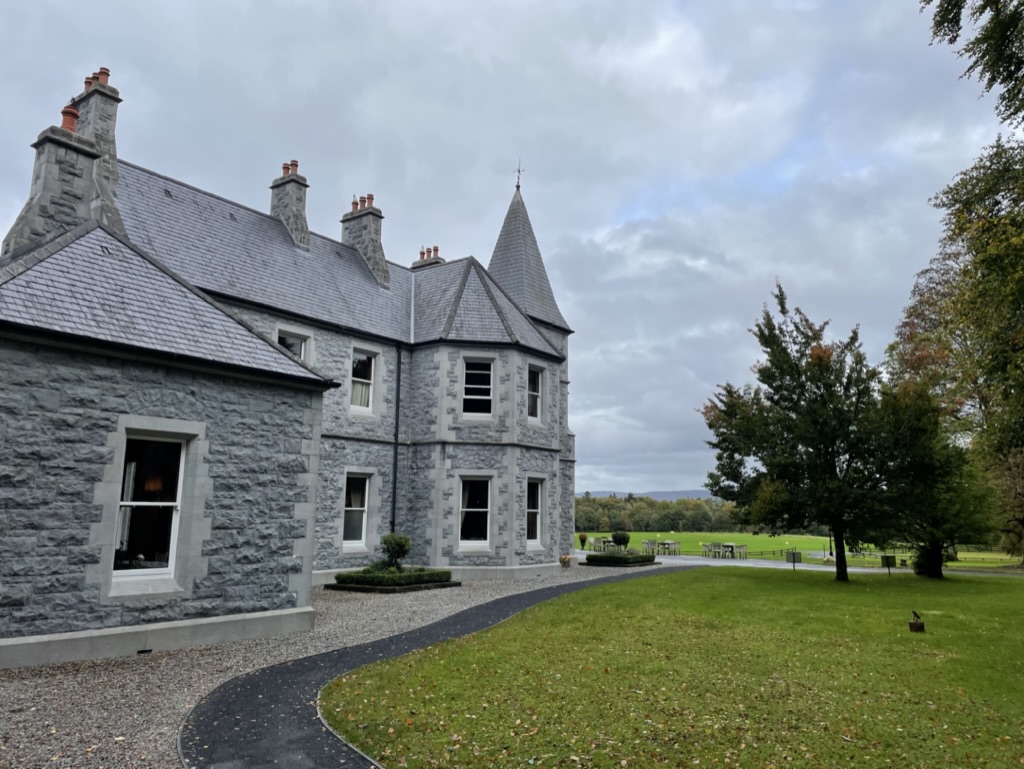
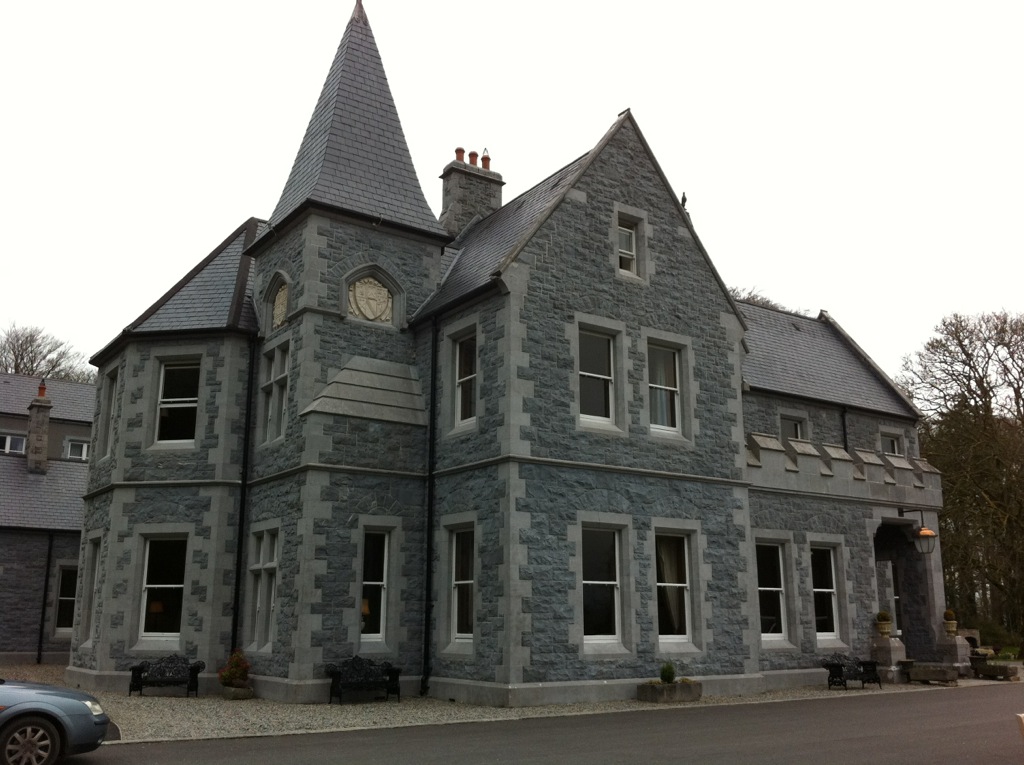
Mount Falcon stands on the west bank of the River Moy, between Foxford and Ballina in the townland of Drumrevagh. Its architecture belongs to late-Victorian Ireland: a two-storey rock-faced limestone house of 1871–1876 by the Dublin architect James Franklin Fuller, commissioned by Utred Augustus Knox for his Knox-Gore bride. It is not an Ó Dubhda house. The land came into Protestant hands through the seventeenth-century land settlements, and the Knoxes bought in to the Mayo estate in the 1820s. We include Mount Falcon here because it sits squarely in former Ó Dubhda ground, and because telling that story honestly is part of our remit.
I. Setting
The demesne lies in Drumrevagh townland, parish of Ballynahaglish, barony of Tirawley, on the west bank of the Moy roughly halfway between Ballina and Foxford (Landed Estates Database, est. 295). The house today forms the core of the Mount Falcon Estate hotel; the Knoxes at their height held 2,065 acres in Mayo and a further 5,434 in Co. Sligo.
II. From the seventeenth century to the Knox purchase
The title to the land at Drumrevagh came out of the seventeenth-century land confiscations. The Landed Estates Database records that a Cromwellian soldier, Captain Edward Watts, was granted over 2,000 acres in the barony of Tirawley in 1668, and that the Knoxes later bought out his descendants; The Knox Family of Mount Falcon and Hollywood, the estate’s commissioned history by Martin J. Leonard, traces the same line. In other words: the estate came out of the Cromwellian and Restoration land settlements, and the Gaelic order that had held Tirawley for centuries — the Ó Dubhda among them — had been displaced well before any Knox or Watts arrived at Drumrevagh.
Major John Knox bought c. 2,000 acres of the Watts estate in the 1820s. His eldest son, John Frederic Knox, married Anna Maria Knox-Gore of the Belleek Manor family and built the first house on the property in 1826, known then as Hollywood House. By 1837 Lewis could list Mount Falcon, ‘that of J. F. Knox, Esq.’, as a gentleman’s seat with ‘a good race-course’ on the demesne, and the Leonard history records that John Knox maintained a soup kitchen at Hollywood House for his tenants during the Great Famine. That is the family’s own account; we pass it on as such.
III. Fuller’s house, 1871–1876
The building history that follows comes largely from Leonard’s family history and has not been checked against the original papers. John Knox died in 1871. His will left £3,000 earmarked “for a mansion house at Mount Falcon,” and the second son, Utred Augustus Knox (1825–1913), took charge of building it. The architect was James Franklin Fuller of Dublin (1835–1924) — a Kerry-born pupil of William Burges, Alfred Waterhouse and Matthew Ellison Hadfield, elected FRIBA in 1872, and one of the busiest Victorian country-house architects in Ireland. Fuller’s other major works of the period include the rebuilding of Ashford Castle for the Guinnesses (1875–1881), the renovation of Farmleigh at Castleknock (1881–1884), and Kylemore Castle in Connemara, later Kylemore Abbey (1868–1884).
The Dublin builder Henry Sharpe tendered at £5,800 and the contract was signed in October 1872 at £6,650 — the original is reported to be displayed in the estate’s Boathole Bar. The house was finished and furnished in 1876 at a total outlay of roughly £10,000, assisted by a substantial loan from Lady Sarah Knox-Gore; Utred married her daughter Agnes Frances Nina Knox-Gore in the summer of 1875.
The National Inventory of Architectural Heritage (NIAH, reg. 31303909) dates the building 1871–1880, inscribed 1876, and describes it as a Victorian country house with Gothic and Classical influences: a detached four-bay, two-storey house with dormer attic and spire-topped tower, in rock-faced limestone with sheer limestone dressings. The double-height staircase hall, encaustic tile floors and carved timber panelling survive. NIAH notes strong comparisons with Fuller’s Errew House (1872-1877), an exactly contemporary Mayo commission for another branch of the Knox family.
IV. Land reform and the end of the Knox era, 1903–1932
Under the Wyndham Land Act of 1903 and the Congested Districts Board Act of 1909, the bulk of the Knox holdings were broken up. By 1916 the Board had bought more than 1,600 acres from Utred Knox, principally in the Sligo barony of Leyny, and a further 1,900 and 900 acres from Hercules and Reginald Knox (Landed Estates DB). Captain Utred Arthur Frederic Knox returned from service with the Royal Irish Rifles after the First World War to sell all but 320 acres of the Mount Falcon demesne. A sawmill he opened in December 1921 was burnt in February 1922 during the War of Independence and was never reopened. In 1932 Captain Knox sold the house and the remaining land to Major Beauclerk Aldridge for £7,000 — a generation’s investment returned for less than Utred had spent to build the house — and moved to Cornwall, where he died in 1935.
V. The Aldridge era
Major Aldridge and his wife Constance (‘Connie’) were fishing people, drawn to Mount Falcon for its stretch of the Moy. Connie Aldridge turned the house into a guesthouse after the Second World War and ran it until 2000, when she sold it at the age of 91. Major Aldridge died in 1976; Connie in 2003.
VI. Mount Falcon today
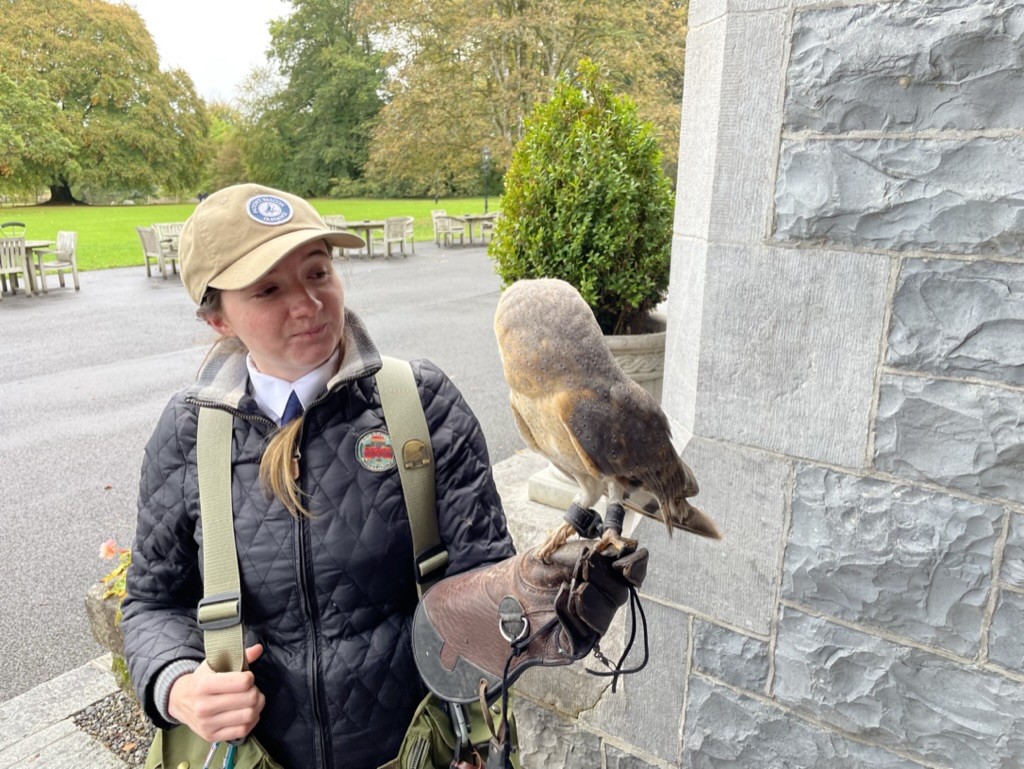
Alan Maloney and his brothers Barry and Michael bought Mount Falcon in 2002 and converted it into a country-house hotel. The estate now runs as a 100-acre demesne with a private stretch of the Moy fishery, a walled garden, falconry and a spa. The house celebrated its sesquicentennial — 150 years since completion — in 2026. Guests over the years are said to have included Vivien Leigh, Peter Sellers, President Patrick Hillery and Taoiseach Jack Lynch.
For current opening, rates and booking, see the official Mount Falcon website.
VII. Mount Falcon and the Ó Dubhda territory
Mount Falcon stands in Tirawley (Tír Amhalghaidh), the half of the old Uí Fhiachrach Muaidhe lordship west of the Moy. Ó Dubhda chiefs were lords of Tirawley until the Barretts drove them east across the Moy in the thirteenth century; the land then passed through Norman and later hands, and after the Cromwellian and Restoration settlements to the Watts, from whom the Knoxes bought it in the nineteenth century. Acknowledging that transfer — not papering it over — is part of telling the story of this place honestly. Mount Falcon is a Victorian country house of settler-descended families, standing on land that once belonged to an older order.
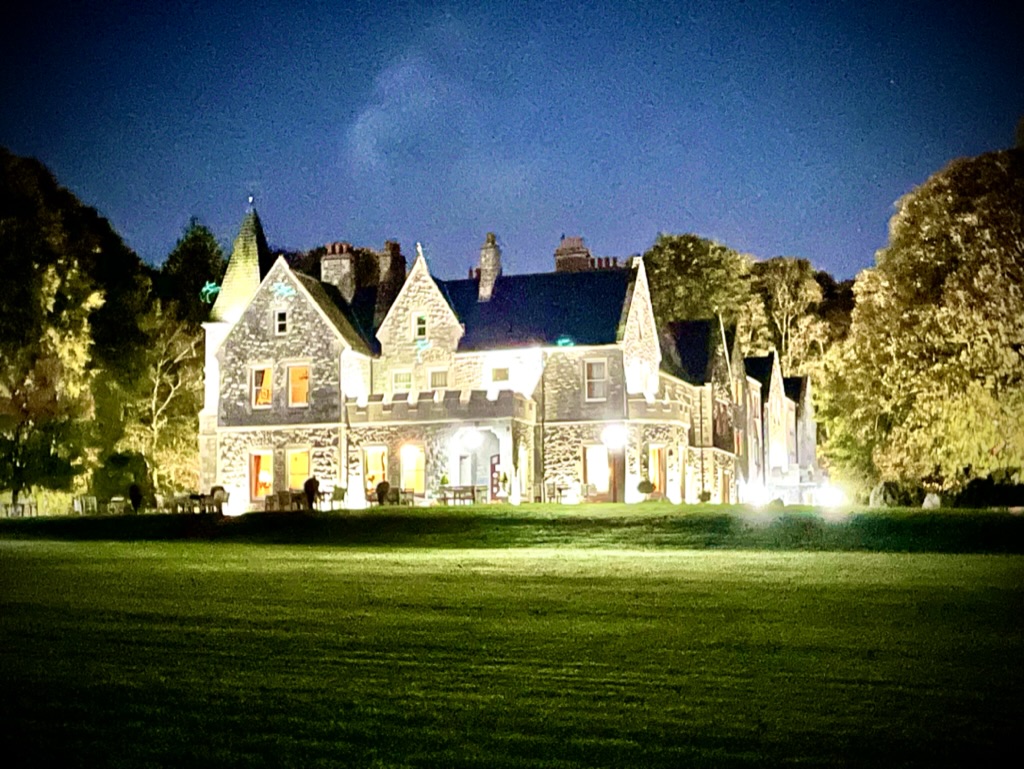
Mount Falcon — on the Moy, between Foxford and Ballina, in the parish of Ballynahaglish.
Mount Falcon
Drumrevagh, Ballina, Co. Mayo · F26 H744
54.0570°N, 9.1568°W
Townland of Drumrevagh, parish of Ballynahaglish, barony of Tirawley
Late-Victorian country house
Two-storey, four-bay, rock-faced limestone with dressed-limestone detail (NIAH)
1871–1880 — inscribed 1876 on the house
Hollywood House (precursor) — 1826
James Franklin Fuller of Dublin (1835–1924) — Ashford Castle, Farmleigh, Kylemore Castle
Watts (17th c.) → Knox (1820s–1932) → Aldridge (1932–2000) → Maloney (2002– )
Country-house hotel on a 100-acre demesne
Private stretch of the Moy fishery, walled garden, falconry & spa
Open year-round as a hotel
Booking, rates and restaurant via mountfalcon.com
Not an Ó Dubhda house. Built by the Knoxes on land that came to Protestant hands after the seventeenth-century confiscations. Stands in Tirawley, west of the Moy ‐ Ó Dubhda territory before the thirteenth-century Barrett conquest.
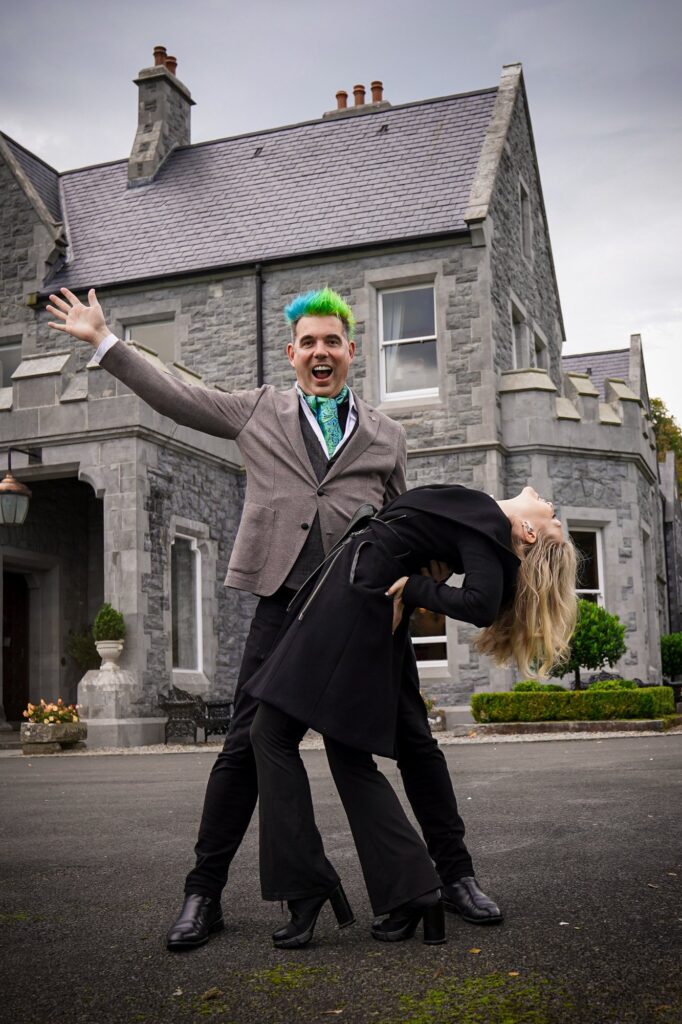
From the Clan
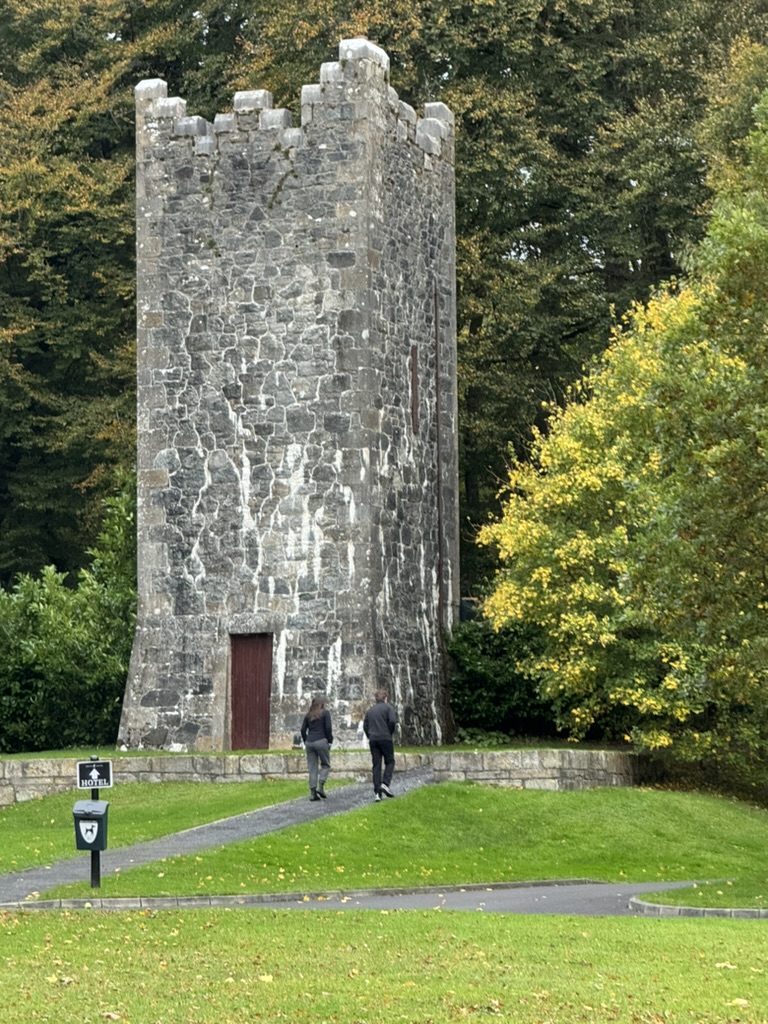
Photographs of Mount Falcon submitted by clan members.
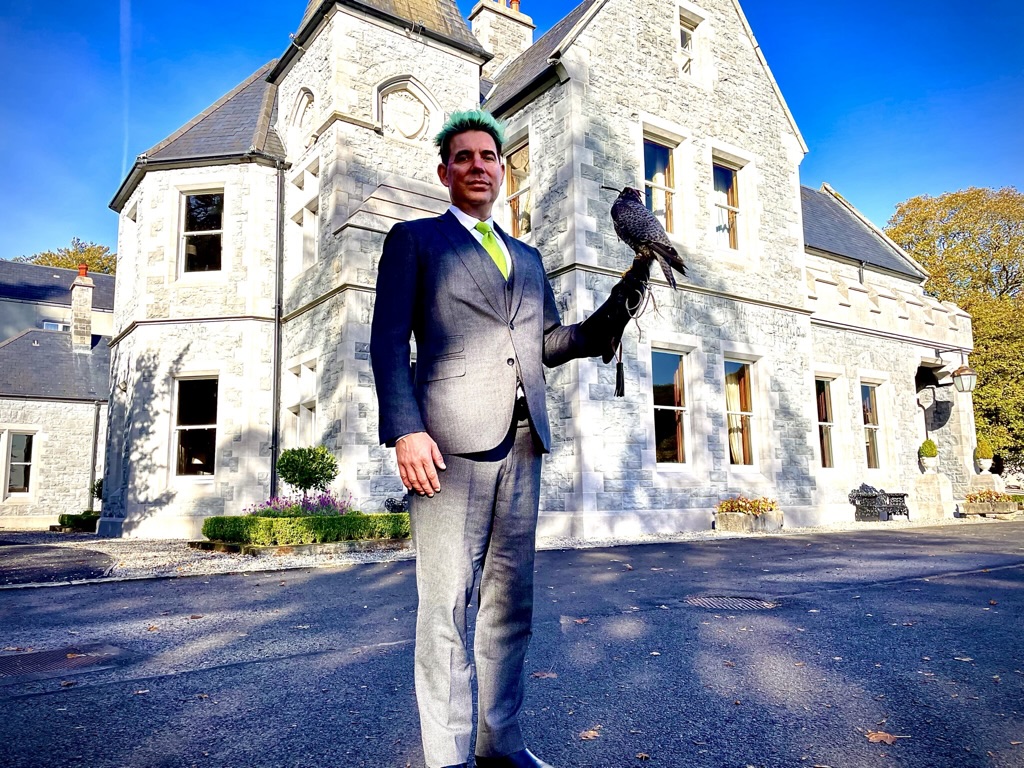
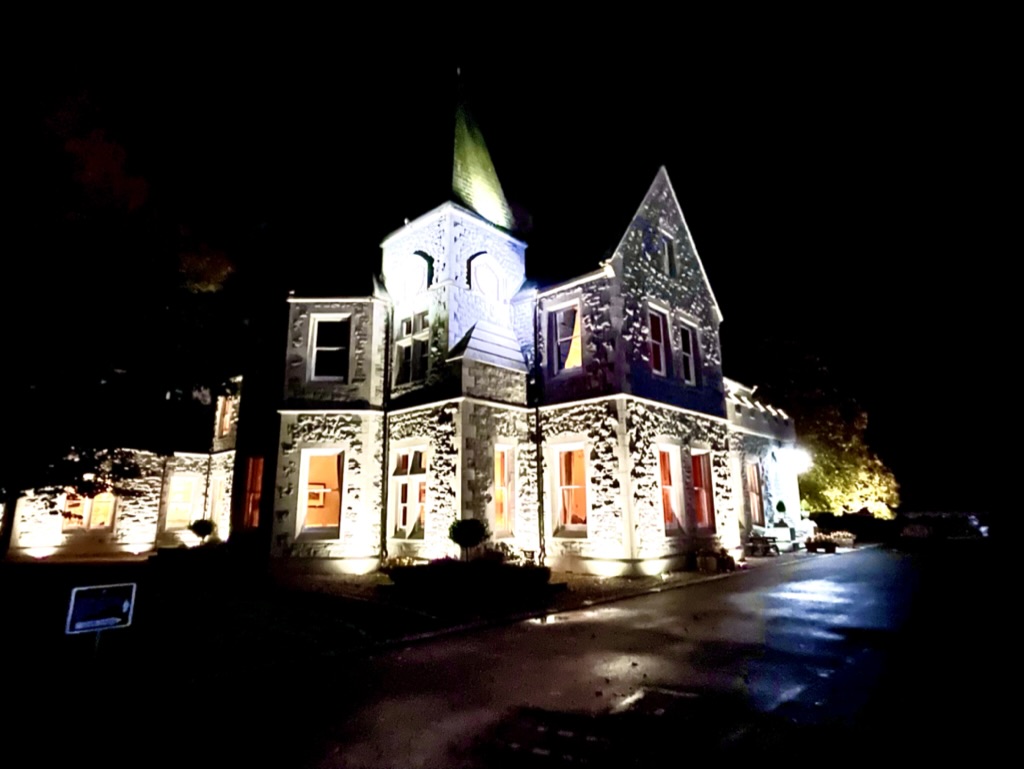
A Note from the Clan
These pages are written and maintained by volunteers of the Ó Dubhda Clan Association. We aim for a sober, museum-style account rooted in primary sources — Landed Estates, the National Inventory, the Dictionary of Irish Architects, Lewis’s Topographical Dictionary, and estate and family records — and we distinguish carefully between what is documented and what is tradition.
Mount Falcon is not an Ó Dubhda house, and we do not claim it as one. If you have a correction, a family record, or a story to add — particularly around the older Watts and Jones holdings whose land this estate grew out of — please get in touch.