
Markree Castle
May 2, 2026 2026-05-07 1:53Markree Castle
Markree Castle
A Gothic Revival seat on the Unshin, in the barony of Tirerrill.
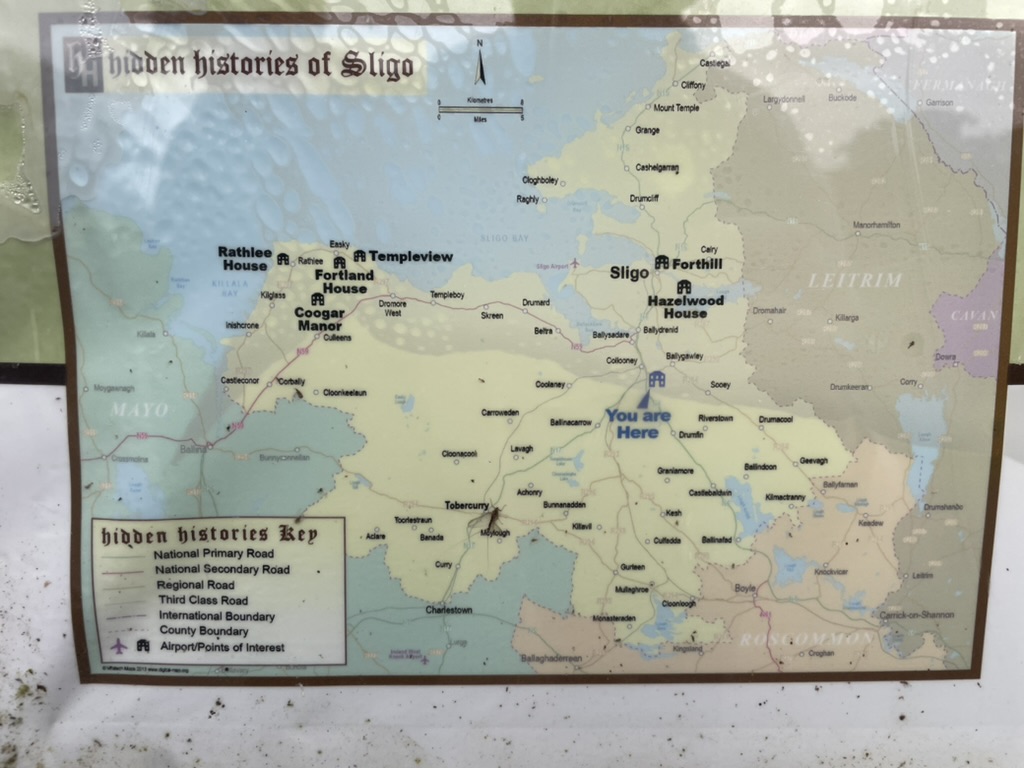
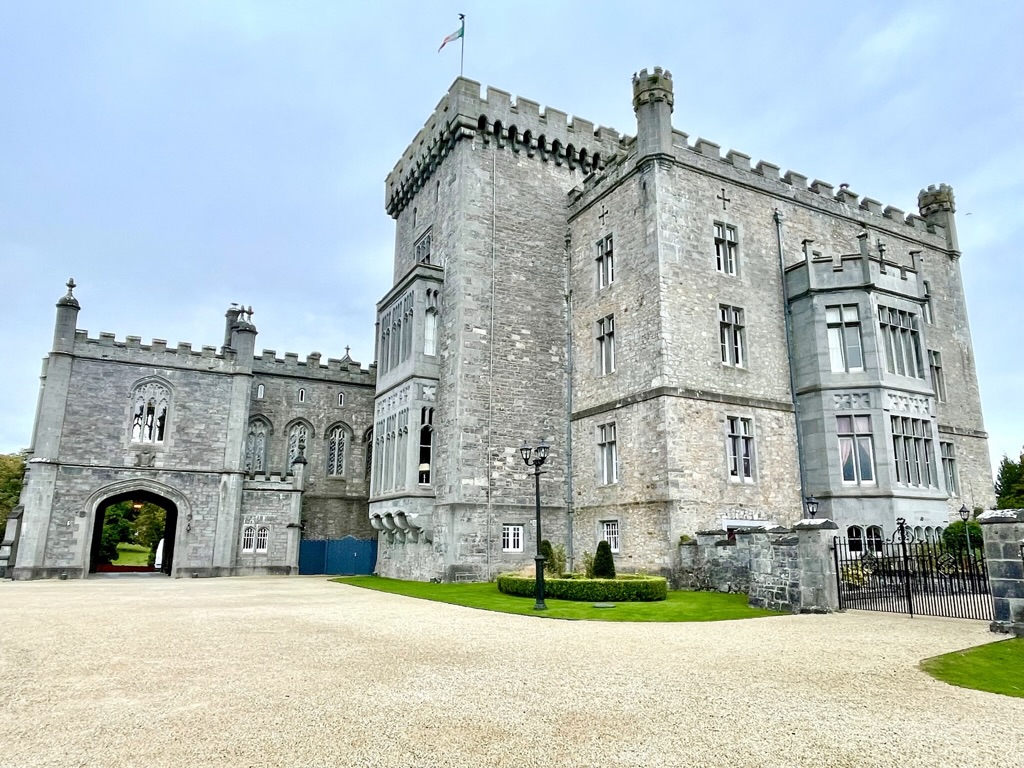
Markree Castle stands on the River Unshin, a little west of Collooney in Co. Sligo. It is not an Ó Dubhda castle, and the site was never part of the Ó Dubhda lordship of Uí Fiachrach Muaidhe. The land belonged for centuries to the McDonaghs, lords of Tirerrill — a branch of the MacDermots — and was granted after the Cromwellian settlement to the English soldier Edward Cooper, whose descendants remodelled the old fort into one of the largest country houses in the north-west. The Cooper family held Markree for ten generations before selling to the Corscadden hoteliers in 2015. We include Markree in this Estate Tour because it sits in the broader Sligo landscape, and because its nineteenth-century observatory gave Ireland its first — and for 160 years only — asteroid discovery. But the ground it occupies was McDonagh, not Ó Dubhda.
I. Origins — McDonagh country
The earliest castle at Markree was a medieval fort guarding a crossing of the River Unshin. It stood in the barony of Tirerrill (Tír Oirill), which lay east of the Ox Mountains and was held by the McDonaghs, a branch of the MacDermots of Moylurg. The boundary between Tír Fhiachrach Muaidhe (Ó Dubhda) and Tír Oirill (McDonagh) ran roughly along the line of the Ox Mountains; Collooney and Markree lay on the McDonagh side of it. Nothing of the medieval fort survives above ground today; its outline is preserved only in the siting of the later Cooper house, which reuses the old river crossing.
II. The Cooper grant
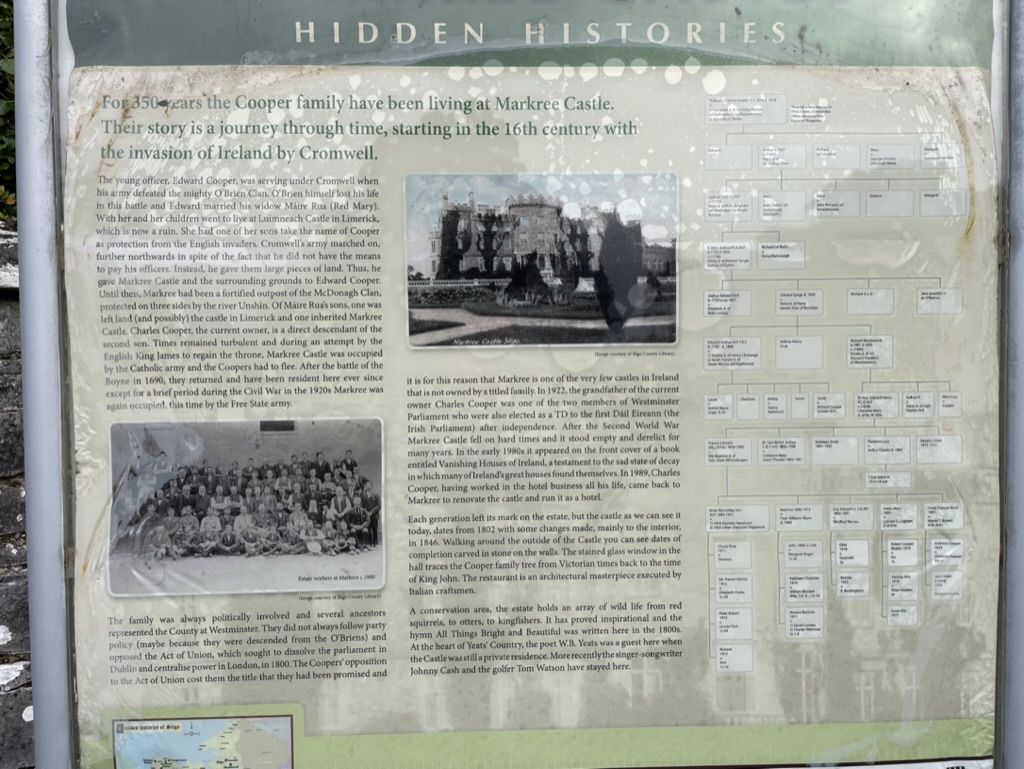
Cornet Edward Cooper came to Ireland as an officer in the Cromwellian army. Under the Restoration Act of Settlement (1662) his holdings in Co. Sligo were confirmed, and he was established at Markree by 1663. By the end of the seventeenth century the site was recognised as a manor; through the eighteenth century the Cooper estate grew to become one of the largest in the north-west, reportedly reaching some 34,000 acres across Sligo at its peak (Landed Estates Database).
A local tradition long attached to this Cooper the story of Máire Rua Ní Mhathúna — the “Red Mary” who, after her second husband Conor O’Brien fell in 1651, married a Cromwellian Cornet Cooper to preserve her son’s inheritance. The marriage is documented; but Máire Rua’s Cooper was a different man — Cornet John Cooper — and her castle was Lemeneagh in Co. Clare, not Markree. The conflation is a piece of nineteenth-century tourist lore and should be set aside.
III. Francis Johnston and the Gothic Revival
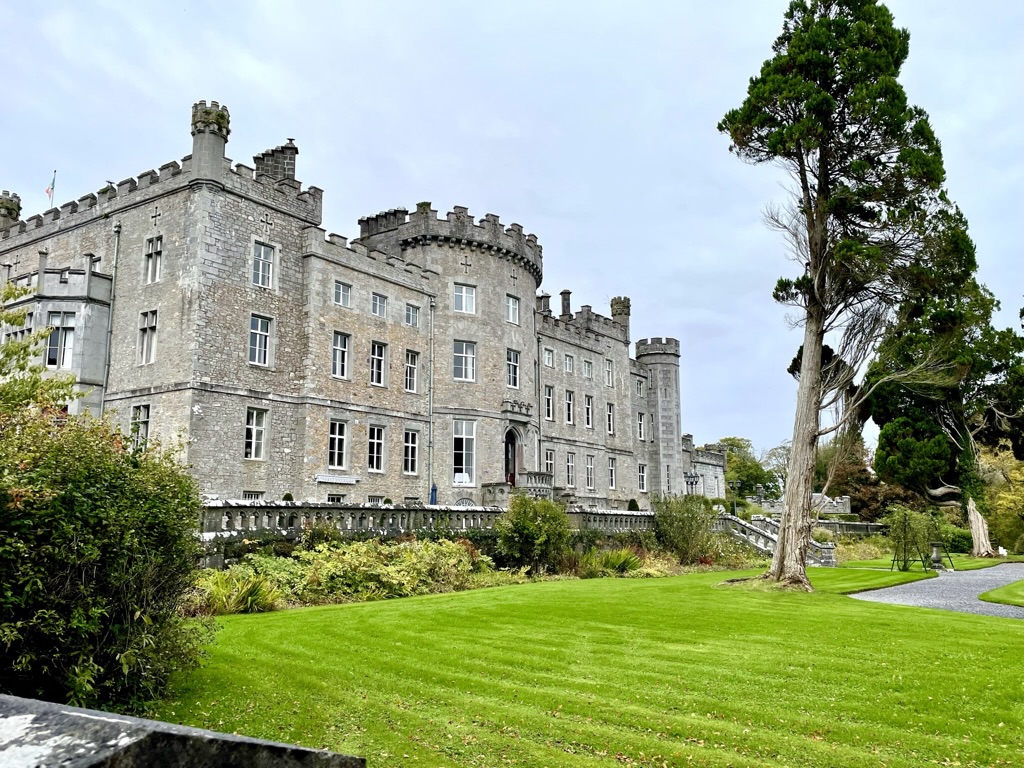
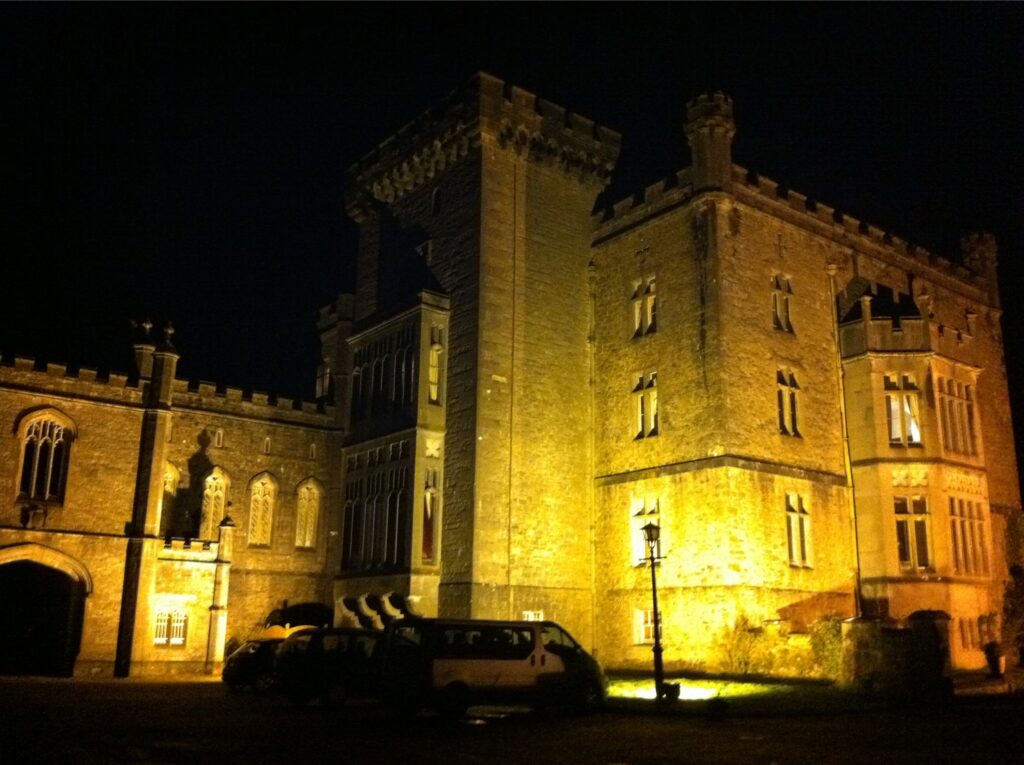
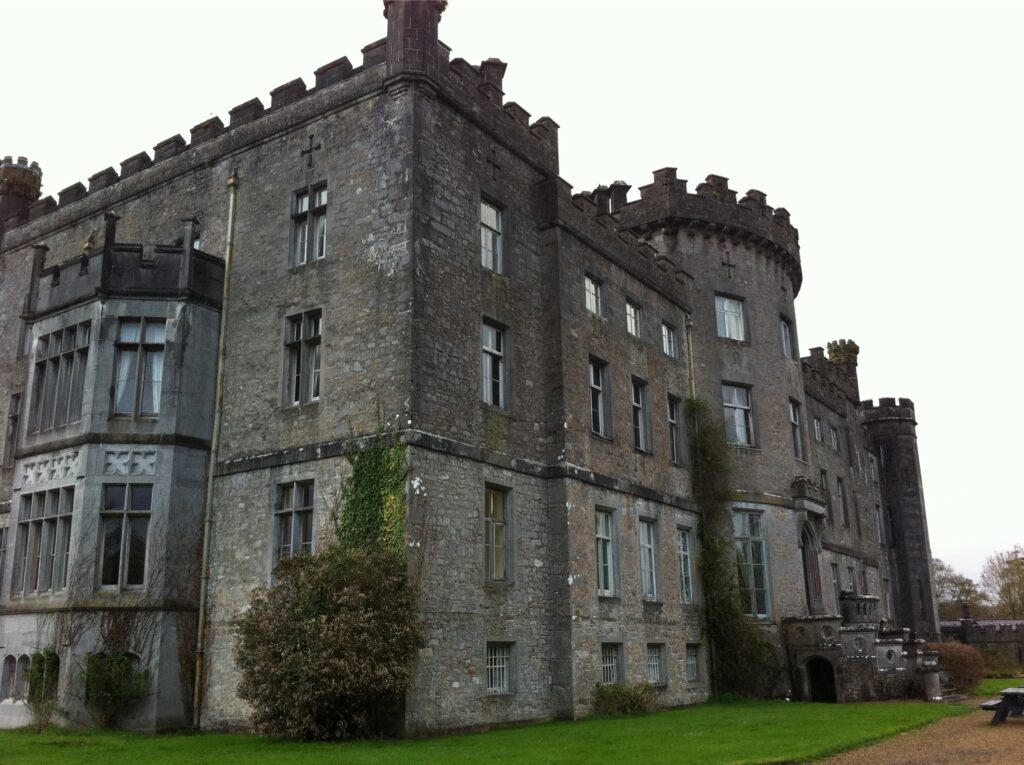
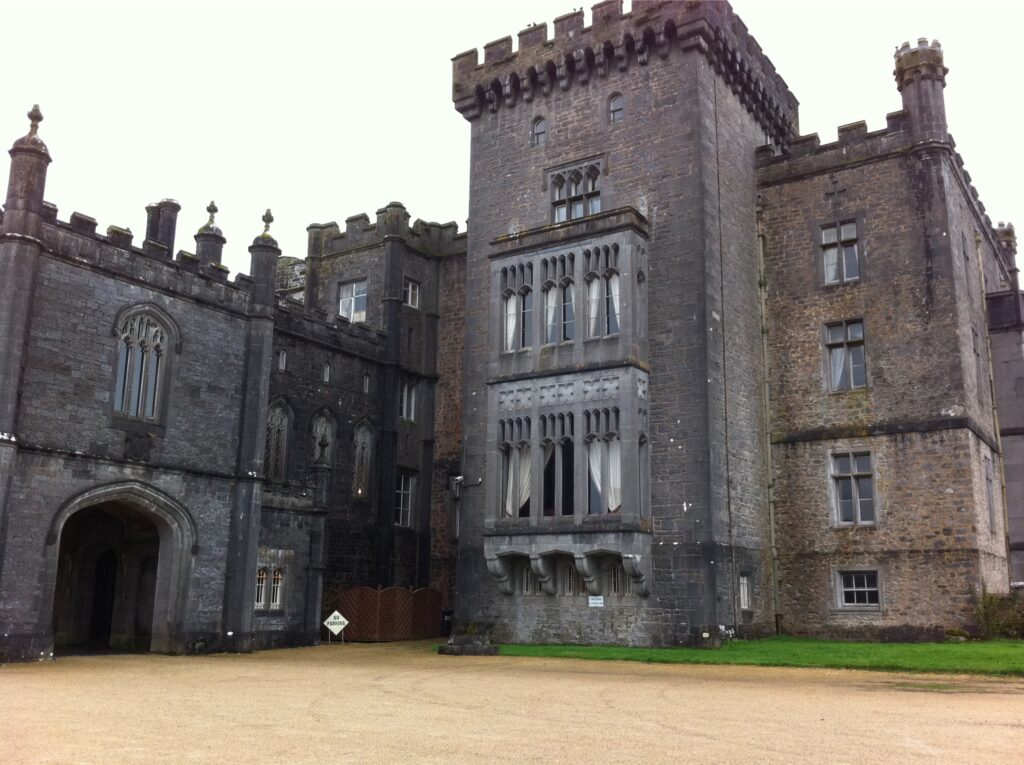
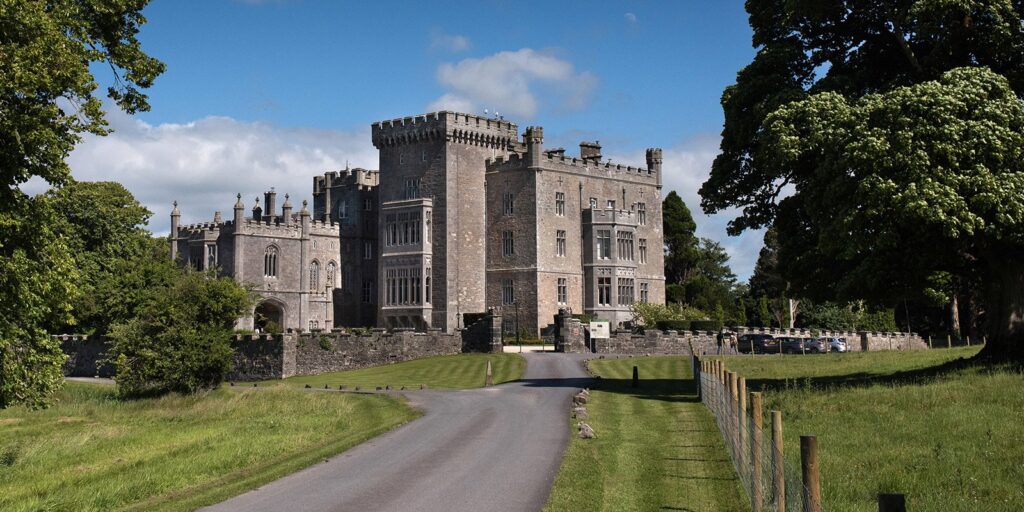
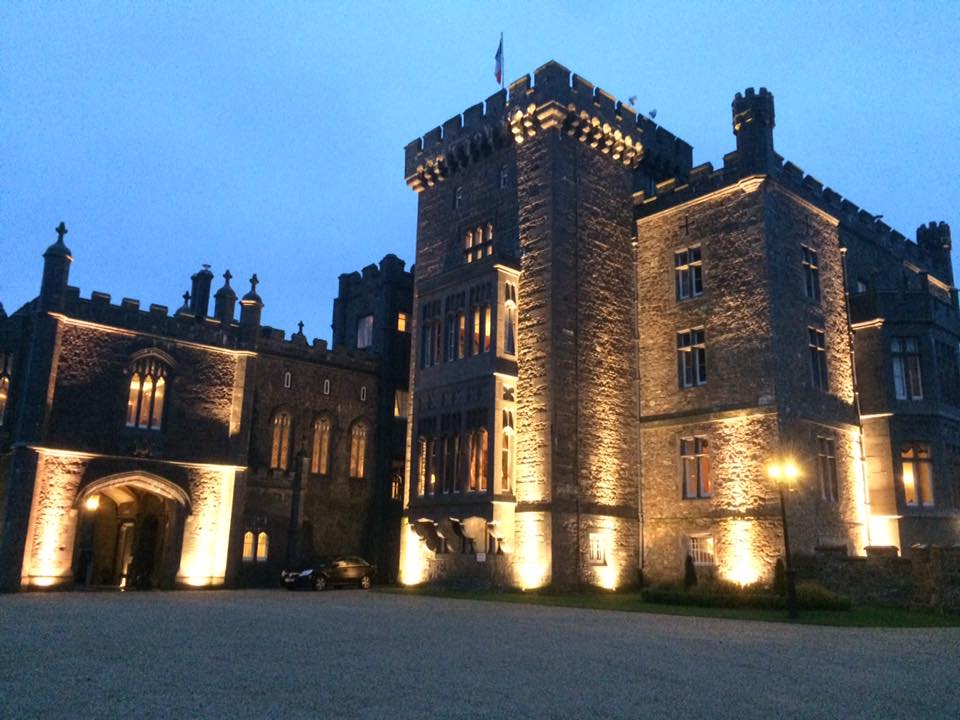
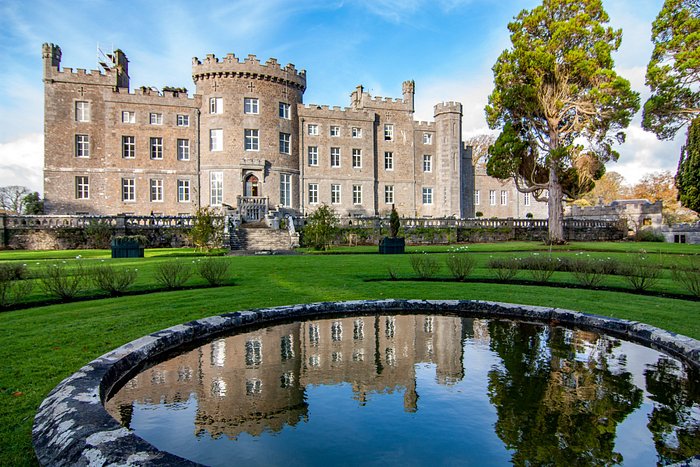
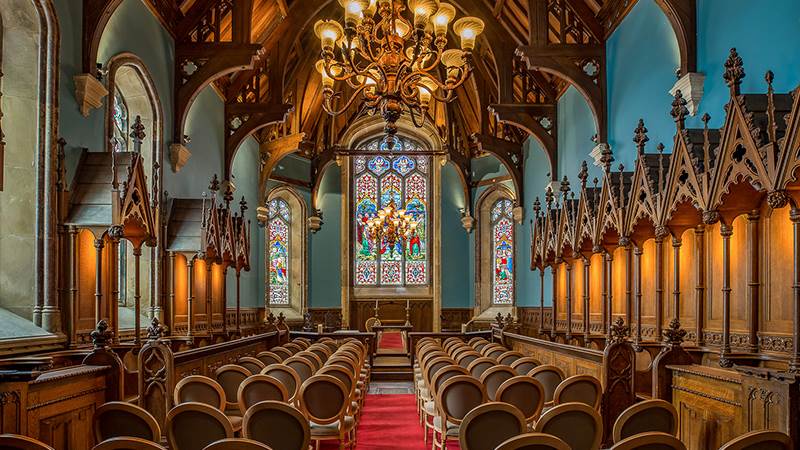
In 1802 the Coopers engaged Francis Johnston (1760–1829) — the foremost Irish architect of his generation, later the architect of the General Post Office in Dublin (1814), the Chapel Royal at Dublin Castle (1807–14), and the Richmond Tower at the Royal Hospital Kilmainham — to remodel the old manor as a castellated Gothic Revival mansion. The 1802 house was built over the raised basement of the previous Cooper house. Enlargements followed later in the nineteenth century: a porte-cochère, a square battlemented tower, and a chapel on the north front were added around 1866, with a canted bay window to the west; a central crenellated bow and an ornamental garden doorway followed in 1896 (NIAH). The interior retained a fine Adamesque entrance hall, an elliptical staircase rising to a glazed dome, and a stained-glass window on the landing tracing the Cooper pedigree.
IV. Markree Observatory and the discovery of Metis
In 1830 Colonel Edward Joshua Cooper, MP (1798–1863) established a private observatory in the grounds. Its principal instrument was a Cauchoix refractor with a 13.3-inch object glass, mounted in 1834 on a Grubb equatorial; for a brief period it was the largest refracting telescope in the world. The Royal Astronomical Society described it in 1851 as “the most richly furnished private observatory known.”
On 25 April 1848 Cooper’s assistant Andrew Graham identified a new minor planet; it was given the name 9 Metis. It was the first asteroid discovered from Ireland — and the only one for a hundred and sixty years, the next being found at Cork in 2008. The observatory continued in operation until the death of Edward Henry Cooper, MP, in 1902; after that it was run down and its instruments dispersed.
V. Decline, hotel, Corscadden
The Cooper holdings shrank through the Land Acts of the late nineteenth and early twentieth centuries to about five thousand acres. The house was damaged in the Civil War (1922) and lay largely unused until 1947. Charles Cooper, tenth generation of the family to reside there, reopened Markree as a country-house hotel in 1989. In 2015 the Coopers sold the estate to the Corscadden family, Irish hoteliers; after renovation it reopened in March 2017 as the present hotel and event venue.
Two unrelated notes attach to the castle’s later history. The hymn-writer Cecil Frances Alexander stayed at Markree in 1848, the year Hymns for Little Children was published; a local tradition holds that the view from the terrace inspired “All Things Bright and Beautiful,” though the claim rests on association rather than documentation. And on 16 January 1881 a reading of −19.1 °C was recorded at Markree — still the lowest air temperature in the Irish record.
VI. The Ó Dubhda connection — an honest statement
Markree is not an Ó Dubhda castle, and the Ó Dubhda never held Tirerrill. Markree sits in Co. Sligo but east of the clan heartland; the Collooney area was McDonagh ground. The only honest connection is the shared post-Cromwellian landscape: the same Act of Settlement that confirmed Cornet Edward Cooper at Markree also ratified the dispossession of Gaelic owners across Tír Fhiachrach, including the Ó Dubhda themselves. Markree is therefore a settler-family house on Gaelic Sligo ground — but not on Ó Dubhda Gaelic ground. It is included in this Estate Tour as a neighbour, not as a cousin.
VII. Visiting
Markree operates today as a country-house hotel and exclusive-hire venue. The castle is open to hotel guests and to those attending weddings and events; there is no general-admission heritage tour. The observatory does not survive as a visitable building. Practical details — bookings, opening dates, and access — are on the hotel’s own site at markree.com.
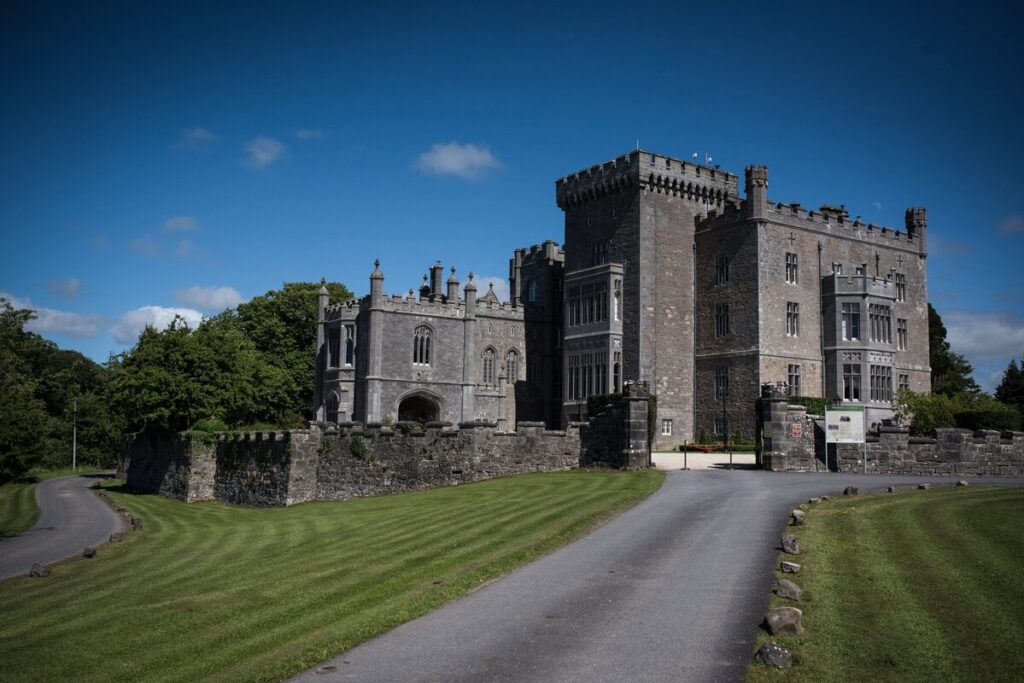
Markree Castle — west of Collooney, on the River Unshin, in the barony of Tirerrill.
Markree Castle
Caisleán Mhac Craith · Collooney, Co. Sligo
54.1741°N, 8.4611°W
Markree Demesne, parish of Kilvarnet, barony of Tirerrill (Tír Oirill)
Castellated Gothic Revival mansion
Built over the raised basement of an earlier eighteenth-century Cooper house
Medieval fort on site (McDonagh)
Present house: 1802 remodel — Cooper
Later additions c. 1866 and 1896
1802 remodel: Francis Johnston (1760–1829)
Later Victorian additions unattributed (NIAH)
McDonagh of Tirerrill (medieval site)
Cooper (1663–2015, ten generations)
Corscadden (2015–present)
Country-house hotel & exclusive-hire venue
Weddings and private events
markree.com
Hotel guests and event attendees only
No general-admission heritage tour
The historic observatory does not survive
Not an Ó Dubhda castle. The site was McDonagh of Tirerrill, outside the Ó Dubhda heartland of Tír Fhiachrach. Included for broader Sligo context; the only honest link is the shared post-Cromwellian experience of dispossession.
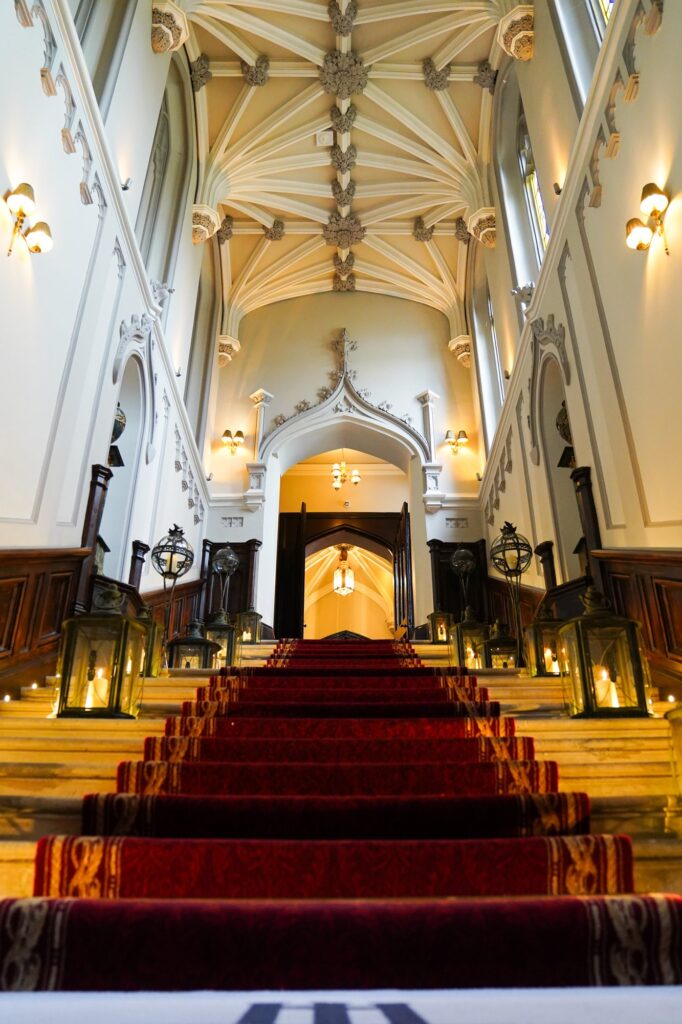
From the Clan
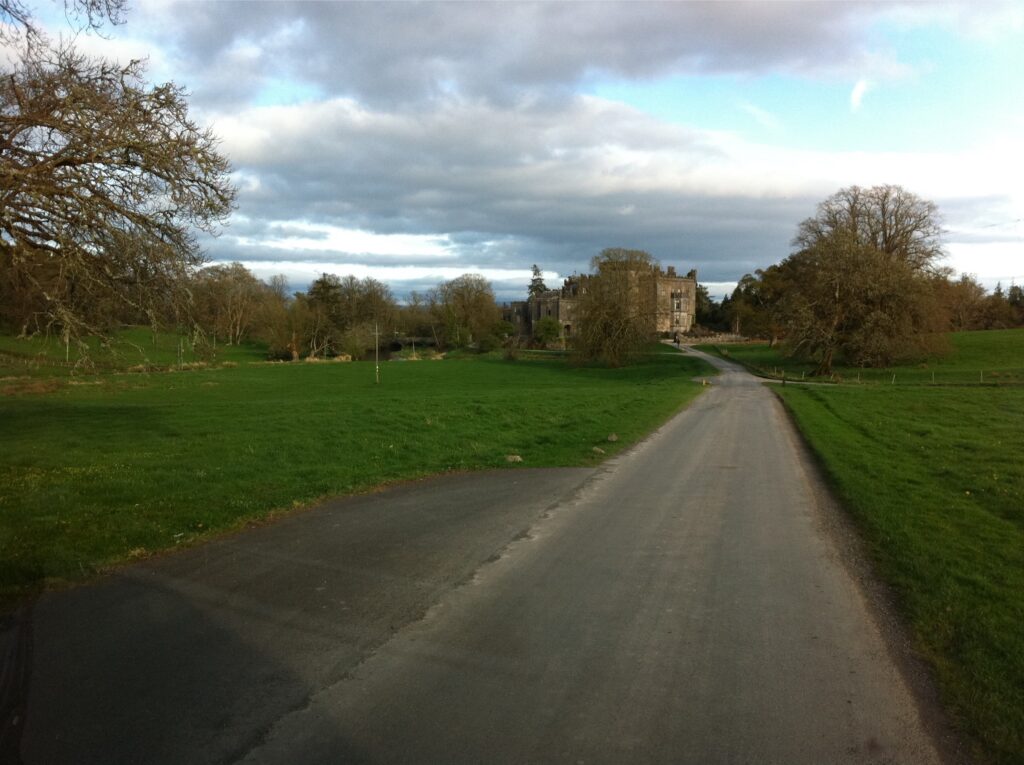
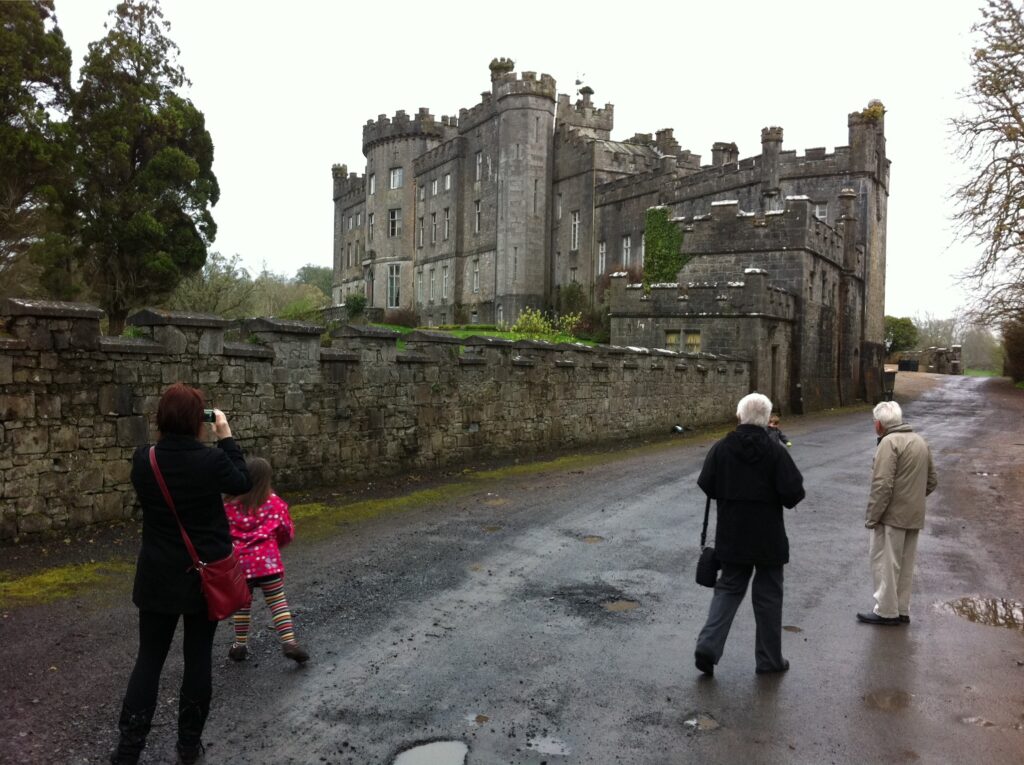
Photographs of Markree Castle submitted by clan members.
A Note from the Clan
These pages are written and maintained by volunteers of the Ó Dubhda Clan Association. We aim for a sober, museum-style account rooted in primary sources — Landed Estates, Lewis, Williams, the National Inventory, the Royal Astronomical Society records — and we distinguish carefully between what is documented and what is tradition.
Markree is not an Ó Dubhda castle, and the ground it stands on is McDonagh, not Ó Dubhda. We include it here as a Sligo neighbour and for its observatory. If you have a correction, a family record, or a photograph of Markree — particularly of the lost observatory — please get in touch.