Abbeys

THE CLAN ARCHIVE · ABBEYS

The Abbeys of the O’Dubhda

Mainistreacha na Muaidhe
“Four medieval religious houses clustered around Killala Bay — three centuries of Gaelic Catholicism in stone.”

A monastic coast in stone

Four medieval religious houses cluster along the lower Moy and Killala Bay. Each was founded under a different rule — Dominican, Franciscan Observantine, Augustinian, Franciscan Third Order — and between them they describe the full spectrum of late-medieval Irish monasticism as the O’Dubhda and their tenants lived it. The earliest (Rathfran) was founded in 1274; the youngest (Moyne) in the 1450s. All four survived until the Dissolution. All four still stand.

Where the Abbeys Stood

The abbeys cluster around Killala Bay and the Moy estuary — a monastic landscape walkable in a single day.

Interactive map of the four medieval abbeys clustered around Killala Bay and the Moy estuary — click any pin for details.

The Abbey Tour

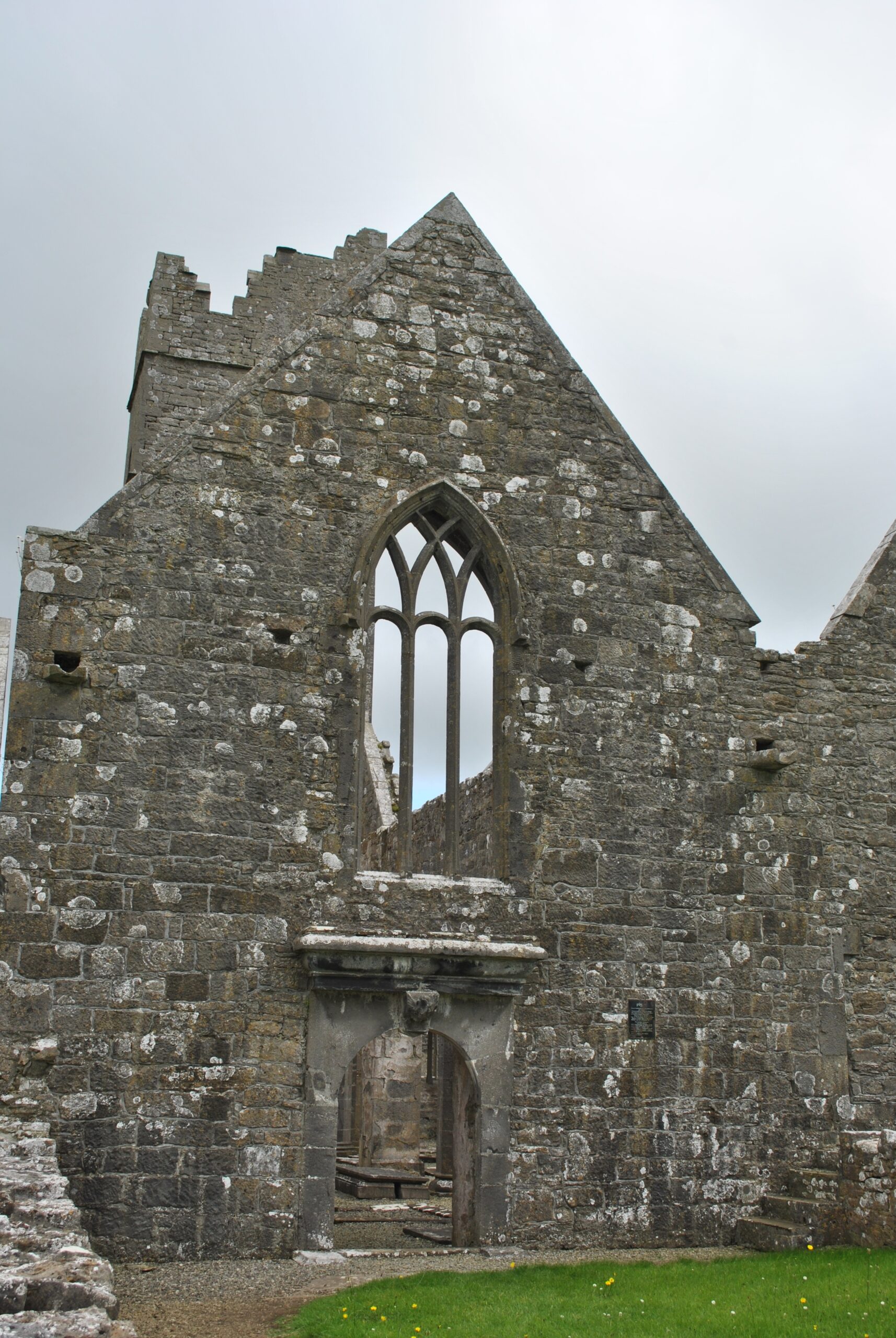
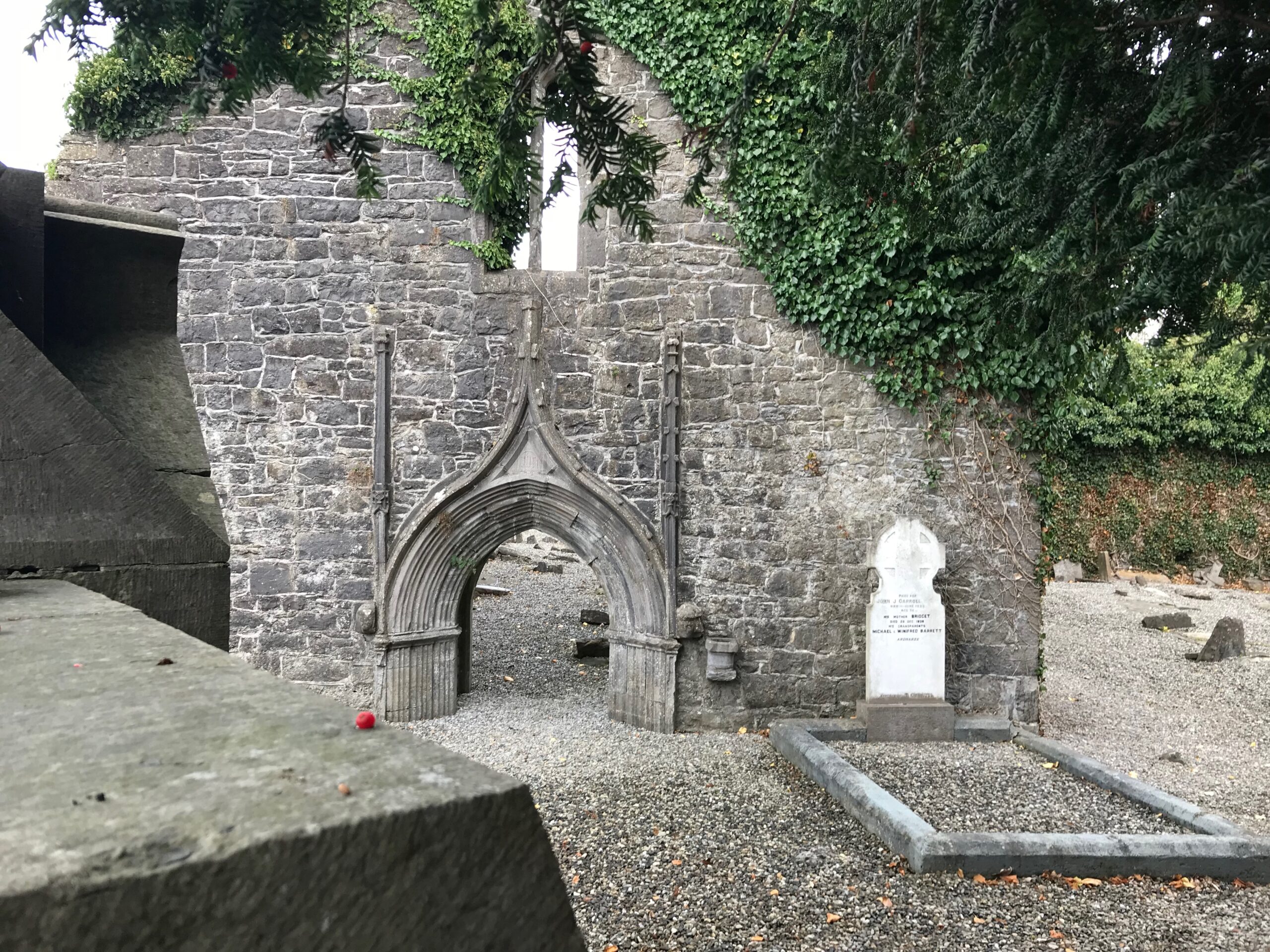
Walk the four abbeys in order. Each preserves a different piece of the O’Dubhda story — a Gothic doorway at Ardnaree, a cloister at Moyne, a lancet window at Rathfran, a bell-tower on the Moy.

Gothic pointed arch doorway and surviving wall of the Augustinian Abbey, Ardnaree, Ballina

Ardnaree Friary

The Augustinian house founded by Tadhg Riabhach Ó Dubhda on the east bank of the Moy.
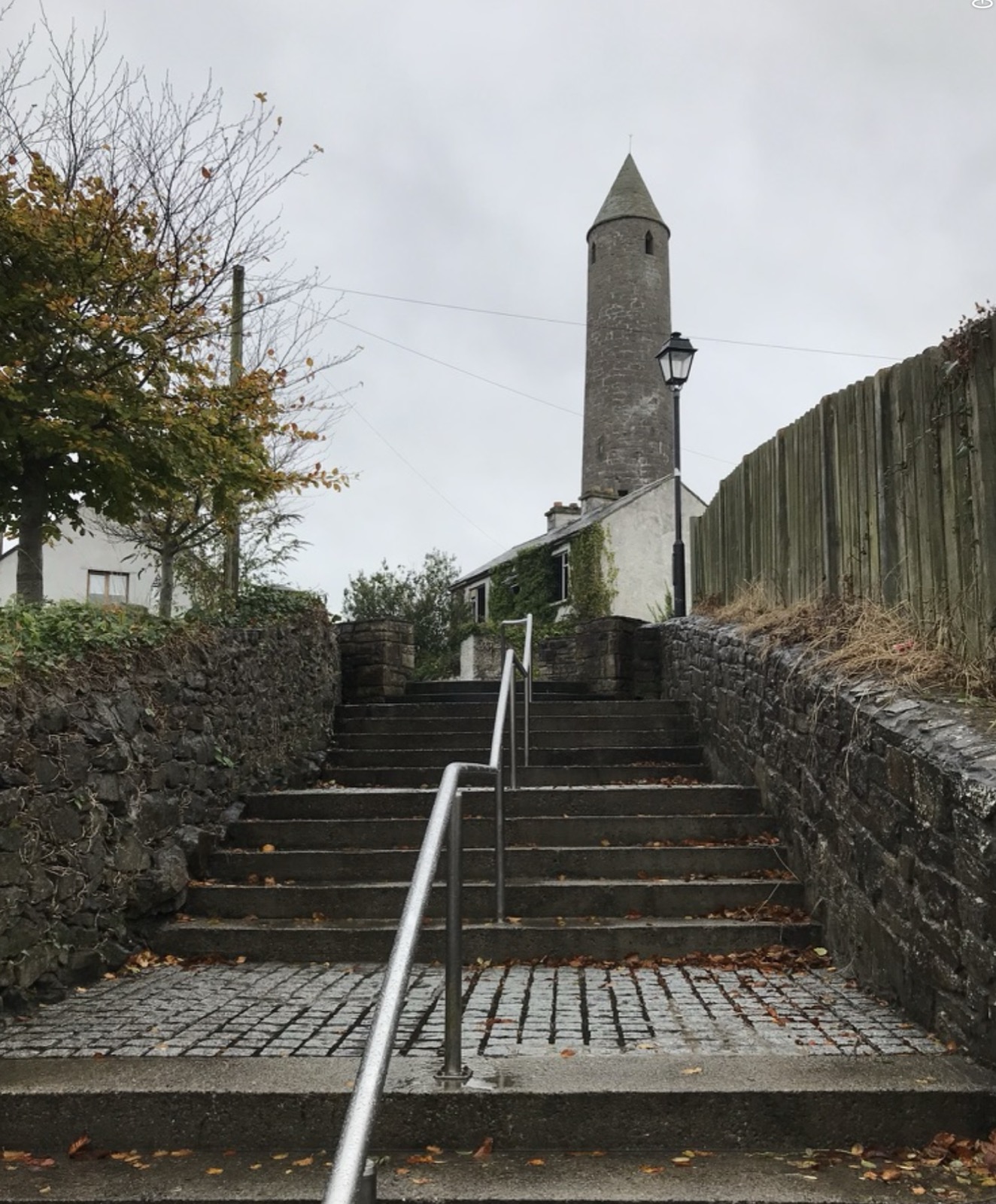
Killala Round Tower, Co. Mayo — the 12th-century cloigtheach standing over the roofs of the town

Killala Round Tower

The 12th-century cloigtheach beside the medieval see of Killala — tower of the ancient O’Dubhda bishopric.

Moyne Abbey east gable, showing the switchline-tracery window above a later doorway

Moyne Abbey

The great Franciscan Observantine house below Killala — intact cloister, switchline-tracery east window.
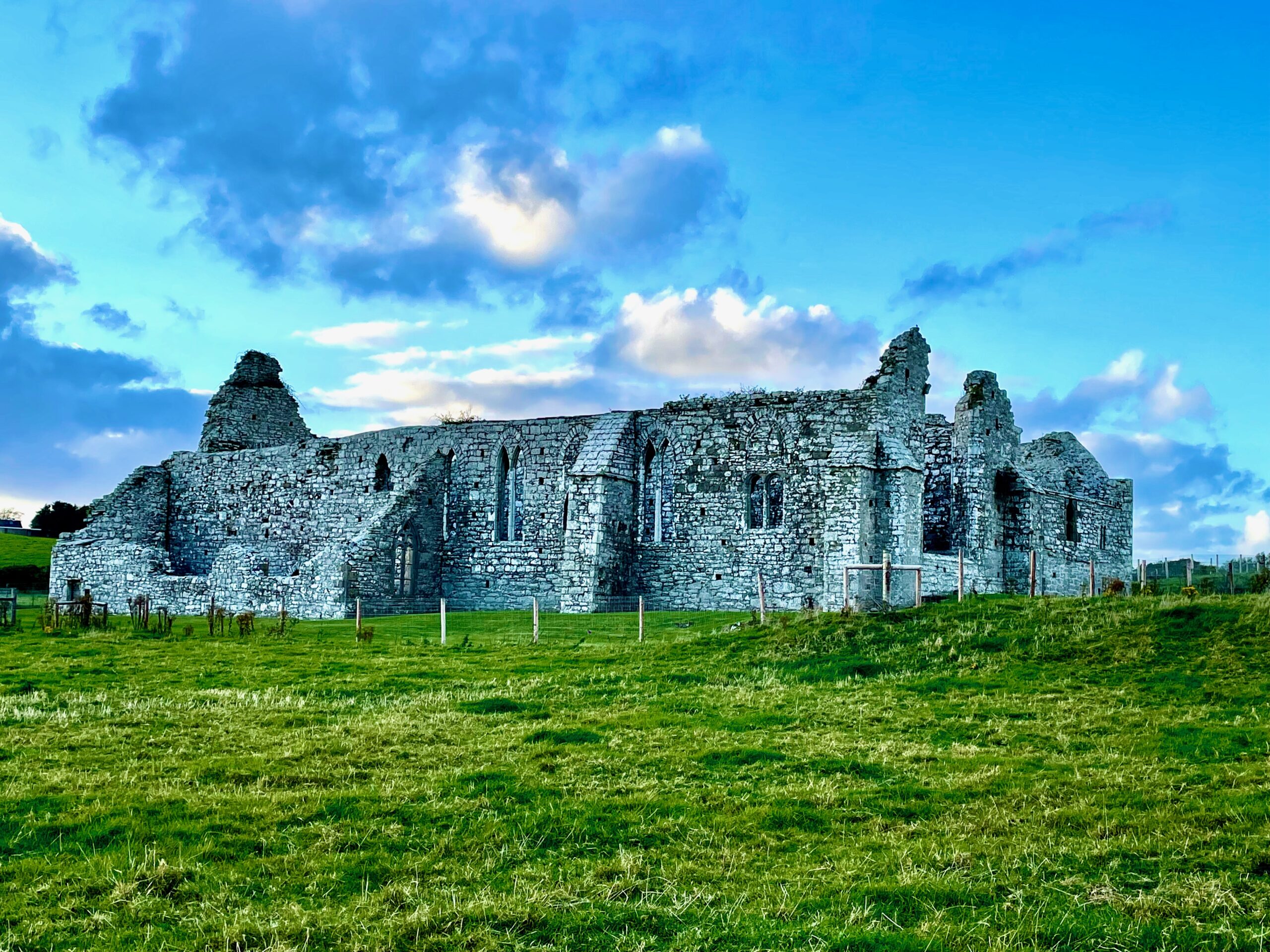
Rathfran Friary ruins against a dramatic blue sky, County Mayo

Rathfran Priory

The Dominican priory on the Cloonaghmore — triple-lancet east window still standing.
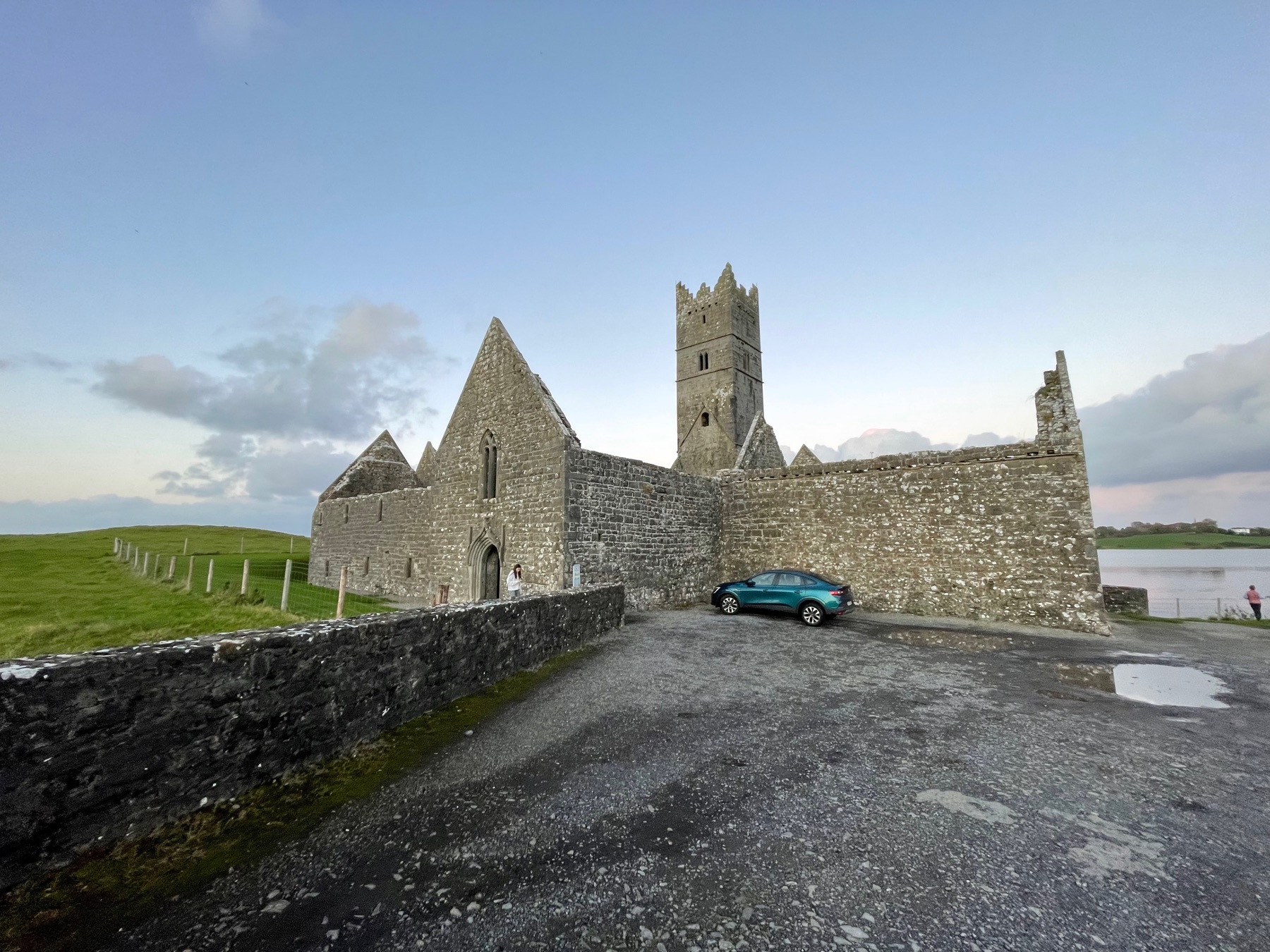
Rosserk Friary from the south, bell tower and precinct wall, River Moy beyond

Rosserk Friary

The Franciscan Third Order house on the Moy estuary — bell-tower and double piscina intact.

Why These Walls Matter

The four abbeys of the Moy are the O’Dubhda’s monastic landscape. They stand within sight of each other across Killala Bay — a Dominican priory on the Cloonaghmore, a Franciscan Observantine house below Killala, an Augustinian friary on the east bank of the Moy at Ardnaree, and a Franciscan Third Order house on the estuary at Rosserk. For three centuries before the Dissolution they were the religious centre of Uí Fhiachrach Muaidhe: where chiefs were buried, where tenants worshipped, where pilgrims came at the cross-quarter days.

All four were founded with lay patronage — one of them (Ardnaree) by an O’Dubhda chief by name — and all four survived remarkably intact until the Cromwellian campaigns. What stands today is ruin: gable walls, tracery windows, a bell-tower on the Moy, a cloister at Moyne. But the placement tells the story. Read the four houses as a single monastic estate and the architecture of lower-Moy Catholic life in the late medieval period becomes legible.

Visiting in Person

All four abbeys are accessible to respectful visitors. None charge admission, none have staffed opening hours, and none are formally signposted — but each sits beside a public road and can be reached on foot. Bring boots.

The Four Abbeys

  • Ardnaree Friary — East bank of the Moy beside St Muredach’s Cathedral, Ballina. Walk down from the cathedral grounds; the surviving Gothic doorway is in the graveyard enclosure. Fully accessible.
  • Moyne Abbey — Below Killala, off the R314. A short walk across a field from the roadside gate. Intact cloister and east window; take time with the tower.
  • Rathfran Priory — Off the coast road north of Killala, near the mouth of the Cloonaghmore. Farm gate; visible from the road; triple-lancet east window is the landmark.
  • Rosserk Friary — On the estuary of the Moy, south-west of Killala. OPW-maintained; open access; the bell-tower and double piscina make this the most architecturally complete of the four.

Practical Advice

Allow a full day to visit all four — they are close, but the narrow roads take time. Respect working farmland and close gates behind you. Rosserk and Moyne are the most photogenic; Rathfran and Ardnaree carry the O’Dubhda story most directly.

Ready to walk the abbey trail?