
The Taoiseach
February 17, 2025 2026-05-07 1:39The Taoiseach
The Taoiseach
Inaugurated at Cahirmore on 9 October 2025, under the old Gaelic principle that made chiefs in this country for twelve hundred years — the restoration of tanistry.
I. A Taoiseach is not a King by Blood Alone
For twelve hundred years, the chiefs of the Uí Fhiachrach Muaidhe were not chosen the way a duke or a baron was chosen in England. There was no primogeniture — no automatic handing of the chiefship from a father to his eldest son. The Irish system was tanistry (tánaisteacht), and it worked on an older principle.
A candidate had to be of the derbfine — the kindred group of all male descendants within four generations of a common royal ancestor. Inside that pool, the Tánaiste — the successor-designate — was elected during the sitting chief's lifetime. Capability mattered. Alliances mattered. Standing inside the family mattered. Seniority of birth was one factor among several, never the deciding one.
The 1595 inauguration of Tadhg Buidhe Ó Dubhda proves the point at the very end of the historical record. Tadhg Buidhe was not his father's eldest surviving son. His elder brother Dáithí had been the heir, and had died the year before. Several cousins had stronger claims by strict seniority. But the decision lay with Ó Domhnaill, as overking, and with the clan's own council — and they chose Tadhg Buidhe, inaugurating him at Carn Amhalghaidh. That is tanistry. That is how the last recorded Ó Dubhda chief was made, and how every Ó Dubhda chief before him had been made for six hundred years of continuous record.
Primogeniture — strict father-to-eldest-son inheritance — was never the Gaelic rule. It was an English import, imposed with the Composition of Connacht in 1585 and finalised after the Flight of the Earls in 1607. The rules that made chiefs in this country were the older rules, and they were elective.
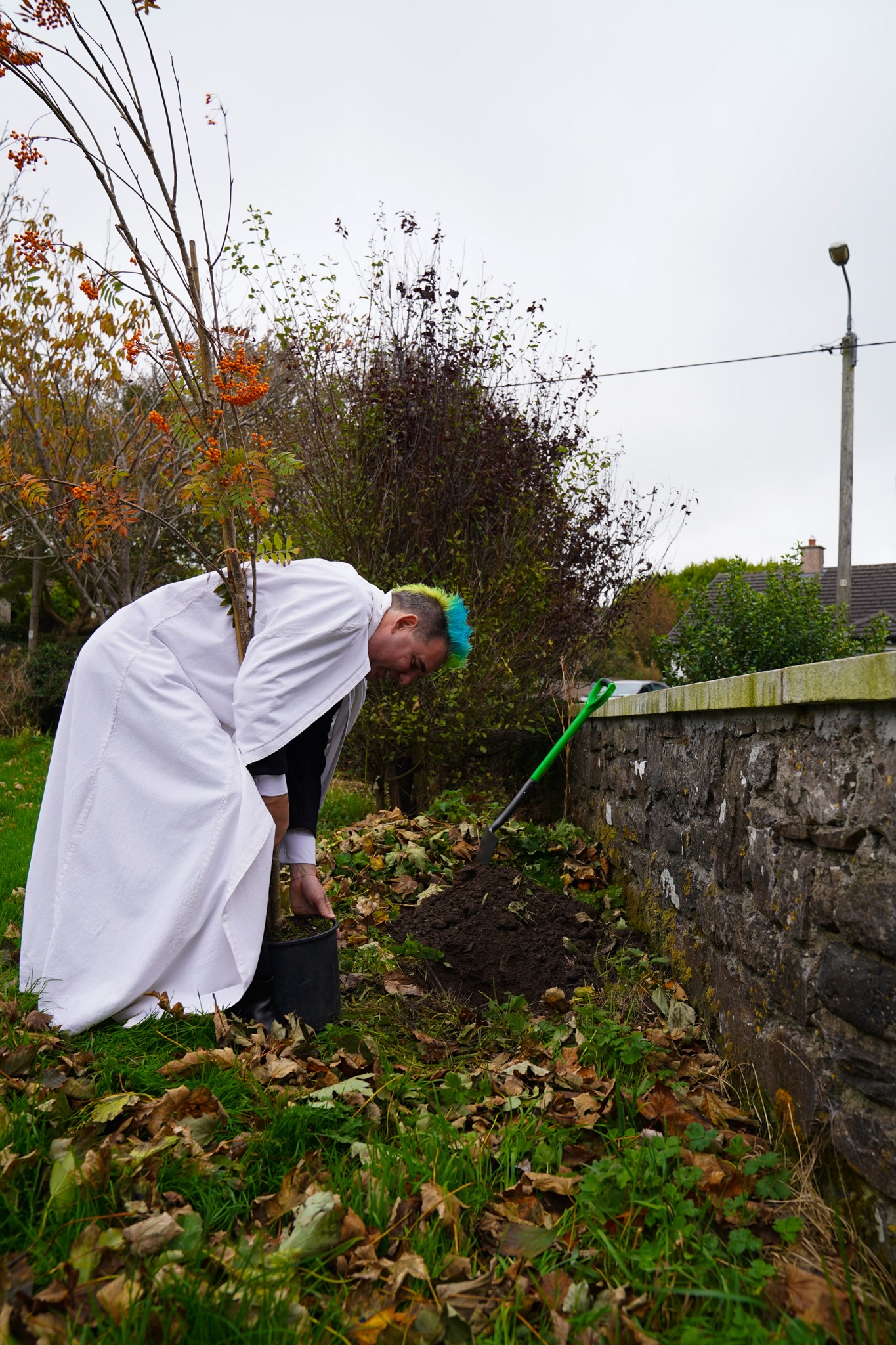
The 2025 inauguration at Cahirmore restores that principle. The Council of the clan, meeting in succession to the old tuath, considered candidates from among the documented descendants of the royal line and chose a Taoiseach. Then, in the oldest rite we have — the planting of a rowan sapling, echoing the Rowan of Dubhros — it inaugurated him on the ground.
A Taoiseach in this understanding is not a hereditary title handed down automatically through the senior male line. It is a role conferred by the clan on one of its own, chosen from among the many who qualify by descent, to hold the office for a term and pass it on to the next.
II. A Descendant, Not the Senior Male Heir
The current Taoiseach, Sean O'Dowda Stephens, carries the surname Stephens, not O'Dowda. In English and patrilineal terms he is not the senior heir of the historical chiefly line — nobody alive is. The senior male line of the chiefly branch fragmented after the Cromwellian confiscations of the 1650s and was no longer recorded as a single pedigree after the early 1800s.
What is documented is a collateral descent into the O'Donovan pedigree through his great-great-grandmother Elizabeth O'Dowda of Walsall, Staffordshire, who married Charles James Stephens. Their son — his great-grandfather — was the first of the Stephens line to carry "O'Dowda" as a middle name, and the practice has descended in the family ever since as a deliberate memorial to who they come from. Sean O'Dowda Stephens was born in 1974; his father is Charles O'Dowda Stephens; his children are Kai O'Dowda Stephens and Trinity O'Dowda Stephens — and the office, under tanistry, is not reserved for the senior male heir.
Elizabeth was the daughter of Thaddeus O'Dowda, Esq. of Bunyconnellan (b. 1786 at O'Dowda's Town, Ballina, Mayo; d. c.1866 at Swinford) — the last individual in the Bonniconlon family named on the formal pedigree compiled by John O'Donovan in 1844. His father was James Vipplar O'Dowda, "commonly called the Baron O'Dowda" — and that is its own story.
III. "The Baron O'Dowda"
The Baron O'Dowda of Bunnyconnellan is one of the most colourful figures in the documented Stephens line. The style "Baron" was a courtesy one: it came through his mother's family, the Freiherren von Vippler of Austrian Silesia, seated near Wigstädt (modern Vítkov, Czech Republic). His father Thady O'Dowda had gone out to the Continent in mid-century, entered the Austrian service, and married Antonia Vippler — sister of Baron Wm. Vippler. When Thady and Antonia returned to Ireland their son James was raised at Odowdastown with the courtesy style carried by the Silesian family.
The primary evidence sits in O'Donovan's Hy-Fiachrach (1844), pp. 368–371: a letter dated Wigstädt, 21 November 1788, from "Wm. Vippler" to his nephew at "Bunniconilan," is reproduced in full in the footnote on the Bunnyconnellan O'Dowdas.
In 1798 James joined the United Irish rising. He raised two hundred men from his Bonniconlon estates, met the French general Humbert when Humbert landed at Killala on 22 August, and fought through the "Races of Castlebar" and the advance into the midlands. After the collapse at Ballinamuck (8 September) he was captured and executed at Killala in September 1798 as a rebel officer. He was thirty-three years old and left a widow, Temperance Fitzgerald of Mount Tallant, and four young children — the eldest of them the twelve-year-old Thaddeus, who would become "Thaddeus O'Dowda, Esq. of Bunyconnellan."
The definitive clan-authored account is Conor Mac Hale, Colonel Baron James Vippler O'Dowda of Bonniconlon, 1765–1798 (Clann Uí Dubhda, Enniscrone, 1991), NLI BB2836.
The Ó Dubhda
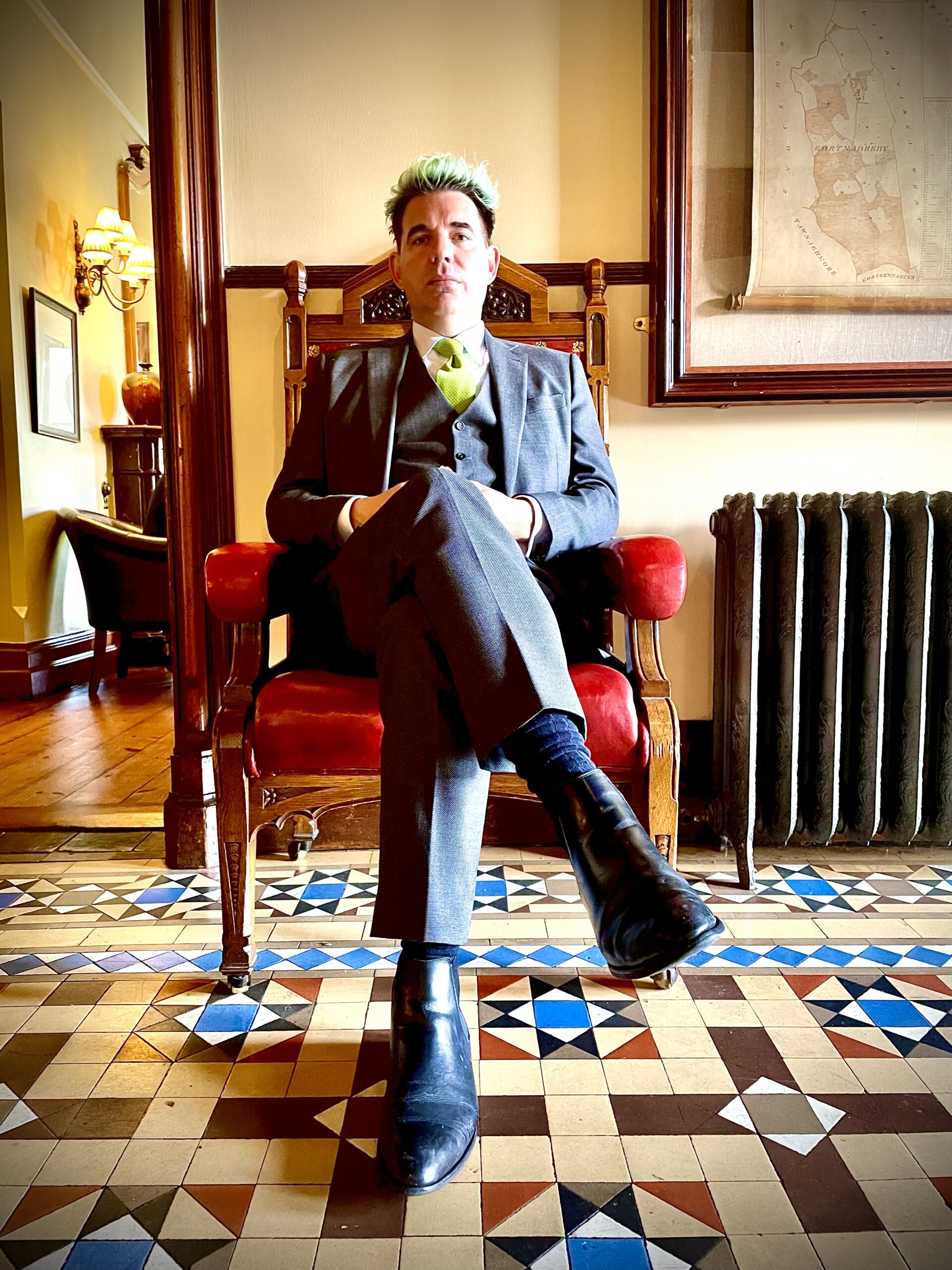
Sean O'Dowda Stephens
ninth modern Taoiseach of Tireragh
The sitting chief of an Irish royal house was never addressed simply by his surname. He was The Ó Dubhda — as the head of the O'Briens was The O'Brien, of the O'Neills The O'Neill. The definite article carried the office.
from Eochaidh Muighmheadhóin, King of Tara, c. 358 AD
The rules that made chiefs in this country were the older rules, and they were elective.
A candidate had to be of the derbfine. The Tánaiste was chosen by the clan. Strict father-to-eldest-son inheritance was an English import, never native law.
— on the restoration of tanistry at the 2025 Cahirmore inauguration
Forty-Nine Generations
From Eochaidh Muighmheadhóin, King of Tara (c. 358 AD), to the present day. Compiled from O'Donovan 1844, Mac Firbis's Leabhar na nGenealach, and Stephens family records.
This is forty-nine named generations. The line is not unbroken patrilineal descent — the crossover at Elizabeth (Gen 44) puts it into cognatic descent from that point forward. In English law that makes the current Taoiseach a collateral, not the senior male heir. In Gaelic law, it qualifies him as a member of the derbfine eligible for election. Both statements are true.
The 2025 inauguration at Cahirmore was not a coronation and it was not the return of a hereditary title. It was the restoration of an older rule.
The old rule in this country was never primogeniture. A Taoiseach was elected from among those descended from the royal line — a member of the derbfine chosen by the clan, not the automatic heir of the last chief. In 2025 the Council of the Ó Dubhda Clan met in succession to the old tuath, weighed the candidates before it, and inaugurated Sean O'Dowda Stephens on the ground at Cahirmore with the planting of a rowan sapling.
The line printed on this page is the line every Ó Dubhda, O'Dowda, O'Dowd, Dowd, Doud, Doody and Duddy of Kerry shares. It is the inheritance of the clan, not the inheritance of one man. The office of Taoiseach is a term of stewardship — the Council will inaugurate the next holder of it at the 2028 Rally.
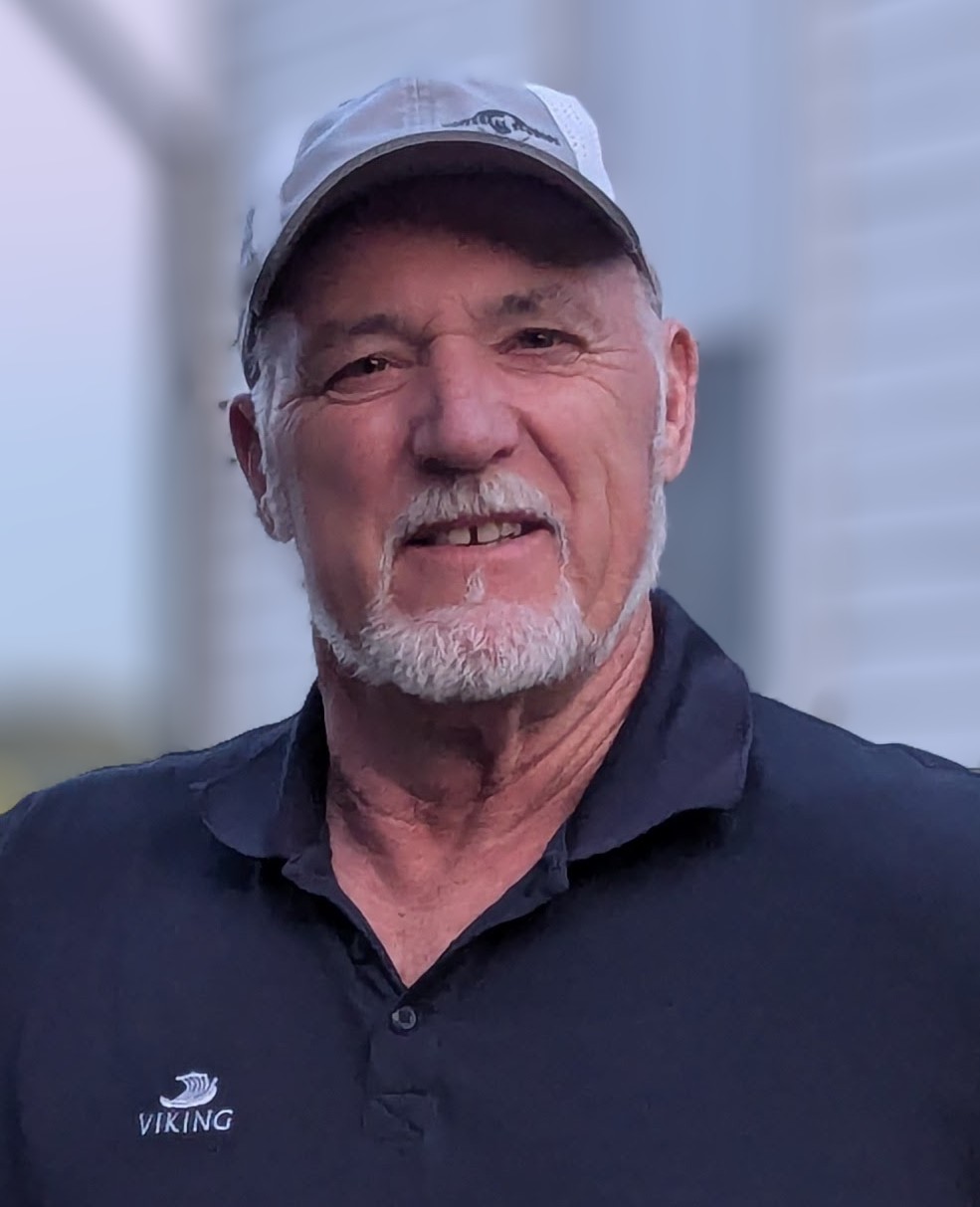
Terry Rochford — An Tánaiste
Named at the 2025 inauguration as Taoiseach-elect, to be inaugurated himself at the 2028 Rally. Retired Illinois State Trooper; the designated successor.
The Tánaiste →Continue Your Journey
A Note from the Clan
This page is assembled from published pedigrees, clan-authored research, and surviving family records. Where sources differ we've noted the variants openly. Where evidence is thin we say so.
If you carry documentation that corrects or extends anything here, we would be grateful to hear from you. Get in touch and we'll weigh it in.