Ardnaglass Castle
July 10, 2025 2026-04-21 16:17Ardnaglass Castle
ARDNAGLASS CASTLE
Ardnaglass Castle
Ard na nGlas — “Height of the Streams” — an O’Dubhda seat in Ardabrone, Skreen
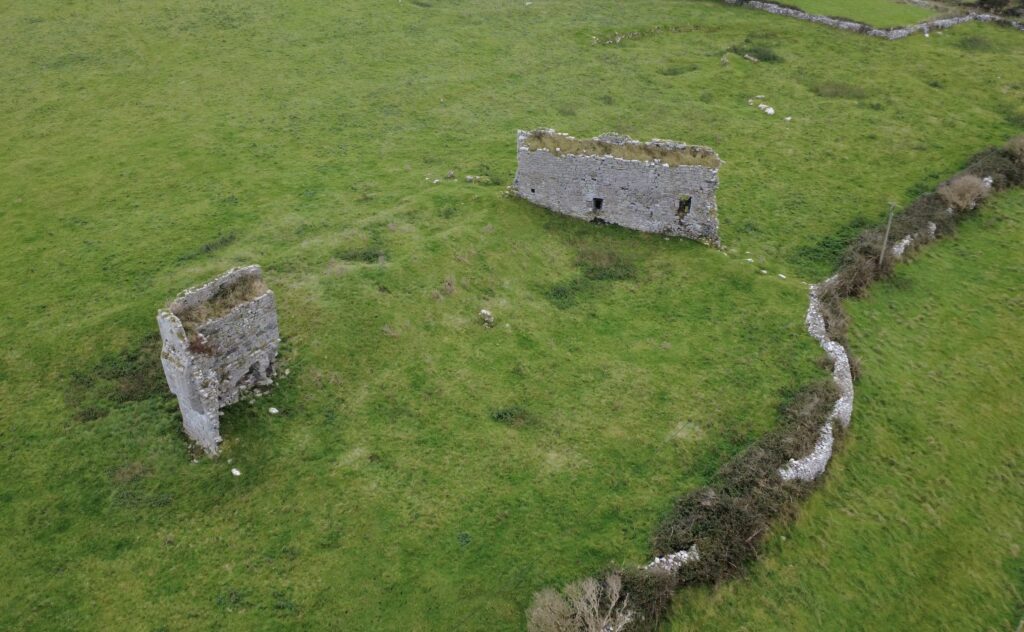
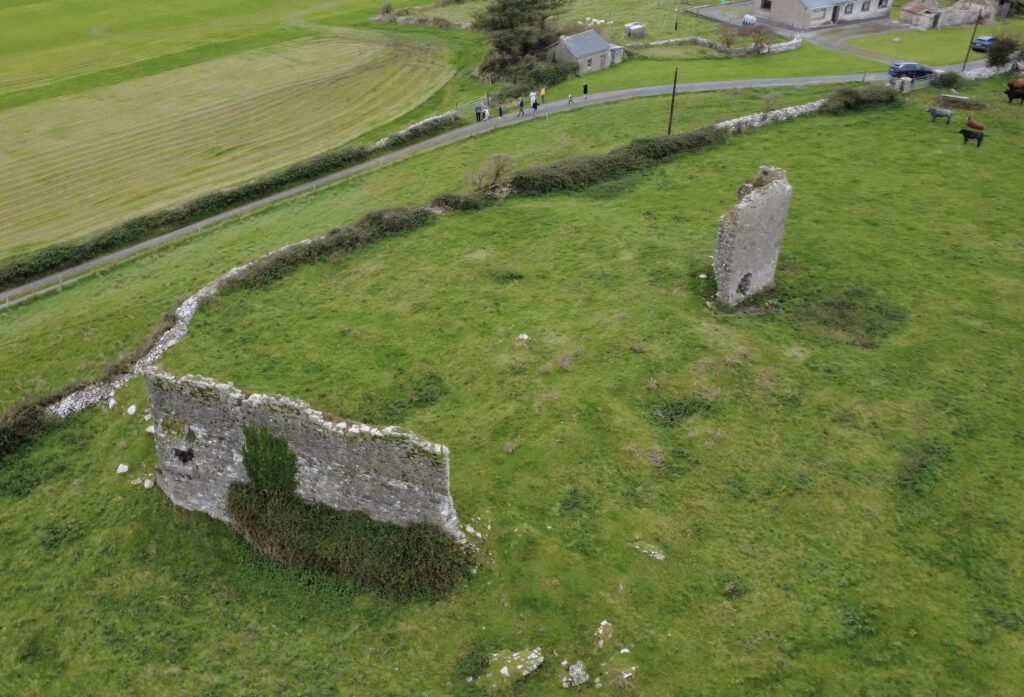
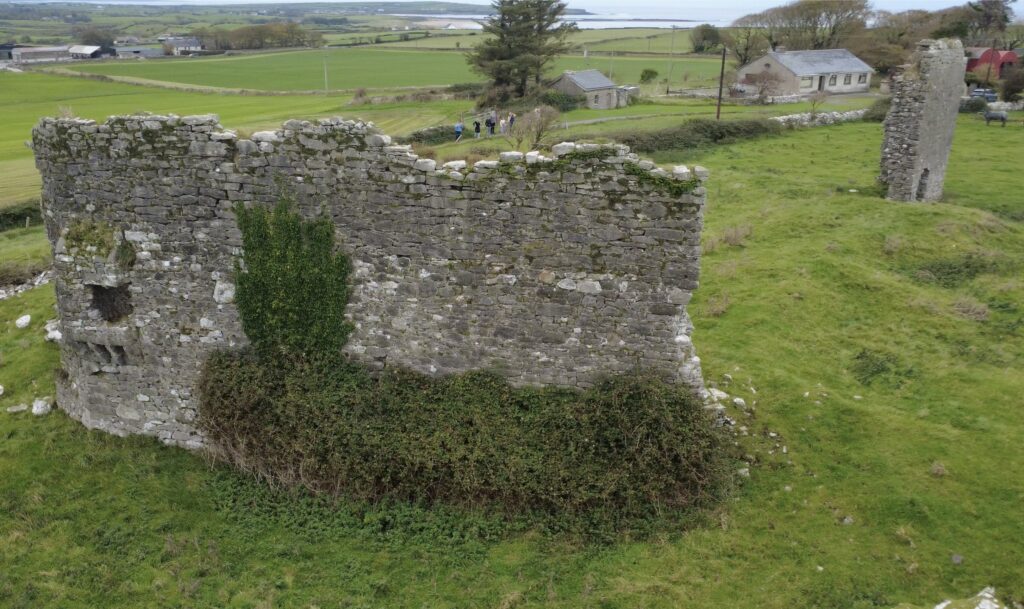
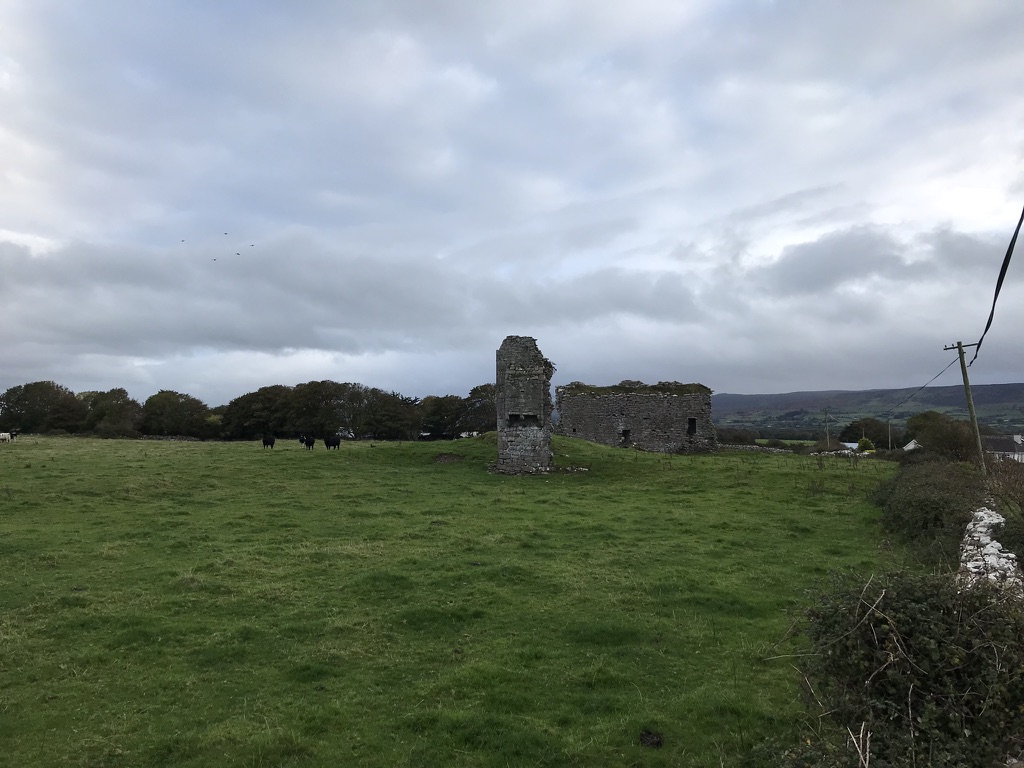
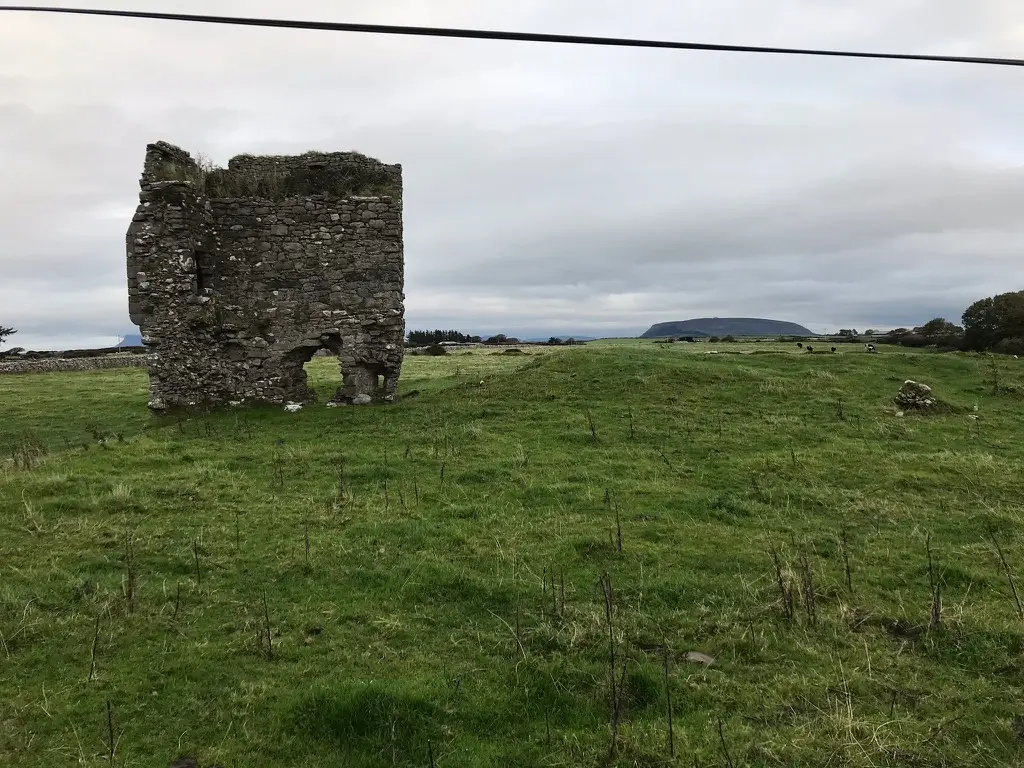
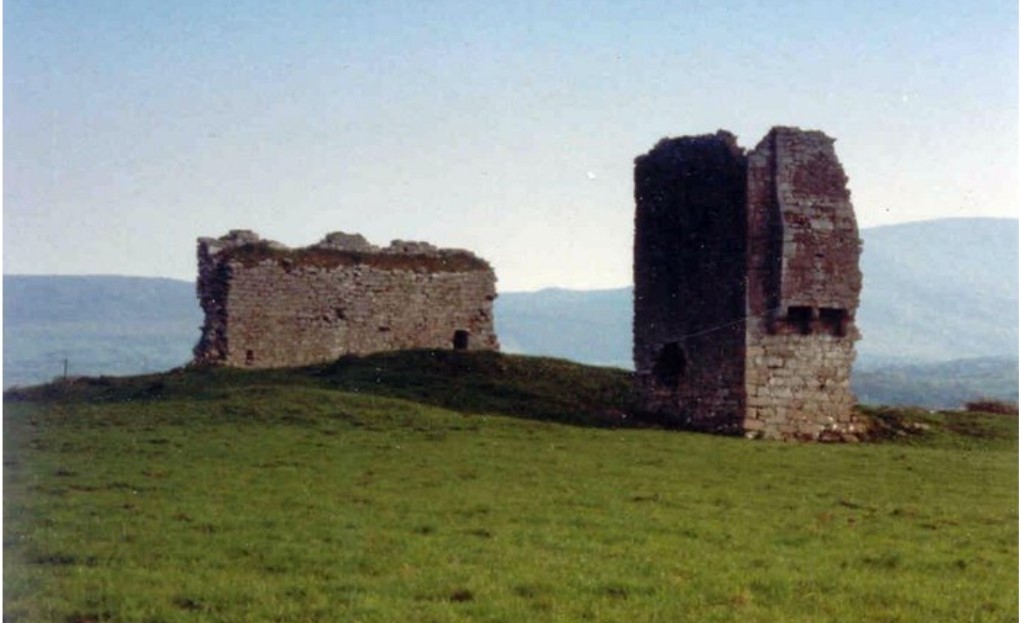
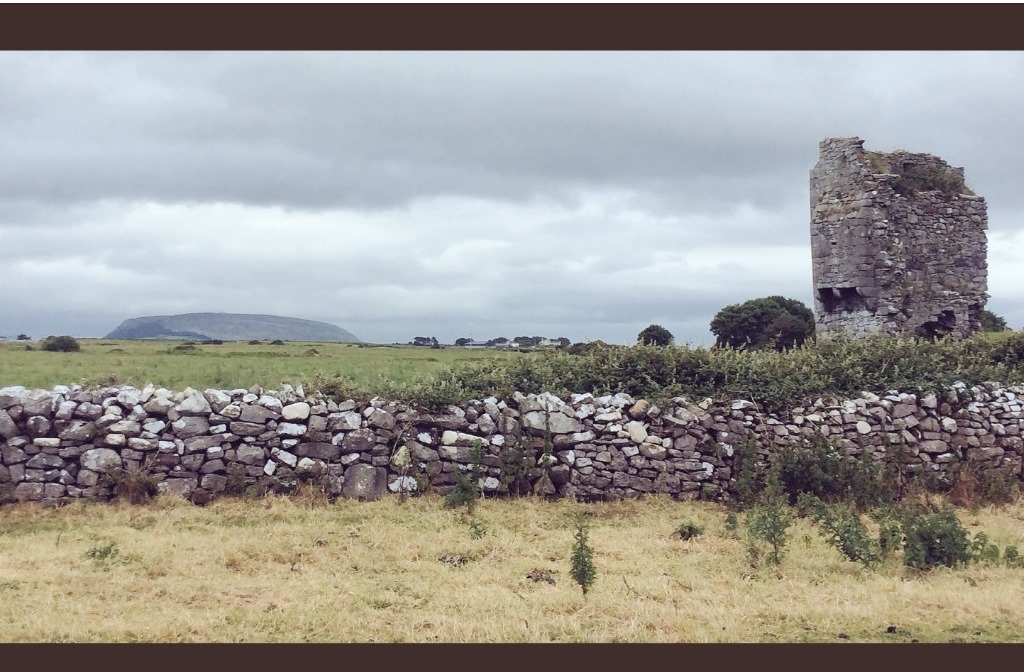
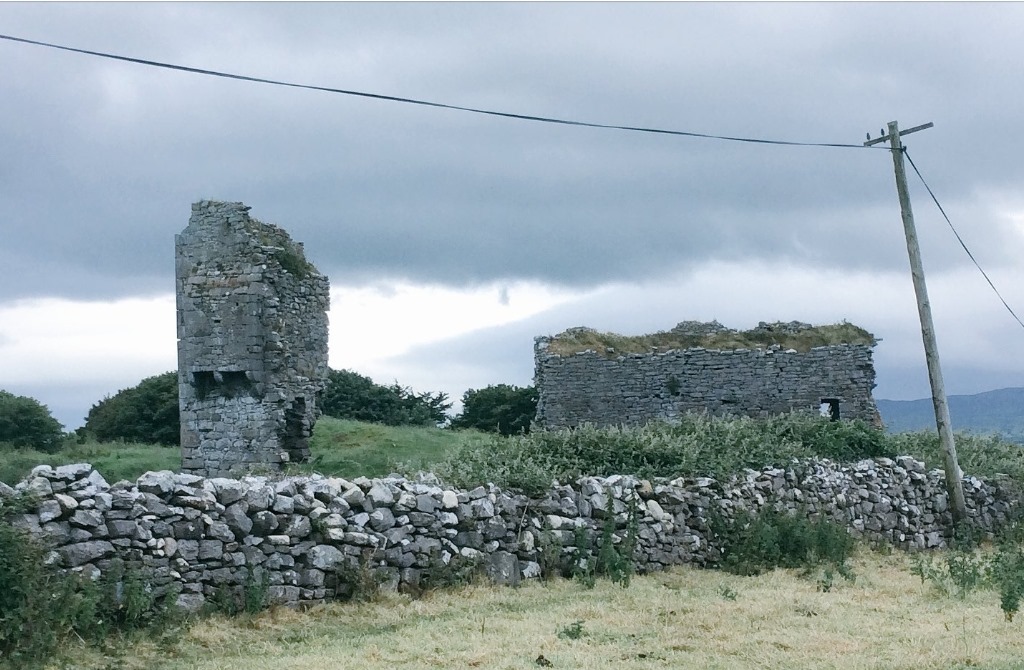
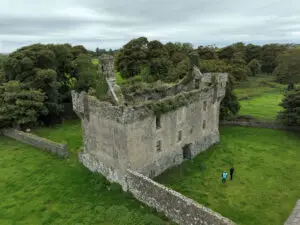
On rising ground a short distance inland from Dunmoran Strand, in the quiet Sligo parish of Skreen, stand the fragmentary remains of Ardnaglass Castle. First mentioned in our written sources as the seat of the O’Dubhda (O’Dowd) and later the MacSwineys, it is one of the better-attested of the twenty fortifications traditionally said to have ringed the O’Dubhda kingdom of Uí Fhiachrach Muaidhe. By 1786 it was already described as a ruin, and it has remained so ever since.
I. The Place: Ardabrone Townland, Parish of Skreen
The castle stands in the townland of Ardabrone (Irish: Ard na Brón), in the civil parish of Skreen (An Scrín, “the shrine”) and the Barony of Tireragh (Tír Fhiachrach, “land of Fiachra”) — the coastal heartland of the O’Dubhda from which the clan takes its ancestral name.
The townland name is glossed by the Placenames Branch as Ard na Brón, “height of the quernstone” (from brón, an old Irish word for a handmill or quern). In his 1836 field notes for the Ordnance Survey, John O’Donovan offered a different reading — “hill of the sorrow” — but the placename has been recorded in enough earlier forms (Carrowardbrone 1615, Ardtron [leg. Ardbron] 1655–7, Ardnebroke [leg. Ardnebrone] 1716, Ardabrone 1660 onwards) to show that the second element has always contained brón, and the millstone reading is now generally preferred.
The name Ardnaglass itself is the name of the estate and castle rather than of the townland. Logainm records it as Ard na nGlas, “height of the streams” — a reference to the small watercourses that drain from this coastal shelf down toward the sea. It is distinct from the other Ardnaglass townlands further north and south in County Sligo.
Ardabrone has been a settled place for a very long time. O’Donovan’s 1836 notes observe that “there are two old forts in this townland,” and surviving records show that the townland also contains a prehistoric portal tomb — evidence that this height above Dunmoran was a place of significance thousands of years before the medieval castle was raised.
II. Ardnaglass in the O’Dubhda Kingdom
According to the tradition set out by clan historian Conor Mac Hale in The O’Dubhda Family History (1990), the O’Dubhda “forged a kingdom in Uí Fhiachrach Muaidhe (Northwest Connacht) which they ringed with 20 castles, often referred to as ‘ten-pound castles.'” Ardnaglass is one of those twenty, and — unlike several on the list — its status as an O’Dubhda seat is independently confirmed by 18th- and 19th-century written sources.
The term ten-pound castle refers to a 1429 statute under Henry VI offering a £10 subsidy for any fortified tower house of minimum dimensions (20 feet long, 16 feet wide, 40 feet high). Although the statute was aimed at the Pale, the tower-house form spread widely among Gaelic lords in the 15th century, and the O’Dubhda adopted it throughout their territory. This places the likely construction of the surviving Ardnaglass tower in the late medieval period, not in the early Christian era.
An important caveat. The remains visible today are those of a late-medieval tower house, but the O’Dubhda presence at Ardabrone is much older than that. It is possible — and quite likely — that an earlier O’Dubhda fortification, now invisible, occupied the same hill or one nearby, and that the stone tower represents a later, 15th-century rebuilding on a long-established site. The present ruin should not be confused with the “original” O’Dubhda castle of Ardnaglass, for which no physical trace has been securely identified.
III. The Historical Record: From O’Dubhda to Ruin
The castle’s last securely-attested O’Dubhda proprietor was Donal O’Dowd of Ardnaglass, a figure of the closing Elizabethan and early Stuart wars. According to clan historian Conor Mac Hale’s digest of Mac Firbis and the O’Dowd pedigree (The O’Dubhda Family History, 1990, pp. 18–19), Donal was present with O’Sullivan Beare at the siege of Dunboy in 1602; having submitted and been pardoned, he obtained a grant of arms in 1608 from the College of Arms — the coat now reproduced on our Armorial Bearings page. In 1614 he married Slany O’Brien of Dromoland and Lemeneagh, daughter of Donogh O’Brien, an alliance between the Ardnaglass O’Dubhda and one of the leading surviving Gaelic houses of Thomond.
Donal’s line did not long retain Ardnaglass. Mac Hale records that his granddaughter Dorothy O’Dowd married David O’Dowda of Bonniconlon in 1656, the “heir to the main O’Dubhda estates in Tireragh” — but by that point the castle had already slipped from the Ardnaglass line under the Cromwellian settlement. The earliest published narrative of what followed is in Samuel Lewis’s Topographical Dictionary of Ireland (1837), which succinctly records the chain of ownership:
“The old castle of Ardnaglass was originally the residence of the Odowds, a family then of great note, and was also in the possession of the Mac Swineys; it is now the property of J. Jones, Esq., whose ancestor came over with Oliver Cromwell.”
— Samuel Lewis, 1837 (Skreen entry)
The castle thus moved through three successive proprietors: first the O’Dubhda, then the gallowglass family of MacSwiney (Mac Suibhne), and after the Cromwellian settlement the Jones family — later succeeded by the Blacks. The individual records for each phase fill out the picture:
- 1739 — Rev. William Henry, visiting Sligo, records Loftus Jones, Esq. as “seated at Ardnaglass.” Loftus Jones is the subject of one of Turlough O’Carolan‘s celebrated harp tunes, “Loftus Jones,” composed for him by the blind composer toward the end of O’Carolan’s life (c. 1738).
- 1749 — Thomas Jones of Ardnaglass serves as High Sheriff of County Sligo.
- 1786 — Wilson’s Post Chaise Companion describes the seat of Mr. Jones as lying “half a mile beyond the ruins of a castle” — the earliest surviving reference to Ardnaglass in its ruined state. The medieval tower had therefore been abandoned by the late 18th century.
- Griffith’s Valuation (mid-19th century) — Ardabrone is by now part of the Webber estate. William Graham is recorded as the tenant leasing a property valued at £4.
Close to the castle, at the rear of the Jones seat, stands the curious two-storey Stand House (c. 1830), a now-protected structure with a distinctive steeply pitched slate roof — a reminder that the Ardnaglass demesne continued in active use as a country estate long after the tower itself had fallen.
IV. Folklore: The Dog and the Wolf
The castle is remembered in local tradition chiefly for one story. As recorded by a schoolchild in the Beltra district of County Sligo in the 1930s for the Irish Folklore Commission’s Schools’ Collection (Bailiúchán na Scol, vol. 0168, p. 425), preserved at dúchas.ie:
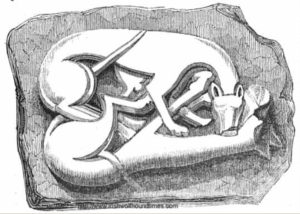
“The castle of Ardnaglass was built by the O’Dowds. Once a dog belonging to the O’Dowds killed a wolf that was doing a great amount of damage among the flocks of Sligo and Leitrim.”
To mark the deed, a carved stone depicting the dog in the act of killing the wolf is said to have been set up at Ardnaglass. A sculpted stone of this description was presented to the Royal Irish Academy in 1841 and is said to have come from the castle; it now forms part of the national collections in Dublin. Specialists note, however, that the carving itself appears to be considerably earlier than the late-medieval tower house, so the stone was probably reused at Ardnaglass rather than carved to order for the O’Dubhda event the folklore remembers.
A further oral tradition, recorded in the Schools’ Collection from the High Park school (vol. 0169, pp. 383–4), holds that the castle was “besieged by Cromwell’s army for two months.” There is no independent documentary support for such a siege, and the tradition should be taken as local memory rather than established fact.
Readers familiar with earlier versions of this page will note that a longer, more dramatic legend — involving a dispute between the O’Dubhda chief and a MacSwiney over a horse, ending in a killing at a border ford — has been removed. We have been unable to trace that account to any primary or scholarly source, and we preferred to leave it out rather than repeat it as history.
For the full folklore entry — with the complete Schools’ Collection transcript, the record of the 1841 donation to the Royal Irish Academy, the last-wolf tradition, and what we have and have not verified — read The Ardnaglass Dog and the Wolf →
V. Visiting Ardnaglass Today
Ardnaglass Castle is on private farmland and is not maintained as a public heritage site. The ruin sits in an active field, close to a modern bungalow, off the Coast Road (the R297) in the stretch between Dromard and Skreen. Dunmoran Strand is a short walk away.
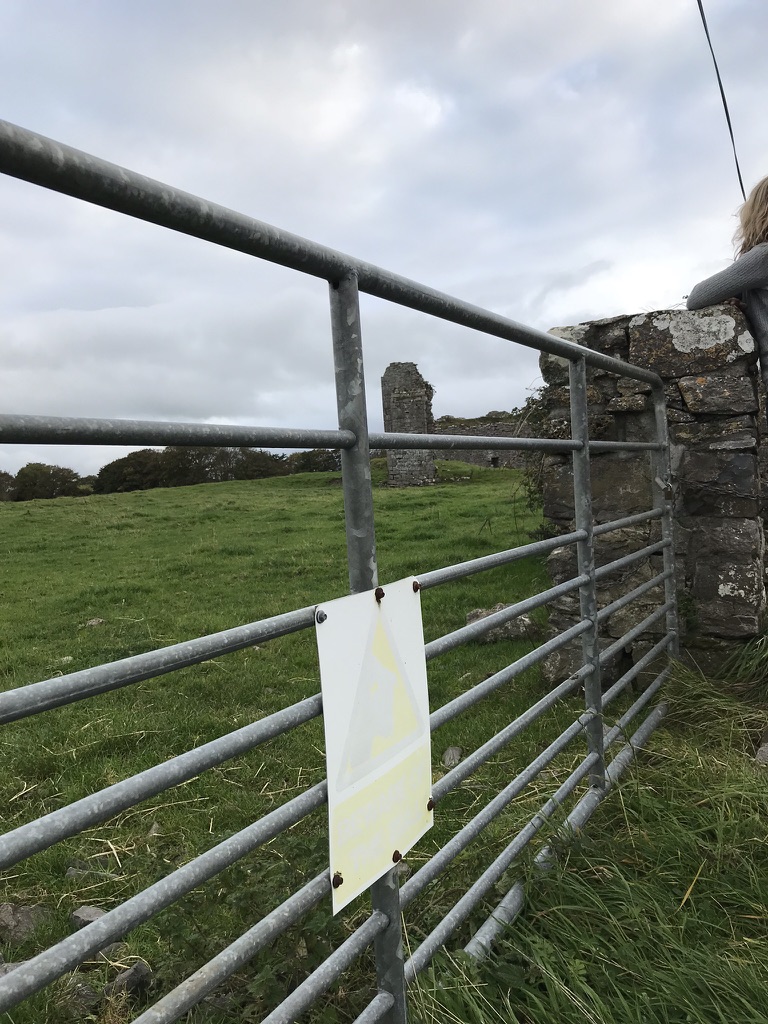
Visitors are asked to view the castle only from public roadways unless the landowner’s permission has been sought and given. Livestock are typically present, and the ruin itself is unstable in places. As with the other O’Dubhda castle sites, please treat the land, the stones, and the privacy of those who live alongside them with care.
VI. Sources
- Samuel Lewis, A Topographical Dictionary of Ireland (London, 1837), entries for Skreen and for Sligo (Antiquities).
- Wilson’s Post Chaise Companion through Ireland (1786) — earliest reference to Ardnaglass as a ruin.
- Rev. William Henry, Hints Towards a Natural and Topographical History of the Counties Sligo, Donegal, Fermanagh and Lough Erne (1739) — records Loftus Jones at Ardnaglass.
- Landed Estates Database, University of Galway — entry for Ardnaglass, consolidating the Jones and Webber references.
- John O’Donovan, Ordnance Survey Name Books / Letters for County Sligo (1836) — field notes on Ardabrone and the “two old forts” in the townland.
- Logainm.ie, the Placenames Database of Ireland — entries for Ard na Brón (Ardabrone), An Scrín (Skreen), and Ard na nGlas (Ardnaglass).
- Bailiúchán na Scol / Schools’ Collection (1937–9), vols. 0168 and 0169, Co. Sligo, digitised at dúchas.ie — the Dog-and-Wolf story and the Cromwellian siege tradition.
- Conor Mac Hale, The O’Dubhda Family History (1990) — the canonical twenty-castle list.
- National Monuments Service, Historic Environment Viewer — official record of the Ardnaglass / Ardabrone archaeological site.
- National Inventory of Architectural Heritage — record of Stand House, Ardabrone (Reg. No. 32401305).
Ardnaglass Castle — Ardabrone, Tireragh
Ardnaglass Castle
Ard na nGlas (Height of the Streams)
54°15'21.9"N, 8°42'24.6"W
Ardabrone townland, Parish of Skreen
Barony of Tireragh, County Sligo, Ireland
Tower house / castle ruin
One of the 20 castles on the Mac Hale list of O'Dubhda fortifications
Likely a "ten-pound castle" (15th century)
Surviving tower likely 15th century
O'Dubhda presence on this hill is considerably older
No securely identified trace of the original Gaelic fortification
Already described as "the ruins of a castle" by Wilson in 1786
Considerable masonry remains in an active field
Unstable in places — not restored or stabilised
On private farmland off the R297 Coast Road
Not a formal heritage site
Dunmoran Strand is a short walk away
Direct O'Dubhda seat in the Barony of Tireragh
Confirmed by Lewis's Topographical Dictionary (1837)
Later held by the MacSwineys (Mac Suibhne), then the Jones family from the Cromwellian settlement, and afterward the Blacks
Remembered in folklore as the site of the Dog-and-Wolf legend
Ardnaglass is among the most fully documented of the O'Dubhda castles, traceable in written sources from the 18th century onward, with its passage through the Jones family commemorated in Turlough O'Carolan's harp tune "Loftus Jones." Today the ruin stands in private ownership.
Related Articles
From the O'Dubhda journal — posts connected to Ardnaglass Castle.

How Many Castles Did the O’Dowds Actually Have? (More Than You Think — and We’re Still Counting)
Every year, another castle surfaces. A local farmer mentions old walls in a field. A researcher cross-references a 17th-century map with a townland name. An archaeological survey turns up foundations where nobody expected them. The story of the O’Dubhda castles is one that refuses to sit still — because we’re still writing it. The Famous “20 Castles” — or Is It 24? Or More? If you’ve read anything about the O’Dubhda (O’Dowd) clan, you’ve probably encountered the claim that our ancestors “ringed their territory with 20 castles.” It’s a powerful image — a network of fortifications stretching across what is now County Mayo and County Sligo, from Lough Conn to Drumcliff Bay, protecting a kingdom that endured for centuries against the Burkes, the Birminghams, and eventually the English Crown. The clan historian Conor Mac Hale spent years researching and locating these castle sites. His work gave us a list of names and locations that has been cited ever since — from Wikipedia to genealogy forums to our own pages. But here’s where it gets complicated. The truth is, we don’t actually know how many castles, fortifications, and strongholds the O’Dubhda maintained. The commonly cited number is 20, but Tony Dowd’s family archives reference 24 castles and 52 towns. And honestly? The exact number doesn’t really matter. What matters is the picture it paints: a clan that strategically fortified an entire kingdom across hundreds of square miles of coastline, river valleys, and rolling hills — at least 24 locations of strategic importance, likely more, forming a defensive ring around O’Dubhda lands that held for centuries. New sites continue to surface. Some we can confirm. Some remain tantalisingly uncertain. The number keeps growing. What Is a “Castle,” Anyway? When most people hear “castle,” they picture towering stone walls, a drawbridge, maybe a moat. The reality of O’Dubhda fortifications is far more varied — and far more interesting. Our ancestors built, occupied, and adapted: Tower houses — the classic Irish “10-Pound Castles,” named after a subsidy granted by Henry IV in 1429. Small, sturdy, and built for defence. Castleconnor, built around 1520 by Conor O’Dowd, is a prime example. Fortified bawns — walled enclosures like Roslee Castle at Easkey (built 1207) and Tanrego Castle overlooking Ballysadare Bay. Adapted Norman castles — fortifications originally built by Anglo-Norman invaders that the O’Dowds captured, contested, or burned. Ballymote Castle, torched by our ancestors in 1588, is the most dramatic example. Ancient ringforts — earthen fortifications predating any stone castle by centuries. Rath O’Dubhda in Doonfeeney, Co. Mayo, is the ancestral ringfort of the entire clan and still exists today as an earthwork. Signal towers and strategic sites — Carrowmably in Tireragh sits on a prehistoric henge, later topped by a Napoleonic signal tower in 1804. Not a “castle” in any traditional sense, but a site of continuous strategic importance on O’Dubhda land. Later manor houses — grand buildings like Belleek Castle (now a hotel) and Enniscoe House (a Georgian mansion on Lough Conn) were built centuries after the O’Dubhda era, often on or near the sites of earlier fortifications. But crucially, the current buildings are not the O’Dowd castles — and in some cases, they aren’t even on the same spot as the original. So when we say “24 castles,” what we really mean is at least 24 locations of strategic and historical importance to the clan — some with dramatic ruins, some with later buildings standing nearby, some with nothing visible above ground at all, and some where the connection is territorial rather than through direct ownership. The Castles We Know About Here’s what we’ve identified so far. And we emphasise so far. Direct O’Dubhda Castles — Ruins Still Standing These are sites where the O’Dubhda built or directly controlled a fortification, and where physical remains survive: Enniscrone Castle Co. Sligo — Also called Field Castle or O’Dowd’s Castle. First fortified in the late 14th century. Currently the subject of active preservation efforts. Roslee Castle, Easkey Co. Sligo — A fortified bawn at Easkey pier, built in 1207. Freely accessible with stunning coastal views. Castleconnor Castle Co. Sligo — A tower house on the River Moy, built around 1520 by Conor O’Dowd. The current ruins may not be on the exact original castle location. Castletown / Cottlestown Co. Sligo — A 13th or 14th-century fortified administrative centre in Tireragh. Baile an Chaisleáin — “Town of the Castle.” Rathlee Castle Co. Sligo — Originally Norman-built, later controlled by the O’Dubhda as the dominant power in Tireragh. Image coming soon Ardnaglass Castle Co. Sligo — A ruin in the parish of Skreen, part of the defensive network. Image coming soon Tanrego Castle Co. Sligo — A fortified bawn on Ballysadare Bay. Appears on Browne’s 1589 map of Sligo. Grangemore Co. Sligo — A castle ruin adjacent to an ancient burial ground in Templeboy. Originally an O’Colman castle, integrated into the O’Dowd network. Image coming soon Carn Amhalghaigh Killala Bay, Mayo/Sligo border — Built in 1477. The inauguration site where each new O’Dowd prince was invested. Now in ruins. Image coming soon Lecan Castle Near Enniscrone, Co. Sligo — Home of the MacFirbis scholars who wrote the Great Book of Lecan (1397–1418). Only a fragment of wall remains. O’Dubhda Territory — Later Buildings on Castle Sites At these locations, an O’Dubhda castle or fortification once existed, but the current building is from a later era — and may not be on the exact original site: Belleek Castle Ballina, Co. Mayo — Now a hotel (1825–1831). A 13th-century tower house existed here, but the hotel is not the O’Dowd castle. Mount Falcon River Moy, Co. Mayo — Now a hotel. A castle existed in this area but the current 19th-century estate is a later construction. Private residence Longford House Near Ballysadare, Co. Sligo — Part of the castle network (listed as “Lomford”). Recently sold as a private residence. Image coming soon Bonniconlon House Co. Mayo — Listed as “Beaufield” in older records. In O’Dubhda territory but details of

The Dog’s Battleflag
The wolfhound carved on a stone from Ardnaglass Castle was never meant as a clan emblem. Four hundred years later it has become the closest thing the O’Dubhda have to one — quieter than the formal arms, and easier to carry.
The 1990 Rally — First Hosting in 395 Years
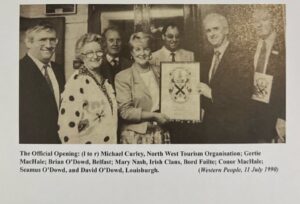
On Friday, 6 July 1990, just over a hundred O’Dubhda descendants gathered in the Convent Hall at Enniscrone. It was the first hosting of the clan in 395 years — since Tadhg Buidhe was installed as Taoiseach in 1595 with the blessing of Red Hugh O’Donnell. They came from Ireland, Scotland, England, Wales, the United States, Canada, Australia and Zambia, and nobody quite knew how it was going to go. At a glanceDates: Friday 6 – Sunday 8 July 1990 · Base: Convent Hall, Enniscrone · Attendance: 100+ from eight countriesNotable moment: Rowan tree and commemorative plaque at Enniscrone Castle — a living marker for the returned exiles. The Gathering The rally had taken shape slowly around Gertie MacHale’s pharmacy in Enniscrone, where for years O’Dowds in search of their roots had been sent with the instruction, “Go see Gertie — she knows all about the O’Dowds.” Her 1971 book Stories from O’Dowda’s Country, and a conversation with the hotelier Tom Nicholson about why foreign visitors had stopped coming to town, gave her son Conor MacHale the idea to simply ask them to come. With Mr and Mrs Tuffy and a small group of Enniscrone volunteers, they did. The opening was held in the Convent Hall, emceed by Jackie Gleeson. A vellum scroll prepared by Sr Emer Mulderrig, emblazoned with the seventeenth-century clan coat of arms, was signed by every person present — six columns of names, now held in the Uí Dubhda archive. When Mary Nash of Clans of Ireland and Michael Curley of North-West Tourism unveiled the coat of arms and explained its heraldic meaning, clan certificates were presented to David O’Dowd of Louisburg, a direct descendant of Donal O’Dubhda (brother of Tadhg Buidhe), and to Seamus O’Dowd of AIB. Any early hesitancy evaporated quickly. The planned events began almost an hour late — the ice broken, it was said, by a supper of Moy salmon and brown bread laid on by Maree MacHale and a team of local caterers. A ceilidh followed, led by the Kilglass branch of Comhaltas Ceoltóirí Éireann under Anthony Coleman, with the famed Irish piper Larry O’Dowd (whose own ancestors came from Tireragh) joining on stage. When the organised event ended, most of the clan adjourned to Maughan’s pub and stayed until the small hours, “the sound of revelry wafting down the main street in Enniscrone.” Tours & Sites Visited Demand for the Saturday tour was such that the bus filled and the rest of the clan followed in a convoy of cars. With commentary from Conor MacHale and Cyril Lonergan, they visited: Scurmore — home of the Mermaid Rocks and the old legend of the mermaid-wife whose seven sons weep when an O’Dowd dies Castleconor — where Chieftain Daithi Rua O’Dowda was murdered in 1594 Ardnaree Augustinian Abbey, Ballina — founded in the fourteenth century by Tadhg O’Dubhda, Taoiseach of Tireragh Ardnaglass Castle — home of Donal O’Dubhda, believed to have been granted the O’Dowd coat of arms in 1608 Moyne Abbey — where many O’Dowd chieftains are buried and where Fr John O’Dubhda was martyred in 1577 At Moyne, in cold weather and a drizzling rain, Jim Gilvarry of Crossmolina Historical Society guided the clan across the grass into the ruins. In a side-chapel built to mark the marriage of an O’Dubhda Taoiseach to a Burke heiress, Fr Michael Doody SJ of St Louis, Missouri, recited a short ecumenical prayer for all those buried there. Highlights For the duration of the rally an exhibition filled the Clan Rally Centre: maps of Tireragh, the O’Dowda estate at Bonniconlon (1854), the Strafford Inquisition of 1635, the 1597 deed of sale of Enniscrone Castle, and a genealogy from O’Donovan’s Tribes and Customs of the Uí Fiachrach (1844). Alongside them sat books by the MacFirbisigh bards — The Great Book of Lecan, The Yellow Book of Lecan, The Annals of Connacht and The Annals of the Four Masters — the sources that had kept the clan’s memory alive. Saturday evening saw the launch of Conor MacHale’s The O’Dubhda Family History, followed by a lively discussion during which it was explained that, through mistranscription and historical accident, the O’Dubhda surname now carried over forty recognised variations. Sunday’s meeting agreed the shape of what was to come: a formal clan newsletter, printed membership forms and subscriptions, an idea to clear the site at Scurmore so the Mermaid Rocks might one day host a proper inauguration, and a proposal that members clip every published O’Dowd reference — good or bad — so that a modern “Book of Annals” could be assembled, echoing the work of the MacFirbis bards. The Rowan at Enniscrone Castle The weekend closed in the grounds of Enniscrone Castle — last held by O’Dubhda forces in the mid-seventeenth century. In a formal ceremony, a rowan tree, sacred to the O’Dubhda ancestors, was planted by Tom Dowds of Scotland, representing the Wild Geese come home, and Francis O’Dowda, a direct descendant of Baron O’Dowda of Bonniconlon. They unveiled a commemorative plaque, and every person present took a turn filling the hole around the sapling before saying their farewells. Voices & Visitors Among those who came: Nora O’Dowd MacNamara from Lisdoonvarna, whose uncle Michael O’Dowd had been a bodyguard to President Eisenhower, and who enjoyed arguing over the spelling of the name with Mamie Doud Eisenhower herself. Seamus O’Dowd from Shannon, at 86 the oldest present. Eighteen-month-old Keelan O’Dowd from Enniscrone, who brought along his parents Edward and Linda. Four Dowds from Scotland — Andrew, Tom, Bridie and Thomas — whose descendants would later become Taoisigh. Donna Glee Williams from the USA. Tess and Bill Heery from Galway. Daphne and Arnold Booth from the UK. The full roll of the vellum scroll — six columns of signatories — is preserved in the Uí Dubhda archive. Further Reading Thomas J Dowds, The O’Dubhda Gatherings: A History (forthcoming) — chapter 1, “The First Rally 1990” Conor Mac Hale, The O’Dubhda Family History (G. MacHale, Inniscrone, 1990) — launched

A Note from the Clan
These pages are researched and written by volunteers of the O'Dubhda Clan. Our history is vast, and our understanding of it grows with every correction, addition, and story shared by clan members and researchers.
If you have found an error, or have information that would improve this page, please get in touch.
The history of Ardnaglass Castle draws on:
- ›Conor Mac Hale, The O’Dubhda Family History (1990)
- ›John O’Donovan, The Genealogies, Tribes & Customs of Hy-Fiachrach (Irish Archæological Society, 1844)
- ›Samuel Lewis, A Topographical Dictionary of Ireland (1837)
See the full bibliography in the O’Dubhda Library.