Help Needed
April 22, 2026 2026-05-18 17:29Help Needed

Pictures of the Land
Strong original photographs of our castles, abbeys, sacred sites, the Moy, the coast, and our gatherings. Not just replacements for what’s here — net-new material we’ve never shown.
We have a handful of good photographs across a lot of ground. If you’re out with a camera in Tireragh, Erris, around Ballina or Killala, send us what you capture. If you’re attending a rally, a walk, or a meeting, bring a camera.
Drone shots of the castle sites and inauguration mounds would be particularly welcome — the topography only makes sense from the air.
Offer Photographs →High-End Archival Scans
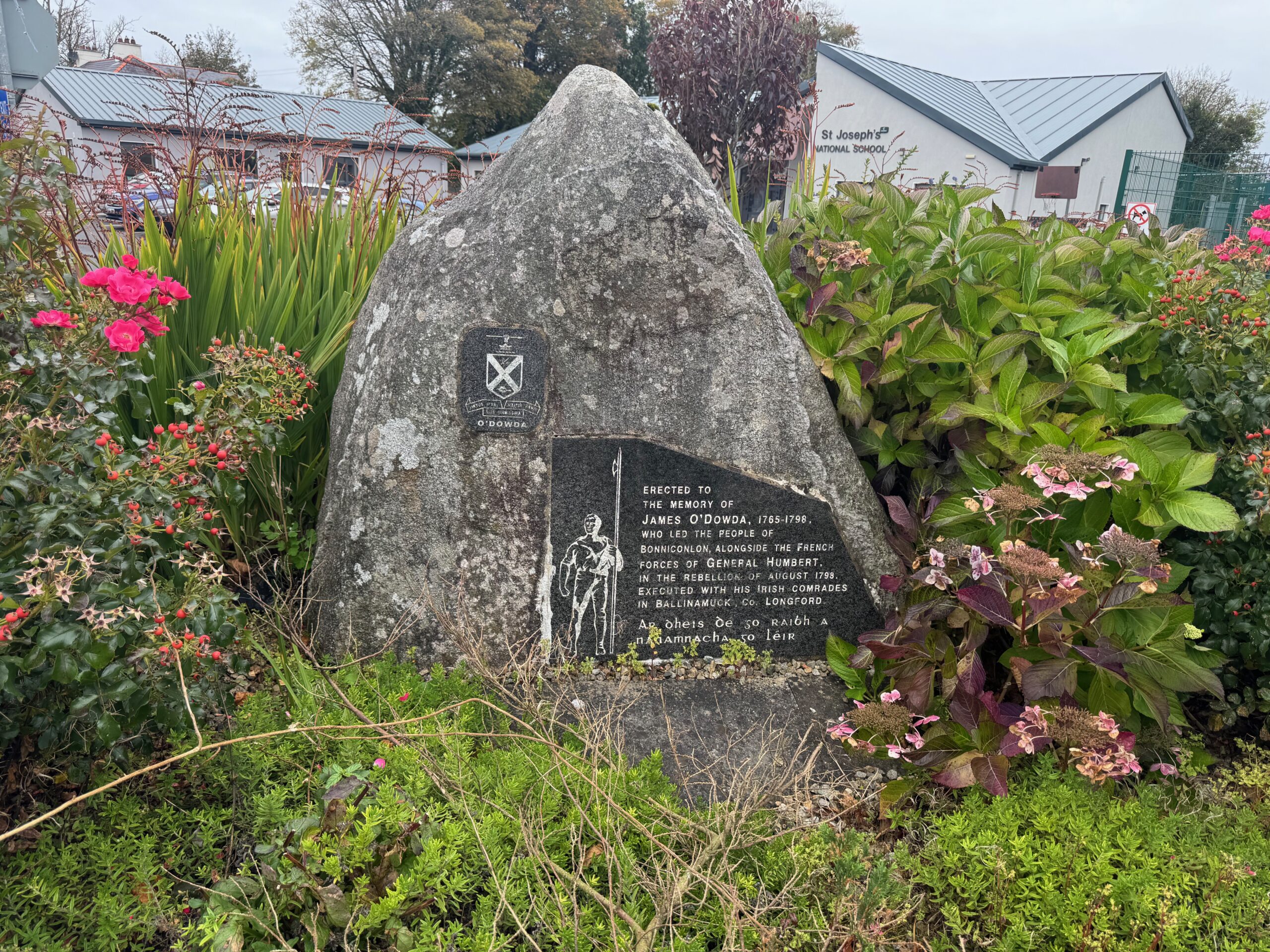
We have access to the original paintings of the clan’s armorial bearings and are seeking someone who can produce proper archival scans or photographs of them — so they can live on the site at full resolution for the first time.
The paintings are physical objects. What we have online are downsized jpegs taken a generation ago. At a proper archival resolution, these can be zoomed into by anyone who wants to read the detail — the way a museum would publish them.
In parallel, we are writing formally to the National Library of Ireland to request images of the three Genealogical Office manuscripts (1574, 1608, 1784) where the original records of our arms survive. If you have reading-room experience in Dublin and could help push that request through, we’d welcome it.
Offer Your Skills →
The Carved and Inscribed
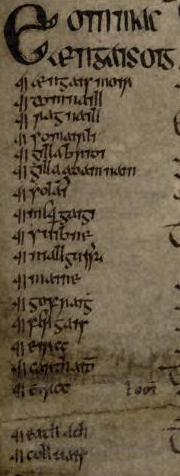
Inscribed slabs, grave markers, carved fragments, the stones at our castles and abbeys. If you live near one, or already have good photographs, we’d like careful images and, where possible, close documentation.
Rathfran, Rosserk, Moyne, Ardnaree — the abbeys are full of carved work that rewards close looking. Castle doorways, window arches, and quoins also carry inscriptions we have only half-catalogued.
Photograph at a raking angle where possible; inscriptions that are invisible at noon can come out sharply at six in the evening with a low sun.
Share a Stone →A Photograph of the Stone in Dublin
A carved stone depicting a dog killing a wolf — said to have come from Ardnaglass Castle and to mark the Ó Dubhda hound that took the last wolf of Connacht — was presented to the Royal Irish Academy in 1841. It is now part of the Academy’s collections in Dublin. We tell the story on both the Ardnaglass Castle page and in the Dog and the Wolf folklore article.
But we have no photograph of the stone itself. The RIA holds the object; we hold the story. The two belong together.
We need someone based in Dublin, or a friend of the Academy, or a museum photographer with access, to help us commission a proper archival image of the stone — ideally with raking light, so the carved figures show clearly. A single good shoot is all it takes.
Help Get the Photograph →
Objects in Family Hands
A christening cup, a family Bible, old photographs, letters, a carved spoon, a pipe, a chair. If you hold something with an Ó Dubhda, O’Dowd, or Dowda story attached, we’d love a photograph and a short note on its history.
We are not asking you to part with anything — only for a record. A photograph and a paragraph: who had it, where it came down from, what you remember being told.
Over time, a collection of these, even just as images, becomes a rich counterpart to the scholarship — the life of the family as well as the history.
Tell Us About an Object →The Lost Castles Hunt
A small group is chasing the castles named in Mac Hale and on the Baxter c.1600 map that no longer stand — or can’t yet be located on the ground. Sites like Dunbuoy, Grangbeg, Duncarragh.
If you like fieldwalking, old maps, and detective work, join the hunt. Time in the townland, patience with the Ordnance Survey six-inch sheets, a willingness to knock on doors and ask older neighbours what the field is called.
Every site we can pin down is another entry moving from the Lost Castles page to the Castle Tour.
See the Lost Castles Page →

Back the Work Directly
The site, the rallies, and the fieldwork all cost money — hosting, archival scans, travel to sites, printing, commissioned photography. If you’d like to back the work directly, contributions in any amount go straight back into the clan’s archive and events.
Recurring support lets us plan beyond the next rally. One-off contributions are equally welcome — we will put them to the most obvious need at the time and tell you what they bought.
If you represent a family trust, a heritage body, or a business with a Mayo or Sligo connection, we are happy to discuss a larger contribution and what it would enable.
Offer Support →Help Us Confirm the Clan Motto
The clan has no single, settled motto in continuous use — and we’d like to fix that, properly, with citations.
What we have so far. Conor Mac Hale’s The O’Dowds, A Brief History (1990) records the motto “Bravery is best sustained by arms” attached to one of the three published O’Dowd coats of arms — specifically the gold-saltire-on-green-shield variant Mac Hale calls “the most widely illustrated version.” Mac Hale gives only the English; the original Latin form is not preserved in his text. The NLI’s main Ó Dubhda heraldic entry (#101574) records no motto. A Cashel manuscript variant carries “innocent as a dove,” but Mac Hale flags that as probably the Dublin Dowds branch, not the Tireragh main line.
Family-line precedent. The Canadian O’Dowdas (Newfoundland line) carry “Courage and Resilience” on their family device. A natural Gaelic rendering would be “Misneach agus Teacht Aniar” — misneach for courage, and teacht aniar, the iconic Irish idiom for resilience (literally “coming back from the west” — the get-back-up spirit). That translation should be confirmed by an Irish-language historian before any clan use.
What we’re asking for. If you have access to:
- The original Latin form of the motto on the green-saltire arms (Genealogical Office MSS, NLI, Chief Herald records);
- Earlier or competing motto records for the Tireragh Ó Dubhda line specifically;
- A defensible Gaelic translation reviewed by a working Irish-language scholar;
- Any oral or written tradition of a motto used by your branch of the family;
… we want to hear from you. The goal is a single, citable motto we can defend in front of a heraldist or an Irish-speaking historian without reaching for a footnote we can’t support.
Share What You Know →
The Faces We’re Still Missing
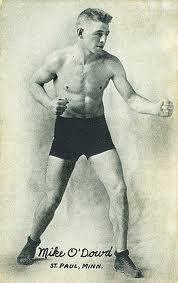
The Notable Ó Dubhdas directory carries the stories of clan-named figures across boxing, hockey, music, the cloth, parliament, the bench, the laboratory. For many of them we have only the words. The photographs — family prints, parish photographs, archive shots — sit in drawers and on shelves in houses we can’t see from here.
Around one in five of the published Notable profiles has no portrait, and the discovery pass keeps surfacing more historical figures whose images simply aren’t on the open web. We’d like to fix that.
If you’re a logged-in member, every Notable profile that’s missing a photograph now carries an ‘upload a portrait’ box at the bottom of the page. Add a JPEG, PNG or WebP, tell us about the license, and your name will appear on the profile as the photo’s contributor. Patron-tier members’ uploads publish straight away; Kinfolk and Voting members’ uploads are reviewed by the council first.
Browse the Directory →