
Five later country houses in the O’Dubhda homelands. Georgian and Victorian estates of settler, Cromwellian, and Ascendancy families who held the lands the clan once ruled.
Five country houses sit inside the O’Dubhda homelands of north Mayo and west Sligo. None of them is a clan castle. Each was built — or re-cased in its present form — by a settler, Cromwellian, or Ascendancy family who held land where the O’Dubhda had once ruled. Four now operate as hotels; one remains a private Blue Book country house.
They belong on this site for three reasons. Their stonework sometimes reuses material from the older Gaelic buildings beneath them — the 1740s fabric of Enniscoe is said to hold stones of the earlier Castle of Inniscoe. Their demesne boundaries often trace older territorial lines. And present-day stewardship — most visibly at the North Mayo Heritage Centre on the Enniscoe estate — keeps the deeper history of this landscape accessible to visitors.
The five estates share the map with the O’Dubhda castles — a deliberate layering, so the later country houses can be read against the Gaelic strongholds they succeeded.
Interactive map of the O’Dubhda homelands — the five estates are pinned alongside the ten O’Dubhda castles they succeeded. Click any pin for details.
Walk the five estates in alphabetical order. Each speaks to a different chapter of Irish land history after the Gaelic order fell — Cromwellian grant, Ascendancy inheritance, Victorian refurbishment, and the twentieth-century reinvention of the big house as hotel or Blue Book country home.

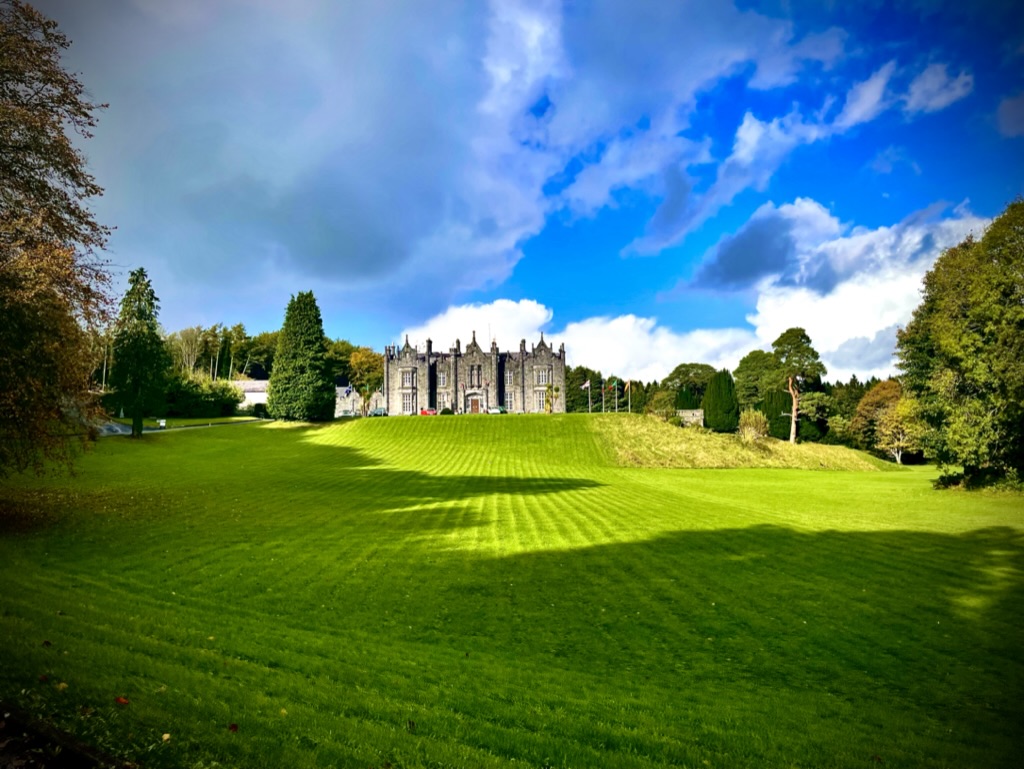
The Knox-Gore manor of 1825–31 on the east bank of the Moy. Revival Gothic; now hotel and armoury museum.
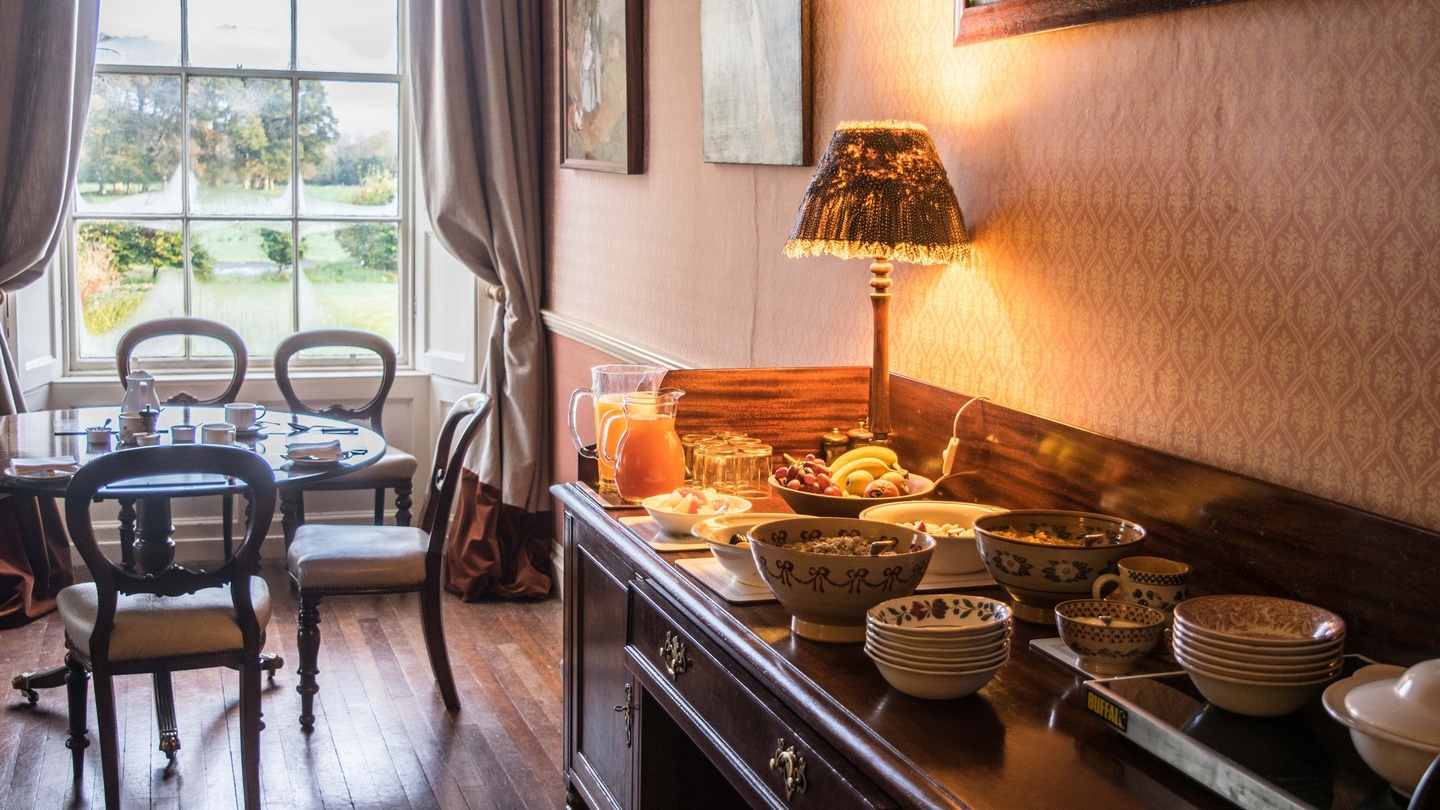
A 1740s Georgian house of the Pratts and Kelletts. Stones of the earlier Castle of Inniscoe reused in its fabric.
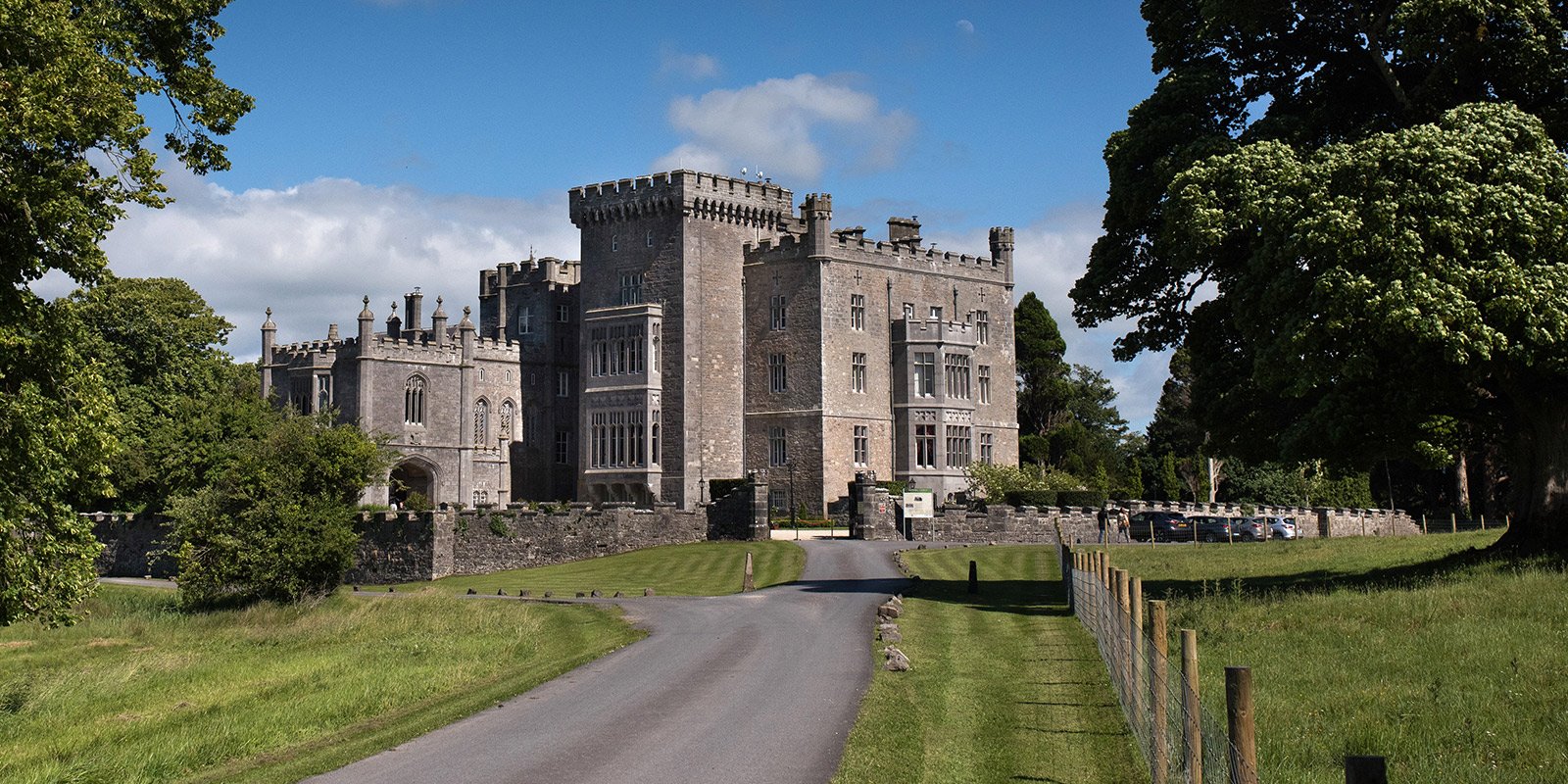
The Cooper seat above the Unshin. A 1642 keep re-cased Gothic Revival in 1802; still in the family.
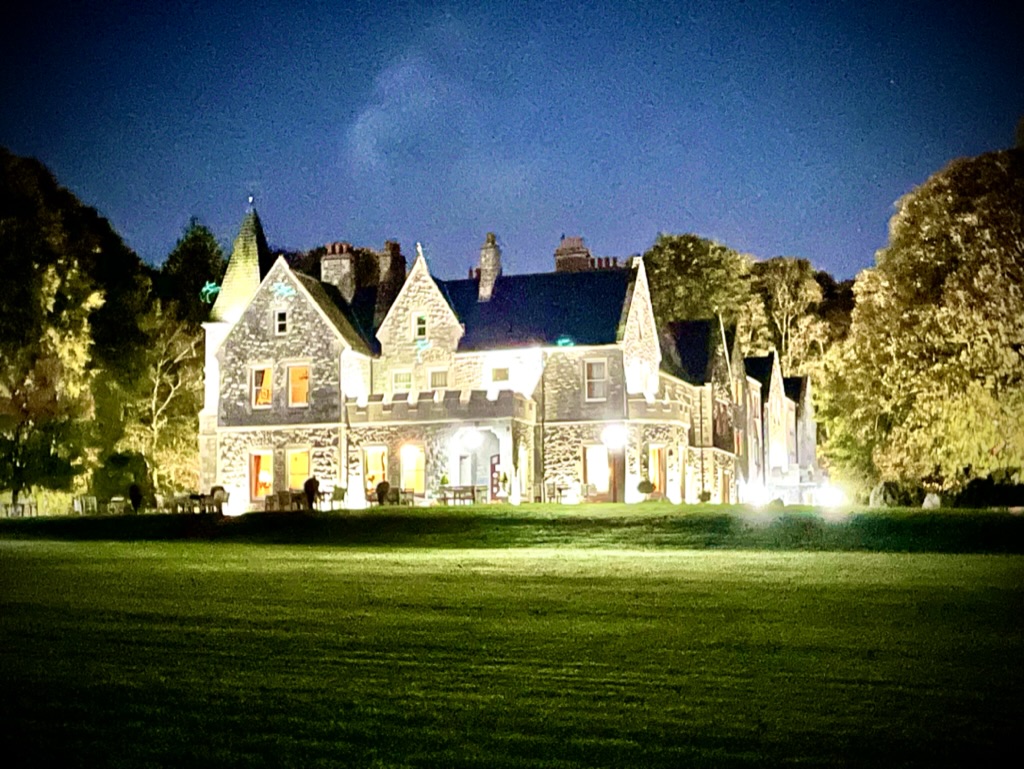
Above Ballina, an 1876 James Franklin Fuller design. Blue Book country-house hotel since 1974.
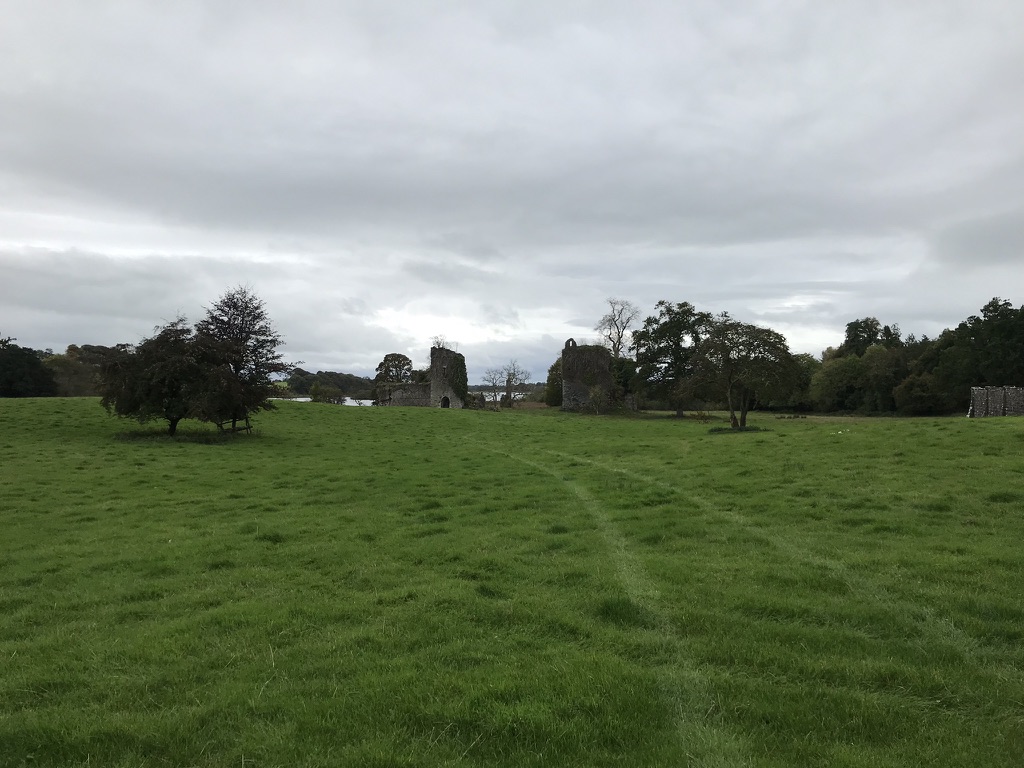
The Perceval family seat in O’Hara country. John Lynn’s 1864 house stands beside a Templar-era ruin.

Why include later country houses at all on a clan heritage site? Three specific reasons, none of them “echoes of Gaelic heritage” filler.
Reused stone. The 1740s rebuild of Enniscoe is said to incorporate material from the earlier Castle of Inniscoe that stood on or near the site. Templehouse Manor sits beside the surviving ruin of a castle attributed to the O’Haras around 1360, built over an earlier Templar foundation. Physical continuity of place, even where ownership has changed, leaves traces in the walls.
Overlapping demesnes. Several estate boundaries follow older Gaelic territorial lines — parish divisions, townland edges, ecclesiastical land. The demesne map of a nineteenth-century estate is often a palimpsest of medieval holding patterns.
Present-day stewardship. The North Mayo Heritage Centre at Enniscoe is one of the principal genealogical resources for descendants of this landscape. Several of the other estates actively host heritage, literature, or conservation work. Their present-day work is part of how the O’Dubhda story is kept accessible to visitors and family members now.
Four of the five estates run as commercial hospitality businesses open to the public. Templehouse Manor is a private country house — it welcomes staying guests through the Irish Landmark / Hidden Ireland / Blue Book network, but is not a day-visit venue. None of these houses should be visited without prior arrangement.
These are working private properties — four of them commercial hotels, one a family home. Photography from the public road is fine; demesne access is by booking or hotel stay only. Respect the gardens and don’t wander into working farmland. On every site, the O’Dubhda story is told best by the stonework beside a public path — please do not wander off-trail.