Rathlee Castle

Rathlee Castle

O'DUBHDA COUNTRY · TIRERAGH

RATHLEE CASTLE

Ráth Lao
“Fort of the calves” — an O’Dubhda site on the Sligo coast, now marked by a 1804 Napoleonic signal tower and WWII lookout post.

Rathlee Castle

Ráth Lao — Fort of the Calves

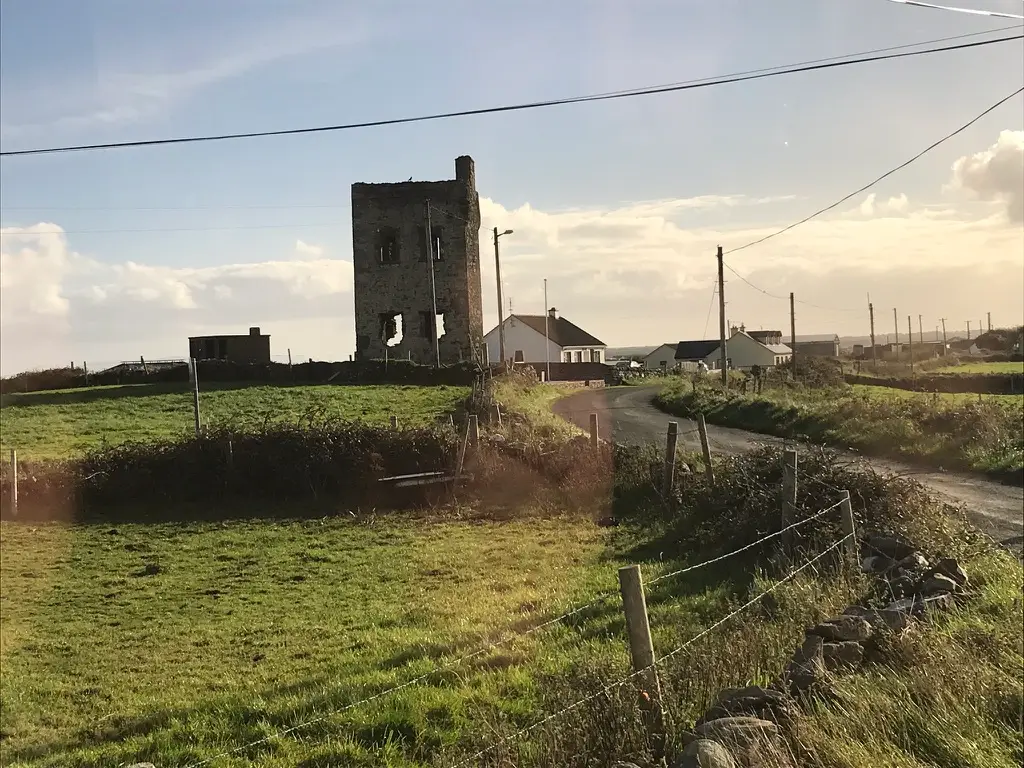
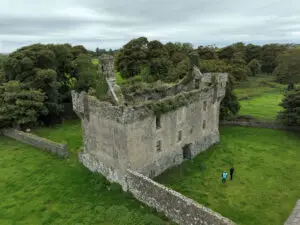
Rathlee occupies a headland on the north Sligo coast, in the parish of Kilglass, barony of Tireragh. Conor Mac Hale (The O’Dubhda Family History, 1990) includes Rathlee in his list of twenty O’Dubhda castles. No medieval castle fabric survives on the site today. The structure visible on the headland is a Napoleonic signal tower, built in the first decade of the nineteenth century, and it is this tower — not a medieval O’Dubhda fortress — that passing visitors encounter.

I. The Placename

The townland is recorded on logainm.ie as Rathlee / Ráth Lao, glossed as “ring-fort of the calves.” John O’Donovan, writing in the Ordnance Survey Name Books for County Sligo in 1836, gives the same reading — “Rath Laogh, fort of the calves” — and notes the survival of the ringfort element in the placename. The first element, ráth, denotes an earthen ringfort rather than a stone castle; the placename therefore records an early medieval enclosure on this ground, not a later tower house.

II. The O’Dubhda Site

Rathlee falls within the historic territory of Tír Fhiachrach Muaidhe, ruled by the O’Dubhda (O’Dowd) from the eleventh century onward. Mac Hale (1990) lists Rathlee among the twenty castles associated with the family. Whether that refers to the ráth itself, to a timber hall defended by the earthworks, or to a later stone fortification now entirely lost, is not possible to establish from surviving evidence. No masonry of medieval date is visible on the headland, and the site does not appear in Lewis’s Topographical Dictionary of Ireland (1837) as a notable ruin.

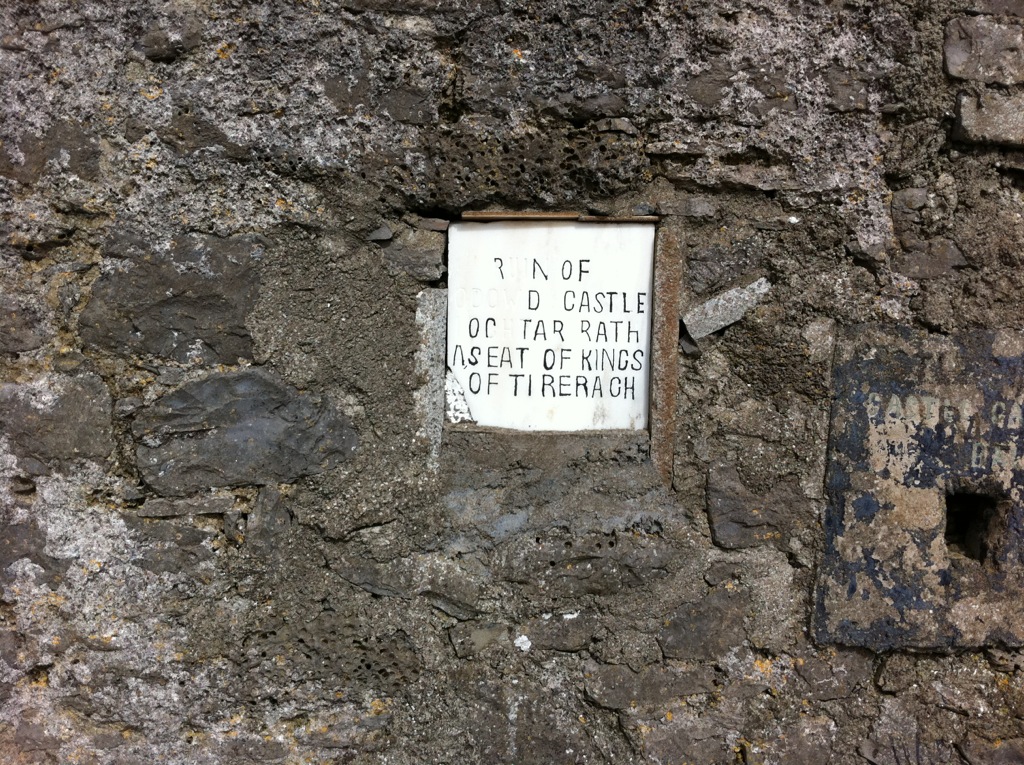
An older stone plaque mounted on the wall of the present tower reads “Ruin of O’Dowd Castle — Lochtar Rath, a seat of Kings of Tirerach.” The provenance of the plaque and the date of its placement are not known to us. Researchers working with the Signal Stations Project have noted that the “Lochtar Rath” name sits more comfortably with Roslee Castle, five kilometres to the west, where a tower house does survive; the possibility that the inscription conflates the two sites cannot be ruled out.

III. The Standing Tower — A Napoleonic Signal Station

The rectangular two-storey tower now occupying the headland is one of eighty-one coastal signal stations erected around the Irish coast between 1804 and 1806, during the Napoleonic Wars. The chain ran from Pigeon House in Dublin round the south, west and north of the island and back to the Pigeon House, and was operated by the Royal Navy in conjunction with a yeomanry guard. Rathlee formed one link in the Sligo–Mayo section, signalling between the neighbouring towers at Roslee (Easkey) to the west and Knocklane to the east.

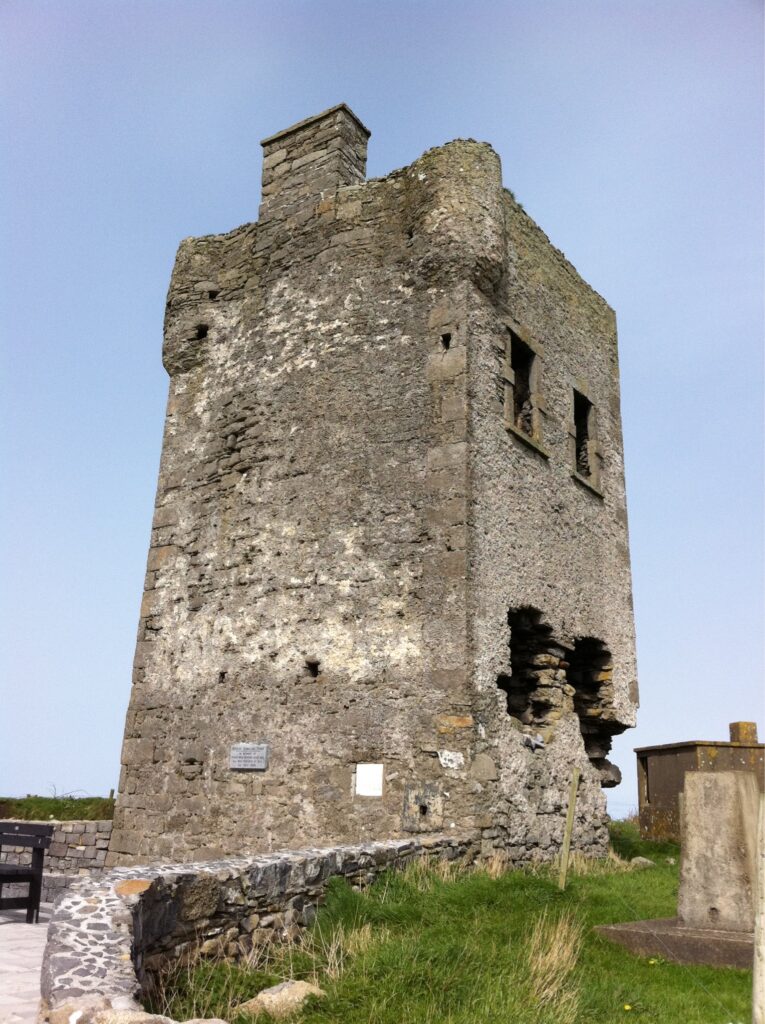
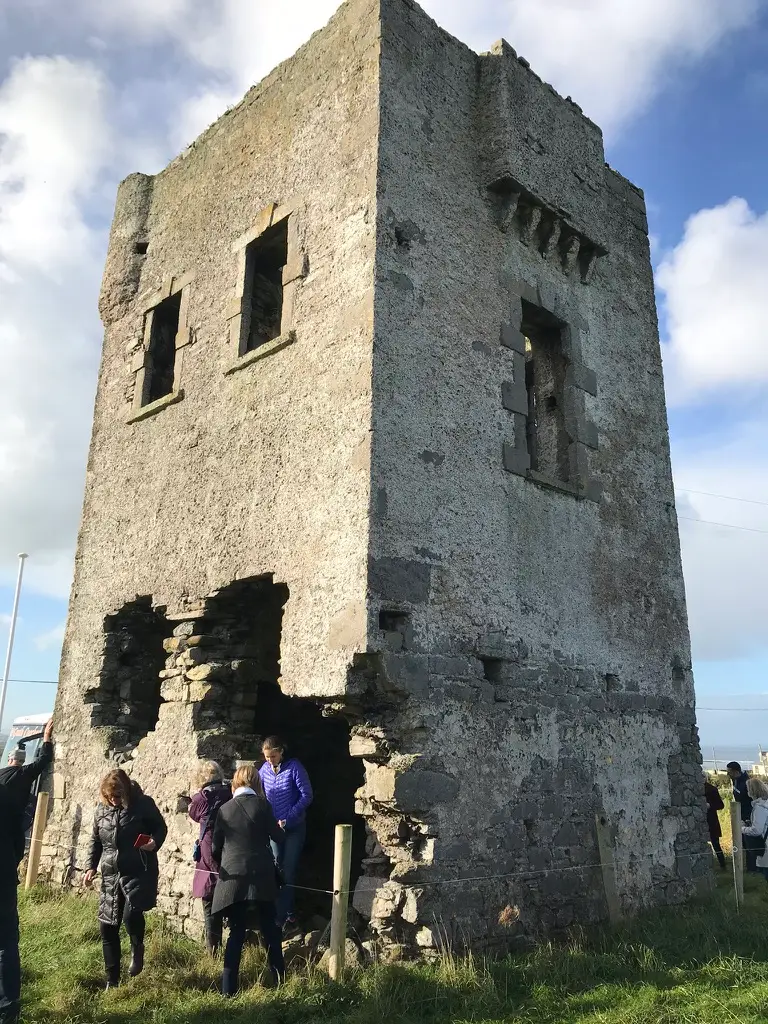
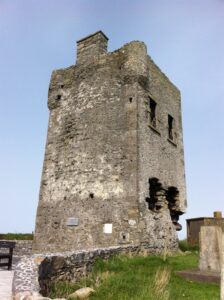
Each tower carried a mast from which flags, balls and pendants were hoisted in coded combinations to pass intelligence of enemy sail along the coast. The bartizan that survives at the corner of the Rathlee tower is characteristic of the standard plan used for the signal-station series: two storeys over a vaulted ground floor, with a small machicolated projection covering the entrance.

IV. Later Use and Memorial

Following the Napoleonic threat the signal network was gradually abandoned; by the mid-nineteenth century most towers, Rathlee included, stood empty. The site was brought back into service during the Second World War, when the Coast Watching Service of the Irish Defence Forces established Look-Out Post (LOP) No. 66 on the headland. Coast-watchers logged shipping and aircraft movements between 1939 and 1945 from the vicinity of the older tower, as they did at dozens of other former signal stations around the coast.

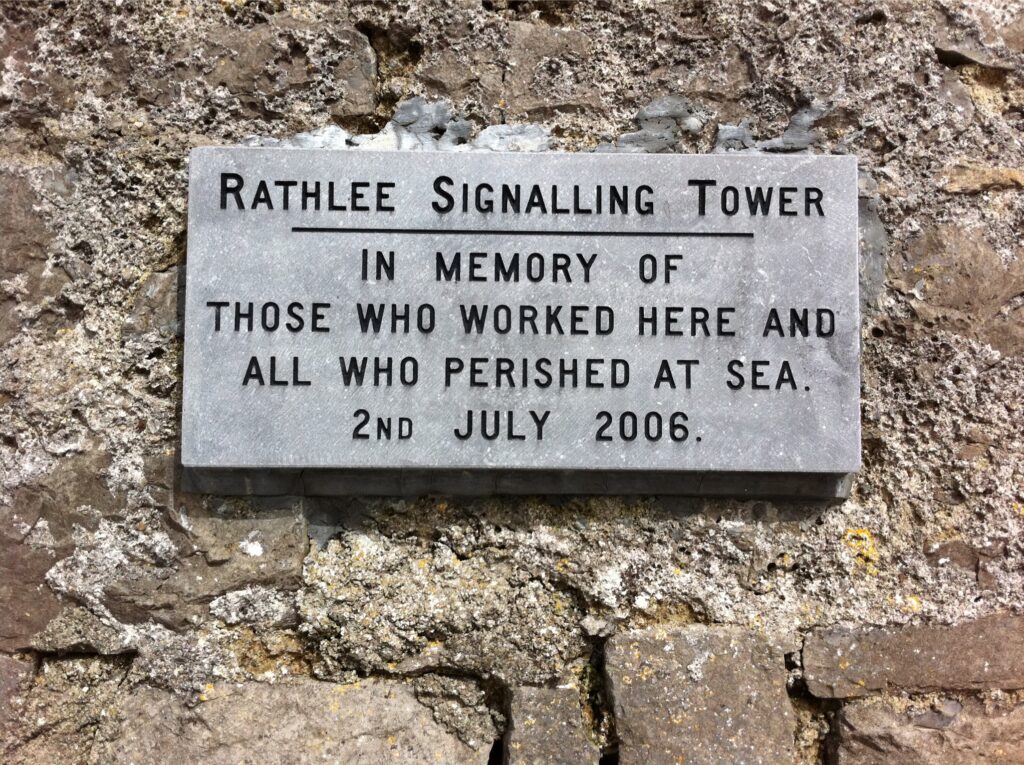
In 2006 a memorial plaque was mounted on the wall of the tower by local subscribers. It reads:

Rathlee Signalling Tower — in memory of those who worked here and all who perished at sea. 2nd July 2006.

The plaque is useful beyond its commemorative purpose: it is the structure’s own self-identification, and should prompt caution in anyone tempted to describe the building as a medieval castle.

V. Local Tradition

A small body of local tradition attaches to the tower and its surroundings, collected during the Bailiúchán na Scol (Schools’ Folklore Scheme) of 1937–1939 and now available through dúchas.ie. References to Rathlee in the Kilglass and Easkey school manuscripts record memory of the coast-watching function and the sea losses of the surrounding townlands, rather than any surviving medieval legend. Where earlier accounts of “underground tunnels” and “hidden chambers” have circulated, we have not found them in any primary source, and they are not repeated here.

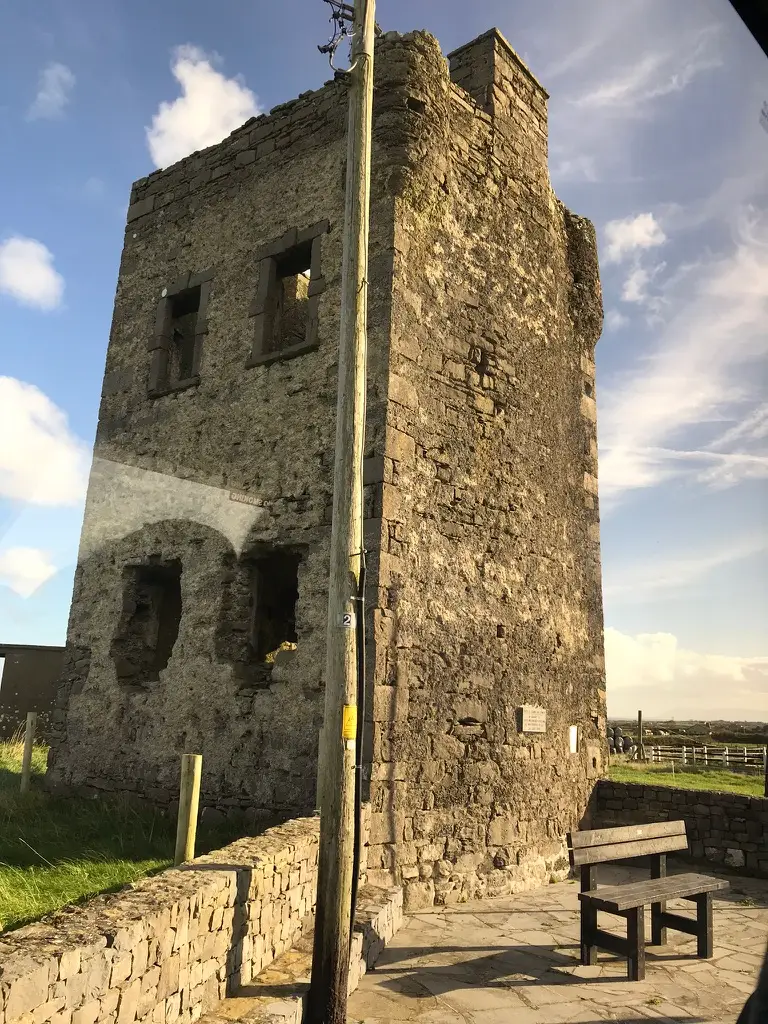
Rathlee signal tower viewed from the approach road, with coastal houses alongside
Rathlee signal tower from the approach road.

Rathlee Castle — on the Sligo coast near Easkey

Rathlee Castle

Ráth Lao ("ring-fort of the calves")

📍 Location

54°17′29.4″N, 8°57′23.4″W
Townland of Rathlee, Civil Parish of Kilglass
Barony of Tireragh, County Sligo

🏰 Type

Placename records an early medieval ráth (ringfort)
Included in Mac Hale's list of twenty O'Dubhda castles (1990)
Standing structure on the headland is a Napoleonic signal tower, not medieval castle fabric

📅 Date Built

Ráth — early medieval (no surviving fabric)
Signal tower — 1804–1806 (Napoleonic coastal chain)
Refurbished for Coast Watching Service use 1939–1945 (LOP 66)

🏡 Current State

Signal tower stands to two storeys with surviving corner bartizan
2006 memorial plaque set in wall identifying it as "Rathlee Signalling Tower"
Older stone plaque records the O'Dowd connection

🚶 Accessibility

On coastal headland reachable by a minor road off the R297
Exterior visible from the public roadway
Tower interior not publicly open

Note: Stonework is exposed to the elements; keep clear of loose masonry and the sea cliffs.
⚔ Relation to O'Dubhda (O'Dowd)

Listed by Conor Mac Hale (1990) among the twenty O'Dubhda castles
Within the territory of Tír Fhiachrach Muaidhe, the O'Dubhda kingdom
A stone plaque on the tower wall records the traditional identification with the O'Dowd chiefs; conflation with Roslee Castle (5 km west) cannot be ruled out

📜 Heritage Note

The name Ráth Lao ("ring-fort of the calves") records an earthen enclosure of early medieval date; no masonry of medieval date survives on the headland. The building seen today is a Napoleonic signal station of 1804–1806, reused during the Second World War as LOP 66 of the Coast Watching Service.

Rathlee signal tower viewed from the grass showing the bartizan at the corner
The tower with its surviving corner bartizan.
Photography · From the Clan

From the Clan

Photographs of Rathlee Castle submitted by clan members.
Add a photograph from here →

From the Seanchas

Latest stories tied to Rathlee Castle.

Tales, research and dispatches from the O’Dubhda journal.

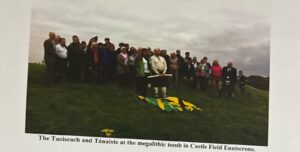
Taoiseach and Tánaiste at the megalithic tomb, Castle Field Enniscrone, 2015
Rallies

The 2015 Rally — Silver Anniversary

October 2015 marked the silver anniversary of the first hosting in 1990. About a hundred people bearing some variation of the Ó Dubhda name came to Enniscrone — including for the first time French-speaking Québec — for four days of lectures, tours, a banquet at Belleek Castle, and the inauguration of Andrew Dowds. At a glanceDates: 8 – 11 October 2015  ·  Base: Ocean Sands Hotel, EnniscroneAttendance: c. 100 from Ireland, England, Scotland, Northern Ireland, the Netherlands, South Africa, Qatar, Australia, the USA, Canada and QuébecNotable moment: Andrew Dowds inaugurated Taoiseach; Kieran O’Dowd elected as the clan’s first female Tánaiste. The Silver Anniversary The 2015 rally was the first to count itself in quarters of a century rather than in years. It was also the first to bring the Mac Firbhisigh memorial back to the table — the chair at Skreen had just been restored — and the first at which the clan brought its own blended whiskey to the banquet. Lectures That Year Dr Nollaig Ó Muraíle — Leabhar Mór na nGenealach, the Great Book of Genealogies of Dubhaltach Mac Fhirbhisigh Proinsias Mag Fhionnghaile — Ancient Gaelic dress (and a live demonstration at the banquet) Mike Dowd — a new history of St Patrick Conor Mac Hale — the heritage of Ó Dubhda, with tours through the territory Tours & Sites Carrowmore megalithic cemetery and Moyne Abbey / Rosserk Friary / Ardnaree Friary The newly restored Mac Firbhisigh Chair at Skreen The megalithic tomb in the Castle Field, Enniscrone — site of the photographic portrait of the Taoiseach and Tánaiste Banquet at Belleek Castle with Tireragh Branch Comhaltas music and dance The Inauguration Andrew Dowds, from Cumbernauld, Scotland, was inaugurated as the fifth modern Taoiseach. Andrew is the son of Thomas J Dowds, the first elected Taoiseach of 1997 — making 2015 the first rally at which a son succeeded to the office held by his father four rallies earlier. Kieran O’Dowd, San Francisco-born but settled in Ireland, was elected Tánaiste: the first woman in the role. Her own inauguration was set for 2018. Voices & Visitors Among the platforms and speakers, Kieran O’Dowd brought a Californian white wine blended for the occasion; Mike Dowd’s new book on St Patrick set the tone for 2018’s return to Foghill. The banquet, at Belleek, included a presentation from a representative of Clans of Ireland — of which Clann Uí Dubhda had been a founder member. Further Reading Thomas J Dowds, The O’Dubhda Gatherings: A History (forthcoming) — chapter 12 odubhdaclan.com archive entry ← Previous Rally The 2012 Rally — Brendan J O’Dowd Inaugurated Next Rally → The 2018 Rally — Kieran O’Dowd, First Woman Taoiseach

Read the seanchas →

A Note from the Clan

These pages are researched and written by volunteers of the O'Dubhda Clan. Our history is vast, and our understanding of it grows with every correction, addition, and story shared by clan members and researchers.

If you have found an error, or have information that would improve this page, please get in touch.