
Enniscoe House
May 2, 2026 2026-05-07 1:53Enniscoe House
Enniscoe House
Enniscoe House
A Georgian country house in the barony of Tirawley — within the historic territory of the Ó Dubhda.
Enniscoe House stands on the wooded shore of Lough Conn, at the foot of Nephin. It is not an Ó Dubhda house. It was raised by the great-grandson of a Cromwellian grantee on land taken from the Gaelic order during the plantation of Tirawley, and has remained in one family line — Jackson, Pratt, Nicholson, Kellett — by direct descent and marriage since the 1650s. We include it here because it occupies Ó Dubhda ground; because its 1740s fabric is reported to contain stones of an older castle of Inniscoe that stood on this spot before; and because the estate now hosts the North Mayo Heritage Centre and Family History Research Centre, the chief resource in the region for those tracing Ó Dubhda and allied lines.
I. The Jackson grant
Francis Jackson came to Mayo as a soldier in Cromwell’s army. Under the Restoration settlement, his grants in the barony of Tirawley — in the parishes of Addergoole, Crossmolina, Moygawnagh and Rathreagh — were confirmed by Charles II in 1669 (Landed Estates Database; Irish Historic Houses). He is recorded as having first resided at Crossmolina Castle; by the early eighteenth century the Jacksons were established at Enniscoe.
II. The 1740s house and the 1790s wrapper
The present house grew in two phases. The earlier core was raised between 1740 and 1750 by George Jackson (1717–1789), great-grandson of Francis — a tall three-storey building of five bays over a basement, single-gabled, built with stones of the old castle of Inniscoe and oak recovered from nearby bogland (Jeremy Williams, cited in Irish Historic Houses).
In the 1790s his son George Jackson (1761–1805), MP for County Mayo, wrapped this older fabric in a new Georgian front — structurally complete by 1798 — with its design attributed by Williams to the Waterford architect ‘Honest John’ Roberts (1712–1796), who also designed Christ Church Cathedral in Waterford and is thought to have built Moore Hall on Lough Carra. The earlier gabled house was not demolished: its outline is still read behind the Georgian reception rooms and staircase.
On 23 August 1798 General Humbert’s French expeditionary force landed at Killala and passed through Tirawley. Some of his troops stopped at Enniscoe, drank the Jackson cellar, and declared the wine ‘the only good wine in Ireland’ (Irish Historic Houses).
III. The architecture
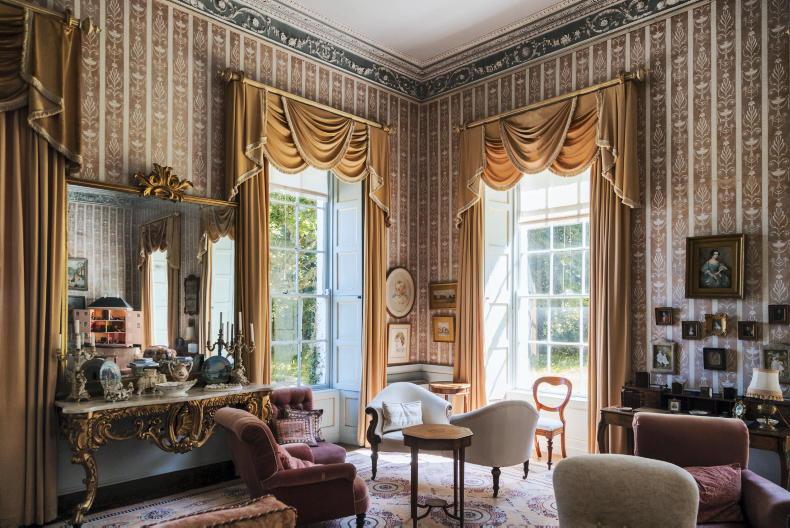
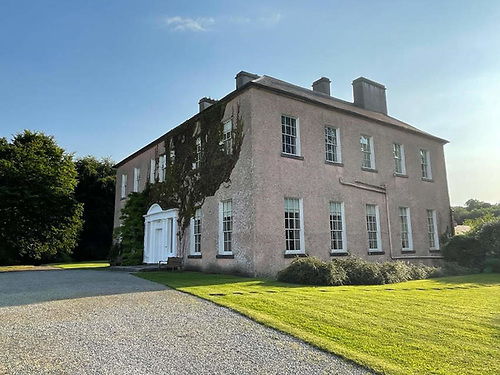
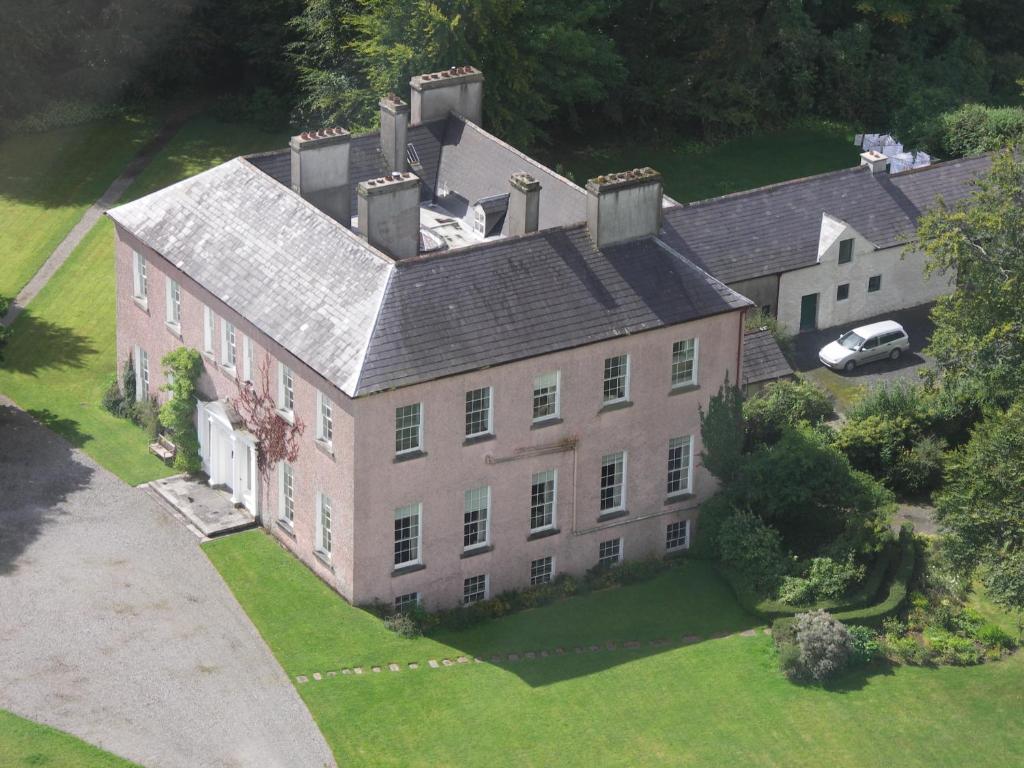
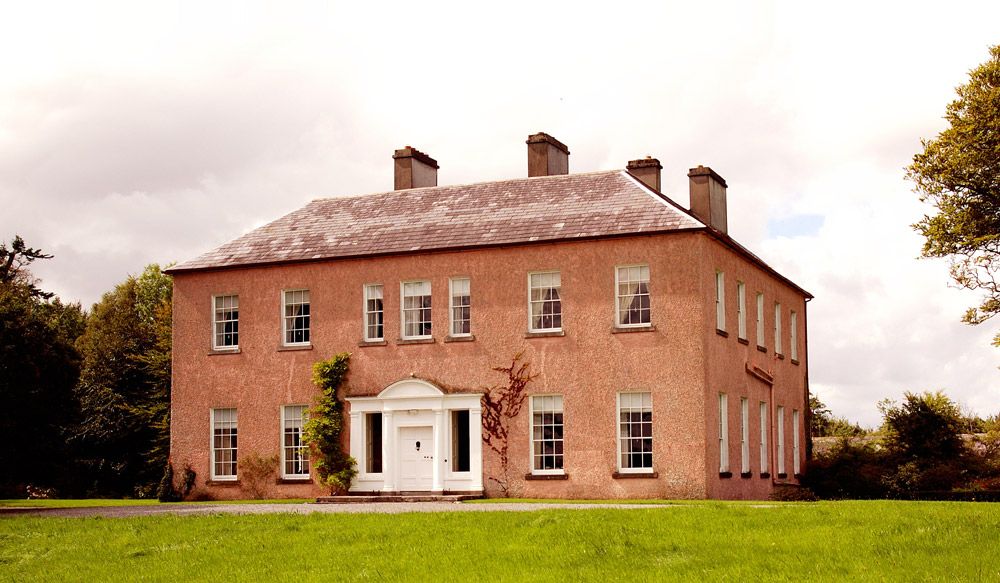
The Georgian front is a square two-storey house of five bays with three formal fronts. The entrance is a pedimented tripartite doorway with Doric columns and pilasters, flanked by sidelights. Inside, the entrance hall carries a frieze of foliage and Adamesque plaster; an elliptical staircase rises to an oval landing lit by a glazed dome, its ceiling a frieze of urns and foliage set within oval medallions (Irish Historic Houses). The stucco work has been compared to the 1790s ceilings at Deel Castle. The drawing room retains its original silk Adam wallpaper — pale blue when hung, now faded uniformly to mushroom pink.
IV. Pratt, Nicholson, Kellett
George Jackson’s son William died in 1822, leaving a six-year-old heiress — Madeline Eglantine Jackson — who in 1834 married her cousin Mervyn Pratt (1807–1890) of Cabra Castle. The Pratts restored the house and laid out much of the garden as it survives. Their son Joseph Pratt married his cousin Ina Hamilton of Cornacassa, County Monaghan; Joseph’s son Major Mervyn Pratt, a bachelor, tended the gardens until his death in 1950 and left the estate to his cousin Jack Nicholson, Professor of Veterinary Medicine, who married Patita Bourke.
Professor Nicholson died in 1972. His daughter Susan Kellett took over the house in 1984 and lives there today with her son DJ, his wife Colette, and her granddaughter Fearne Madeline. The estate has remained in one family, by direct descent and marriage, since the 1650s.
V. The Ó Dubhda connection — an honest statement
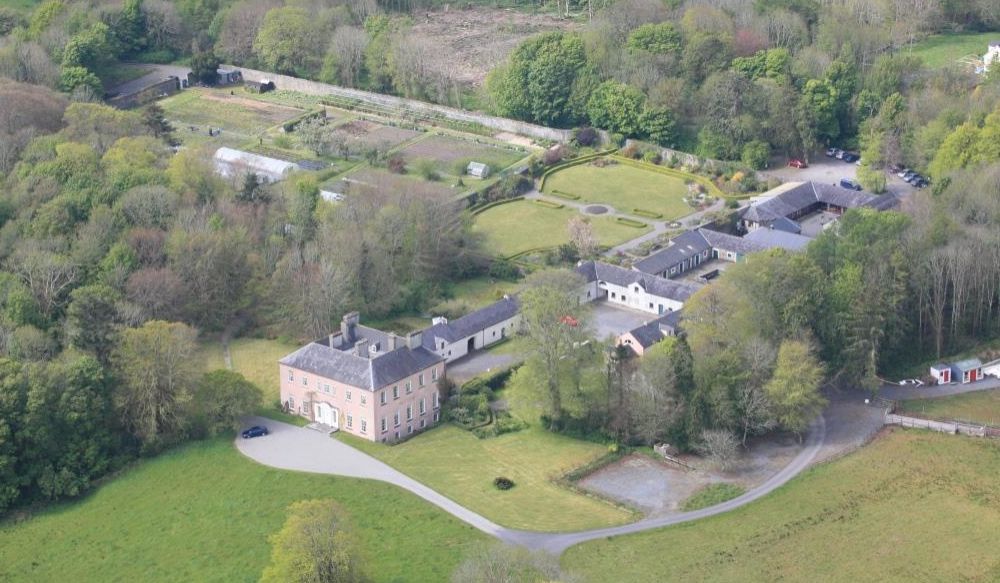
Enniscoe lies squarely in former Ó Dubhda territory. The barony of Tirawley was the northern wing of Uí Fiachrach Muaidhe; the stones of the earlier castle of Inniscoe are reported to be reused in the 1740s fabric; and the North Mayo Heritage Centre, in the estate’s converted outbuildings, holds the parish registers, estate papers and Griffith’s Valuation returns that make it the first stop for anyone researching Ó Dubhda descent in North Mayo.
It is not an Ó Dubhda house. It was built on land taken from the Gaelic order, and its survival through the eighteenth and nineteenth centuries is the survival of the settler line, not the native one. What it offers is a place where the two stories can be read together — a Georgian front on Gaelic ground, with a research library above the lough where the old lordship had its heartland.
VI. Visiting
Enniscoe is a Section 482 accommodation house, open from 1 April to 31 October each year. House tours are by appointment. The Victorian walled gardens (restored 1996–1999 under the Great Gardens of Ireland programme), the North Mayo Heritage Centre and the organic garden are open to the public during posted hours; garden entry is free.
Enniscoe House — on the western shore of Lough Conn, at the foot of Nephin.
Enniscoe House
Castlehill, Ballina, Co. Mayo · F26 EA24
54.0704°N, 9.3090°W
Townland of Prospect (Castlehill), parish of Crossmolina, barony of Tirawley
Late-Georgian country house
Incorporates an earlier mid-eighteenth-century fabric
c. 1740–1750 — George Jackson
Georgian front, 1790s — George Jackson II
1790s wrapper attributed to ‘Honest John’ Roberts of Waterford (1712–1796) by Jeremy Williams
Jackson (1650s–1830s) → Pratt → Nicholson → Kellett
Same family line since the 1650s
Section 482 family home & guest accommodation
Victorian walled gardens, organic garden, agricultural museum
North Mayo Heritage Centre & Family History Research Centre
Open 1 April – 31 October
House tours by appointment
Gardens & Heritage Centre open during posted hours (gardens free)
Not an Ó Dubhda house. Built after Cromwellian settlement, on land taken from the Gaelic order. Occupies former Ó Dubhda territory (Tirawley) and reuses stones of an earlier castle of Inniscoe; now hosts the North Mayo genealogy centre.
From the Clan
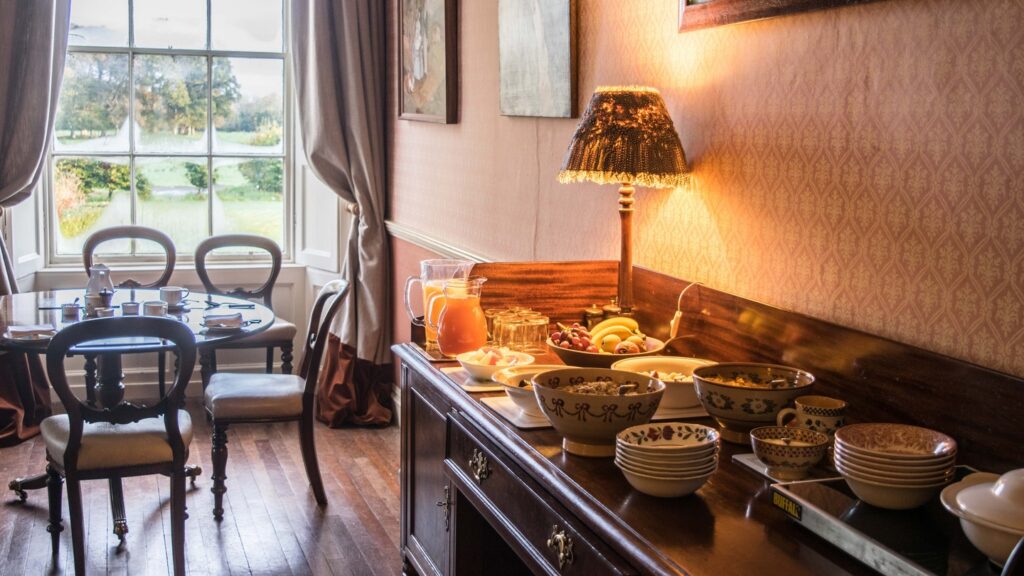
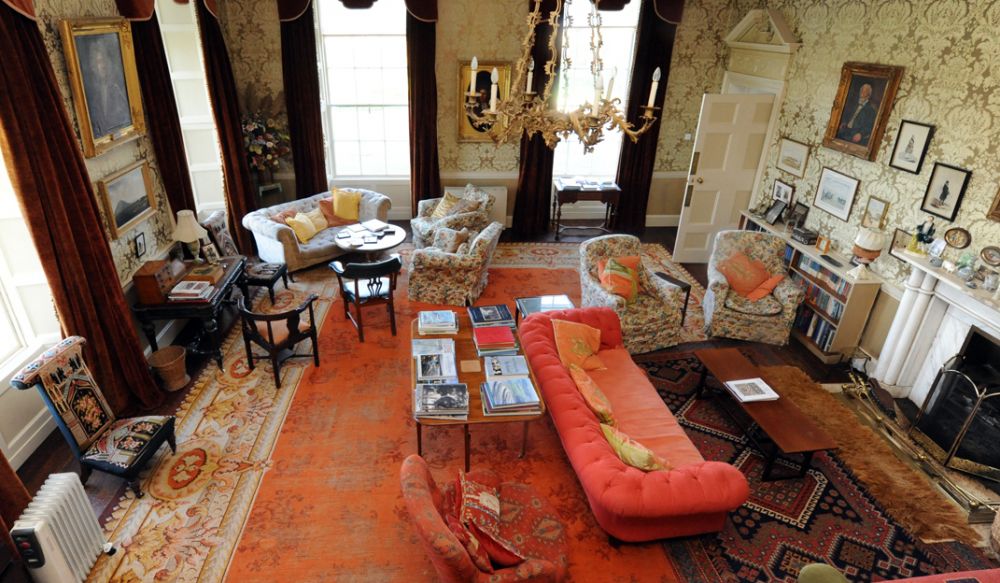
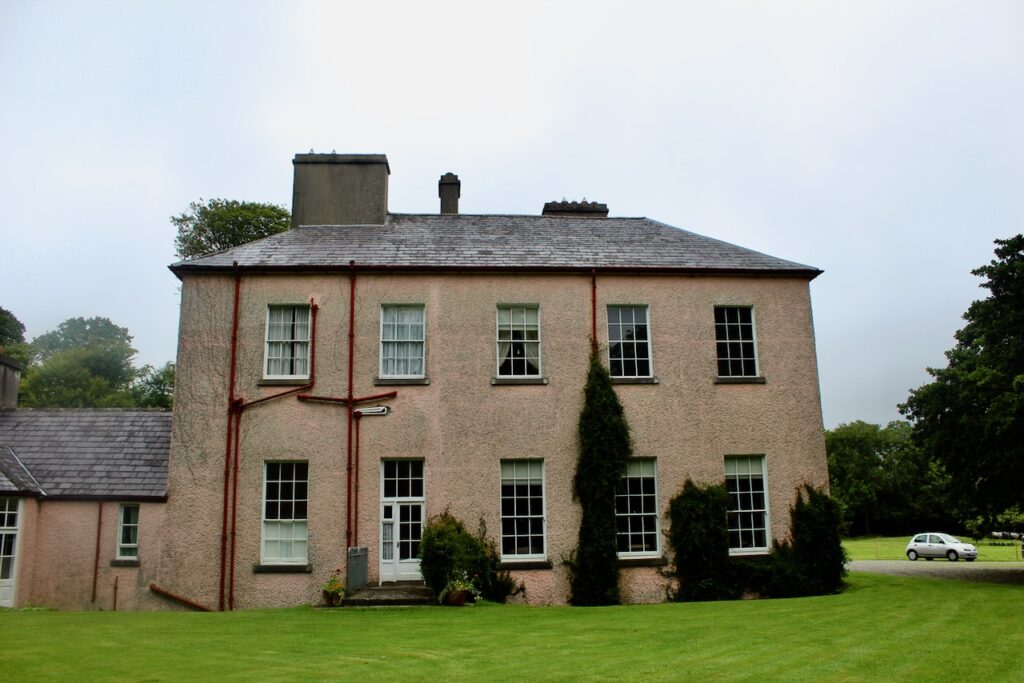
Photographs of Enniscoe House submitted by clan members.
A Note from the Clan
These pages are written and maintained by volunteers of the Ó Dubhda Clan Association. We aim for a sober, museum-style account rooted in primary sources — Landed Estates, Lewis, Williams, the National Inventory, parish and family records — and we distinguish carefully between what is documented and what is tradition.
Enniscoe is not an Ó Dubhda house, and we do not claim it as one. If you have a correction, a family story, or a local record to add — particularly around the older castle of Inniscoe whose stones are built into the present fabric — please get in touch.