
Moyne Abbey
May 2, 2026 2026-05-07 2:24Moyne Abbey

From the Clan
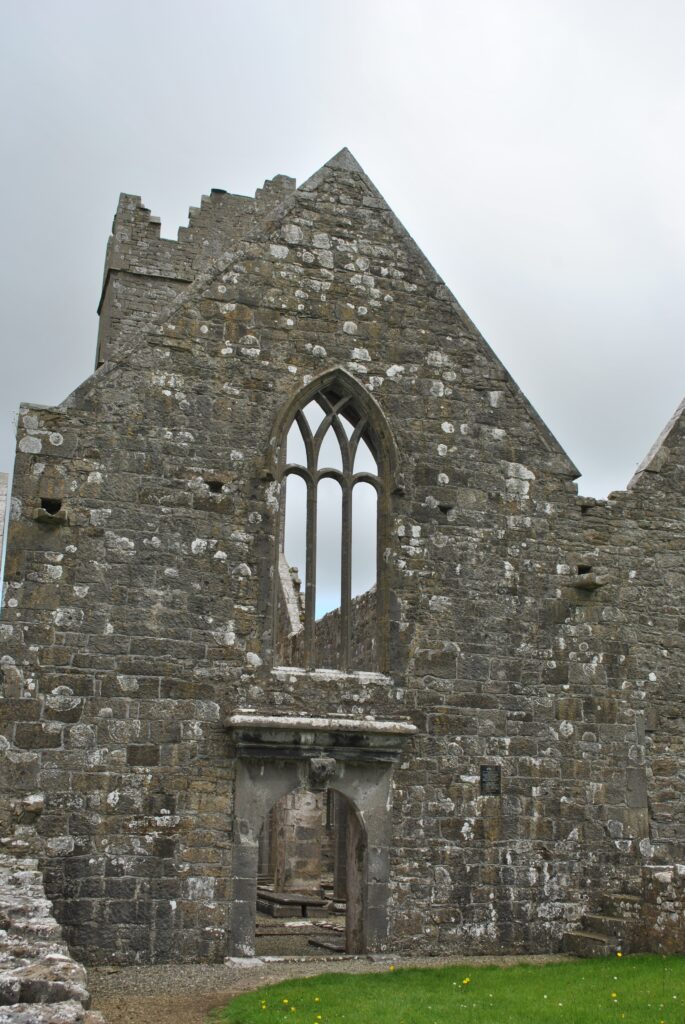
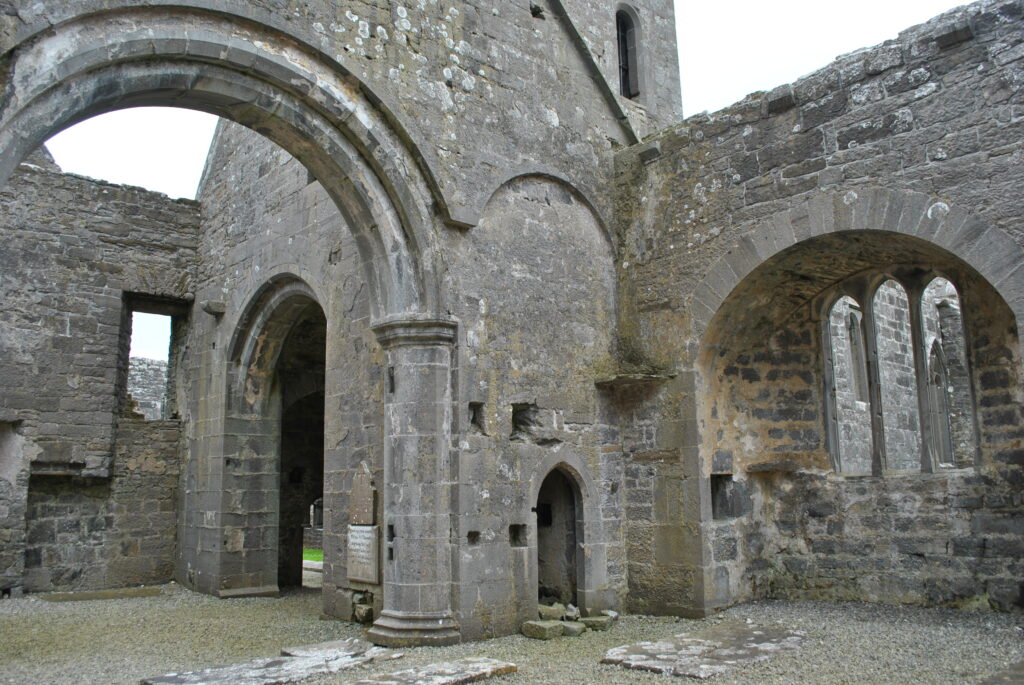
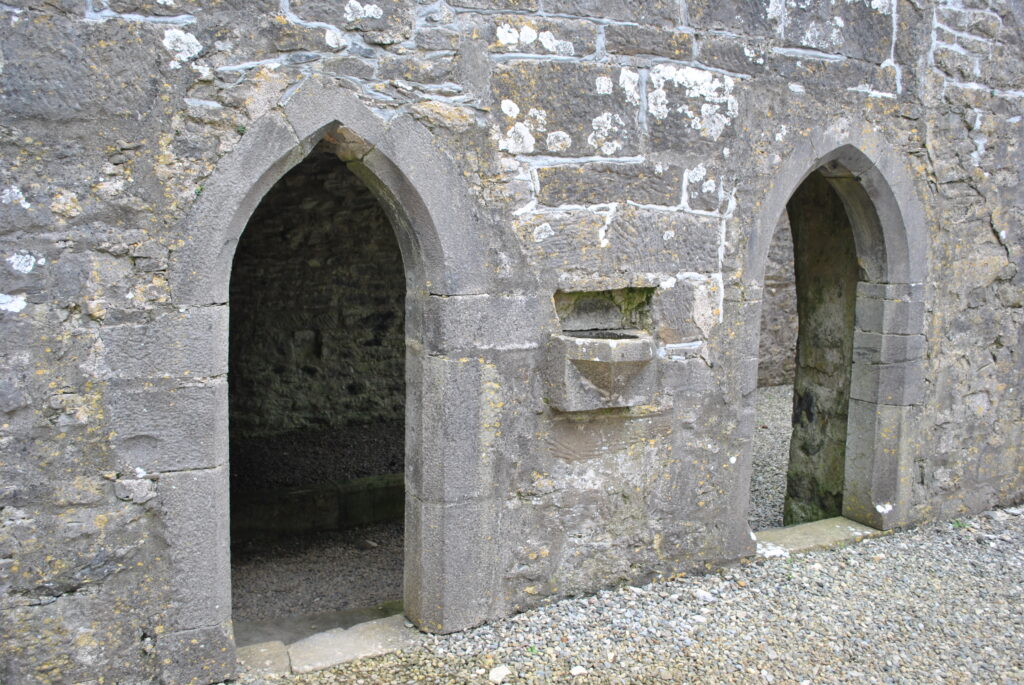
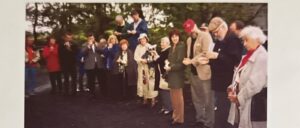
Photographs of Moyne Abbey submitted by clan members.
The 2015 Rally — Silver Anniversary
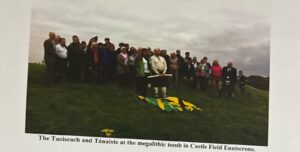
October 2015 marked the silver anniversary of the first hosting in 1990. About a hundred people bearing some variation of the Ó Dubhda name came to Enniscrone — including for the first time French-speaking Québec — for four days of lectures, tours, a banquet at Belleek Castle, and the inauguration of Andrew Dowds. At a glanceDates: 8 – 11 October 2015 · Base: Ocean Sands Hotel, EnniscroneAttendance: c. 100 from Ireland, England, Scotland, Northern Ireland, the Netherlands, South Africa, Qatar, Australia, the USA, Canada and QuébecNotable moment: Andrew Dowds inaugurated Taoiseach; Kieran O’Dowd elected as the clan’s first female Tánaiste. The Silver Anniversary The 2015 rally was the first to count itself in quarters of a century rather than in years. It was also the first to bring the Mac Firbhisigh memorial back to the table — the chair at Skreen had just been restored — and the first at which the clan brought its own blended whiskey to the banquet. Lectures That Year Dr Nollaig Ó Muraíle — Leabhar Mór na nGenealach, the Great Book of Genealogies of Dubhaltach Mac Fhirbhisigh Proinsias Mag Fhionnghaile — Ancient Gaelic dress (and a live demonstration at the banquet) Mike Dowd — a new history of St Patrick Conor Mac Hale — the heritage of Ó Dubhda, with tours through the territory Tours & Sites Carrowmore megalithic cemetery and Moyne Abbey / Rosserk Friary / Ardnaree Friary The newly restored Mac Firbhisigh Chair at Skreen The megalithic tomb in the Castle Field, Enniscrone — site of the photographic portrait of the Taoiseach and Tánaiste Banquet at Belleek Castle with Tireragh Branch Comhaltas music and dance The Inauguration Andrew Dowds, from Cumbernauld, Scotland, was inaugurated as the fifth modern Taoiseach. Andrew is the son of Thomas J Dowds, the first elected Taoiseach of 1997 — making 2015 the first rally at which a son succeeded to the office held by his father four rallies earlier. Kieran O’Dowd, San Francisco-born but settled in Ireland, was elected Tánaiste: the first woman in the role. Her own inauguration was set for 2018. Voices & Visitors Among the platforms and speakers, Kieran O’Dowd brought a Californian white wine blended for the occasion; Mike Dowd’s new book on St Patrick set the tone for 2018’s return to Foghill. The banquet, at Belleek, included a presentation from a representative of Clans of Ireland — of which Clann Uí Dubhda had been a founder member. Further Reading Thomas J Dowds, The Ó Dubhda Gatherings: A History (forthcoming) — chapter 12 odubhdaclan.com archive entry ← Previous Rally The 2012 Rally — Brendan J O’Dowd Inaugurated Next Rally → The 2018 Rally — Kieran O’Dowd, First Woman Taoiseach
The 2012 Rally — Brendan J O’Dowd Inaugurated
The 9th rally, October 2012, carried the inauguration of Brendan J O’Dowd of Castlebar — the first Irish-born Taoiseach of Tireragh since Tadhg Buí in 1595. The ceremony was held in the church at Enniscrone; the banquet, in the old hall, closed with traditional music from the Tireragh Comhaltas. At a glanceDates: 11 – 14 October 2012 · Base: Ocean Sands Hotel, EnniscroneNotable moment: Brendan J O’Dowd inaugurated — first Irish-born Taoiseach since 1595Tour: Rathcroghan, seat of Connacht’s kings and grave of Daithí. The Gathering Rally week opened with an afternoon excursion to Rathcroghan in Co. Roscommon — the ancient royal seat of Connacht, where the stone marker for Daithí, the last pagan Ard Rí and ancestor of the Ó Dubhda, still stands over the ring-forts. The clan walked the souterrain at Oweynagat and visited the Strokestown Famine Museum on the way back. A second excursion took in Castlebar, the short-lived capital of the Republic of Connacht in 1798, the Museum of Country Life at Turlough House, the Mayo North Heritage Centre at Enniscoe, and the fine late-medieval Castletown / Cottlestown. Frank Tivan gave an evening talk on the deeper historical connections of the Ó Dubhda to the sites visited. The Inauguration On Saturday, at the Enniscrone church, Brendan J O’Dowd of Castlebar was inaugurated as Taoiseach of Tireragh, succeeding Mike Dowd. Brendan, born in 1965 and raised near Culleens in Kilglass, became the first Irish-born Chieftain to hold the office since Tadhg Buí. Andrew Dowds of Cumbernauld, Scotland — son of Thomas J Dowds, the first modern Taoiseach — was elected Tánaiste. The MacFirbis Memorial Archaeologist Martin Timoney briefed the meeting on the MacFirbis memorial at Skreen, which had been temporarily removed for stonework and would be restored in May 2015. The great bardic family, ollamhs to the Ó Dubhda chieftains for centuries, were the reason so much of the clan’s lore survives at all. Tours & Sites Rathcroghan Heritage Centre, Oweynagat souterrain, Strokestown Park Castlebar, the Museum of Country Life at Turlough, Enniscoe Castletown / Cottlestown — the late-medieval Ó Dubhda tower-house Ardnaree Friary, Moyne Abbey, Killala, Foghill — St Patrick’s first Irish landing Further Reading Thomas J Dowds, The Ó Dubhda Gatherings: A History (forthcoming) — chapter 11 odubhdaclan.com archive entry ← Previous Rally The 2009 Rally — Mícheál Ó Dubhda Inaugurated Next Rally → The 2015 Rally — Silver Anniversary
The 2006 Rally — Edward P O’Dowd Inaugurated
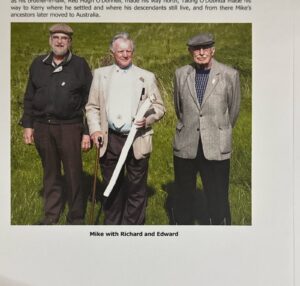
The seventh rally, 15 – 17 September 2006, held its business in the back room of Roper’s Pub (the Atlantic Hotel was being refurbished) and closed with the inauguration of Edward P. O’Dowd of Chicago as the third modern Taoiseach at Enniscrone Castle. At a glanceDates: 15 – 17 September 2006 · Base: Roper’s Pub, EnniscroneAttendance: From Australia (ACT, Queensland), Canada, England, Ireland, Scotland and across the USANotable moment: Inauguration of Edward P. O’Dowd of Chicago; Mícheál Ó Dubhda (Brisbane) elected Tánaiste. The Gathering Registration on Friday included a welcome pack: the clan newsletter, a copy of the Ó Dubhda History, a programme, a lapel pin presented by Taoiseach Richard Dowd, and a first drink on the house. The exhibit that year was stronger than any before it — manuscripts dated 1160, 1397 and 1650, and materials on Baron O’Dowda and the more than forty recorded surname variants. Saturday: Two Coaches, Six Sites Two minibuses worked through the day’s itinerary. The Ó Dubhda Mermaid Rocks at Scurmore; the thirteenth-century ruins of Castleconnor; the fifteenth-century Moyne Abbey, where Fr John (Seán) Ó Dubhda was martyred; Kilcummin, the French landing place of 1798; and the Neolithic Céide Fields above the Atlantic cliffs. Dinner that evening was at Murphy Brothers’ restaurant in Ballina. The Inauguration Sunday morning began with a memorial Mass for deceased clan members, celebrated by Fr Michael Doody SJ. The Council met and confirmed Mícheál Ó Dubhda (Mike Dowd) of Queensland as the incoming Tánaiste. The members then moved to Enniscrone Castle for the inauguration of Edward P. O’Dowd of Chicago. Following the now-established form, the White Wand was passed hand-to-hand through the gathering before being raised over Edward’s head by the Ollamh. At the same meeting the rule was unanimously adopted that retiring Taoisigh should henceforth hold the title Taoiseach Emeritus as permanent members of the Clan Council. Tours & Sites Mermaid Rocks at Scurmore Castleconnor, Roslee Castle, Easkey, the Split Rock of Killeenduff Grangemore Castle (16th c.) and Skreen — Mac Fhirbhisigh country Rathlee Tower (c.1803) and the cliff-walk at Rathlee Castle Further Reading Thomas J Dowds, The Ó Dubhda Gatherings: A History (forthcoming) — chapter 8 odubhdaclan.com archive entry ← Previous Rally The 2003 Rally — Richard F Dowd Inaugurated Next Rally → The 2007 Flight of the Earls Commemoration
The 2003 Rally — Richard F Dowd Inaugurated
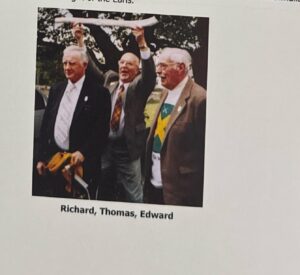
The sixth gathering, September 2003, was above all a handover. Thomas J Dowds’ six-year term came to a close at Enniscrone Castle as he passed the White Wand to his Tánaiste, Dr Richard F Dowd of New Jersey — the clan’s second modern Taoiseach. At a glanceDates: 12 – 14 September 2003 · Base: Atlantic Hotel, EnniscroneNotable moment: Inauguration of Dr Richard F Dowd at Enniscrone CastleBook launch: Inishcrone and Ó Dubhda Country by Conor MacHale at the MacFirbis Centre, Kilglass. The Gathering Registration and a welcome reception were again at the Atlantic Hotel on Friday evening. The weekend had the settled feel of a tradition — a Saturday morning tour of the Turlough Park Museum of Country Life, the Mermaid Rocks at Scurmore, and Castleconnor, followed by an evening clan council. At the MacFirbis Centre in Kilglass, Conor MacHale launched Inishcrone and Ó Dubhda Country, the fuller account of the territory and its history. Transport was laid on between the hotel and the MacFirbis Hall so that no one missed the launch. The Inauguration On Sunday afternoon the clan gathered at Enniscrone Castle — the fortress last held by Ó Dubhda forces in the seventeenth century — for the formal inauguration of Dr Richard F Dowd as Taoiseach of Tireragh. The ceremony followed the Brehon form adopted at Cahirmore in 2000: the White Wand was passed through the hands of every member present before the Ollamh, Conor MacHale, held it over the new Taoiseach’s head. Richard Dowd, of New Jersey, became the first American-born holder of the office. Tours & Sites Moyne Abbey, Rosserk Friary, Ardnaree Friary and Rathmullcah — the great friary corridor of Tireragh Scurmore / Mermaid Rocks and Castleconnor The closing banquet at Belleek Castle, with transport laid on both ways. Voices & Visitors Thomas Dowds, now Taoiseach Emeritus, remained at the heart of the Council. Ed O’Dowd of Chicago was named Tánaiste-elect, setting the succession for 2006. Paddy Tuffy, still at every rally, was acknowledged for his unbroken service to the local committee. Further Reading Thomas J Dowds, The Ó Dubhda Gatherings: A History (forthcoming) — chapter 7 Conor MacHale, Inishcrone and Ó Dubhda Country (2003) — launched at this rally odubhdaclan.com archive entry ← Previous Rally The 2000 Millennium Rally & First Inauguration in 400 Years Next Rally → The 2006 Rally — Edward P O’Dowd Inaugurated