Augustinian Abbey, Ardnaree
April 15, 2026 2026-04-15 3:36Augustinian Abbey, Ardnaree
Augustinian Abbey, Ardnaree
Mainistir Agaistíneach — An O’Dubhda Foundation on the Moy
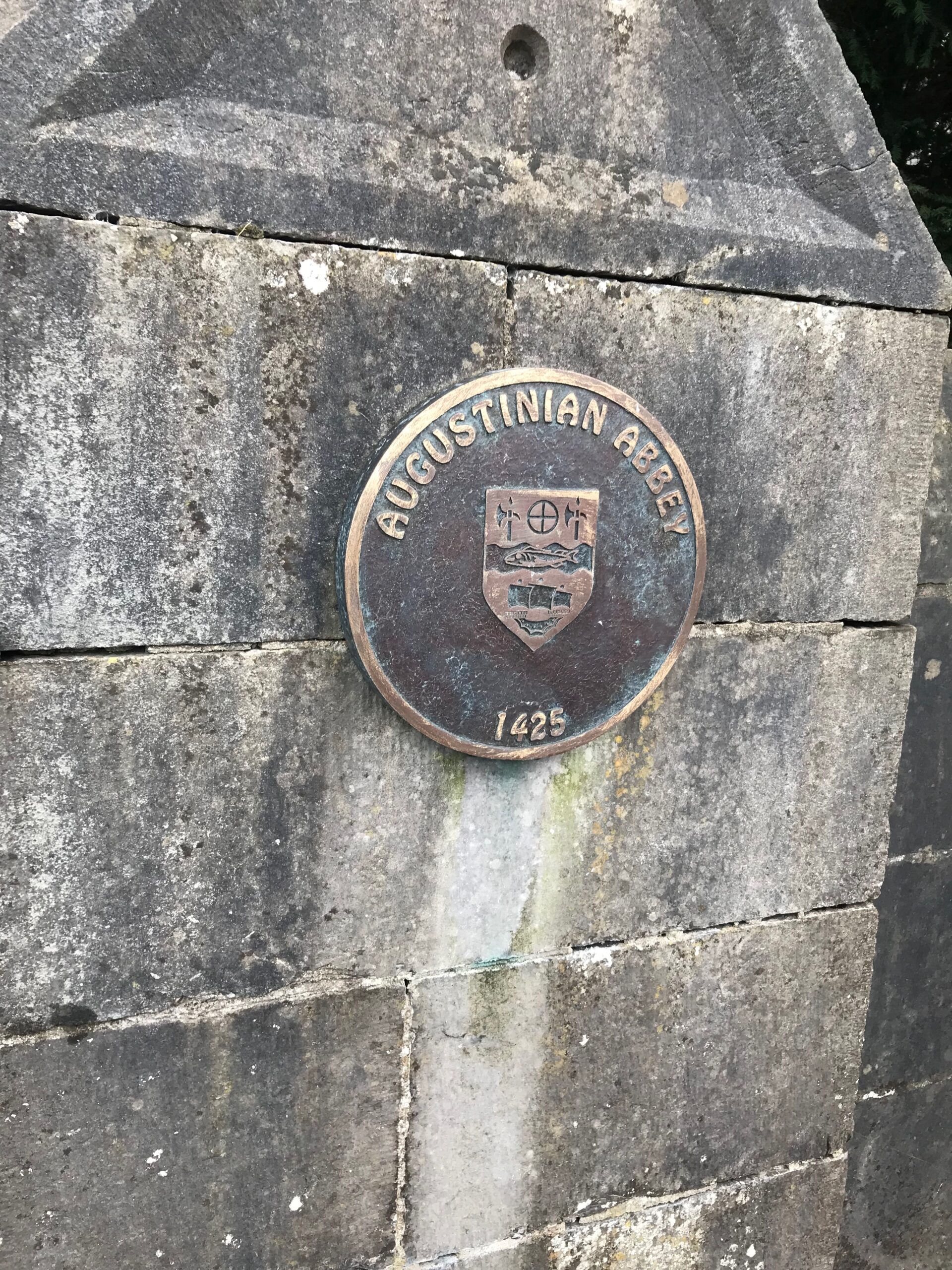
The Augustinian Abbey at Ardnaree (Árd na Ría, “the height of the executions”) stands on the Sligo side of the River Moy in Ballina, County Mayo. A bronze plaque at the site dates the foundation to 1425, while historical accounts place the monastery’s origins more broadly in the fourteenth century. Founded for the Eremites of the Order of St Augustine, this was one of the most important religious houses in the O’Dubhda heartland — and the one with the deepest connections to the clan itself.
Foundation and the O’Dubhda Connection
Although the Augustinian Eremites professed to live in seclusion, they served the needs of the people across the wider area. The O’Dowd family, who ruled the territory of Ardnaree from 1371, became direct patrons of the church — a relationship that bound the abbey closely to the clan’s identity and authority in north Connacht.
The depth of this connection is confirmed by burial records: Muircheartach O’Dubhda was buried at Ardnaree in 1402, demonstrating that the abbey served as a place of interment for the chiefs themselves. This is a significant marker of prestige — burial at a religious house one patronised was a hallmark of Gaelic lordship.
Suppression and Destruction
During the Reformation, when Henry VIII became Supreme Governor of the Church in England, an Act of Parliament in 1536 brought about the dissolution of monasteries across Ireland. It was not until the 1570s that this abbey was formally suppressed. During the reign of Queen Elizabeth I in 1578, the house and lands at Ardnaree were leased to new holders.
Sir Richard Bingham, appointed Governor of Connacht by Queen Elizabeth I, oversaw the burning of the nearby Franciscan monasteries of Moyne and Rosserk in 1590. The ruins of these large structures still dominate the landscape and serve as a visual reminder of the wave of destruction that swept through O’Dubhda territory during the Tudor conquest. The Ardnaree abbey likely suffered during this same period of upheaval.
Later History
Remarkably, Priors of the Abbey continued to be appointed from 1649 to 1875, although the building itself remained unoccupied. Fergal O’Gara was recorded as Prior in 1649 — a testament to the enduring spiritual significance of the site even as the physical structure fell into ruin.
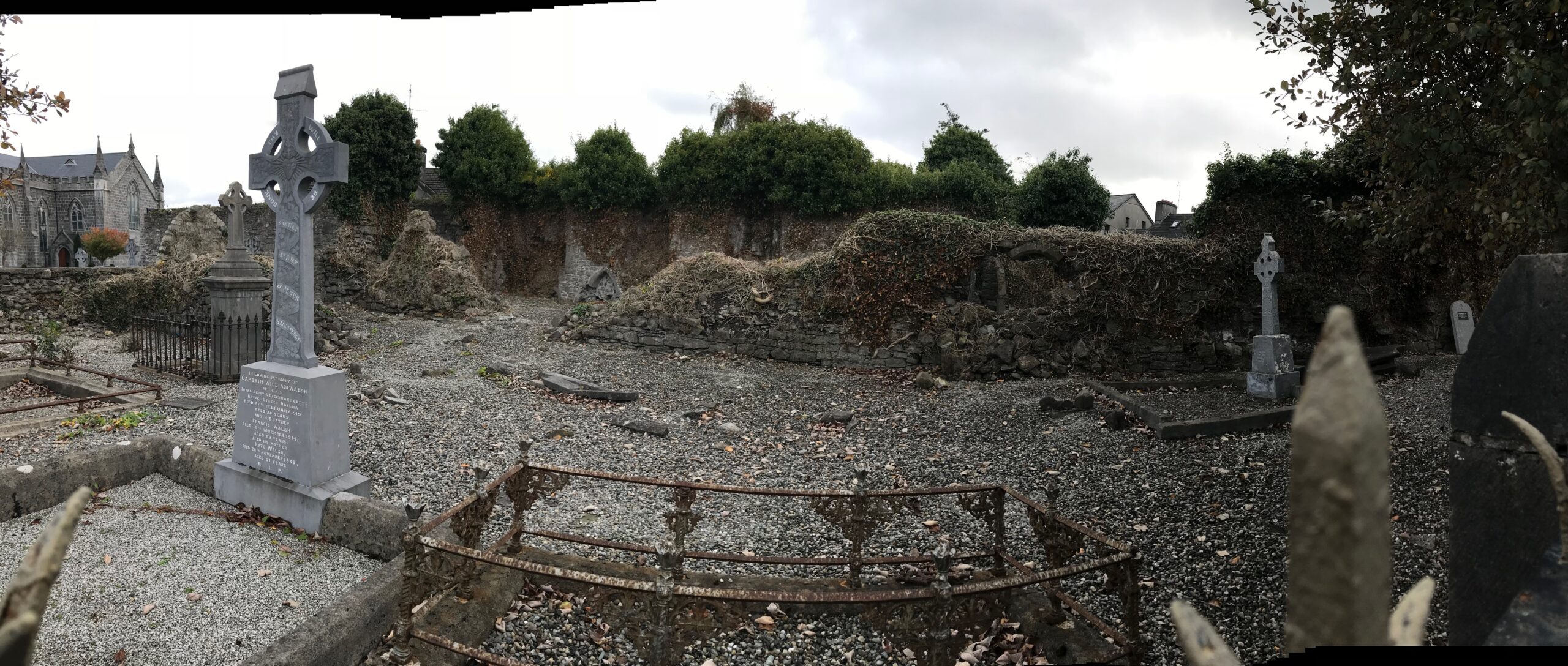
The abbey grounds continued in use as a burial ground through the centuries. The Urban District Council ordered the graveyard’s closure in 1930, though those with familial burial rights continued to use it until the 1950s.
What Survives Today
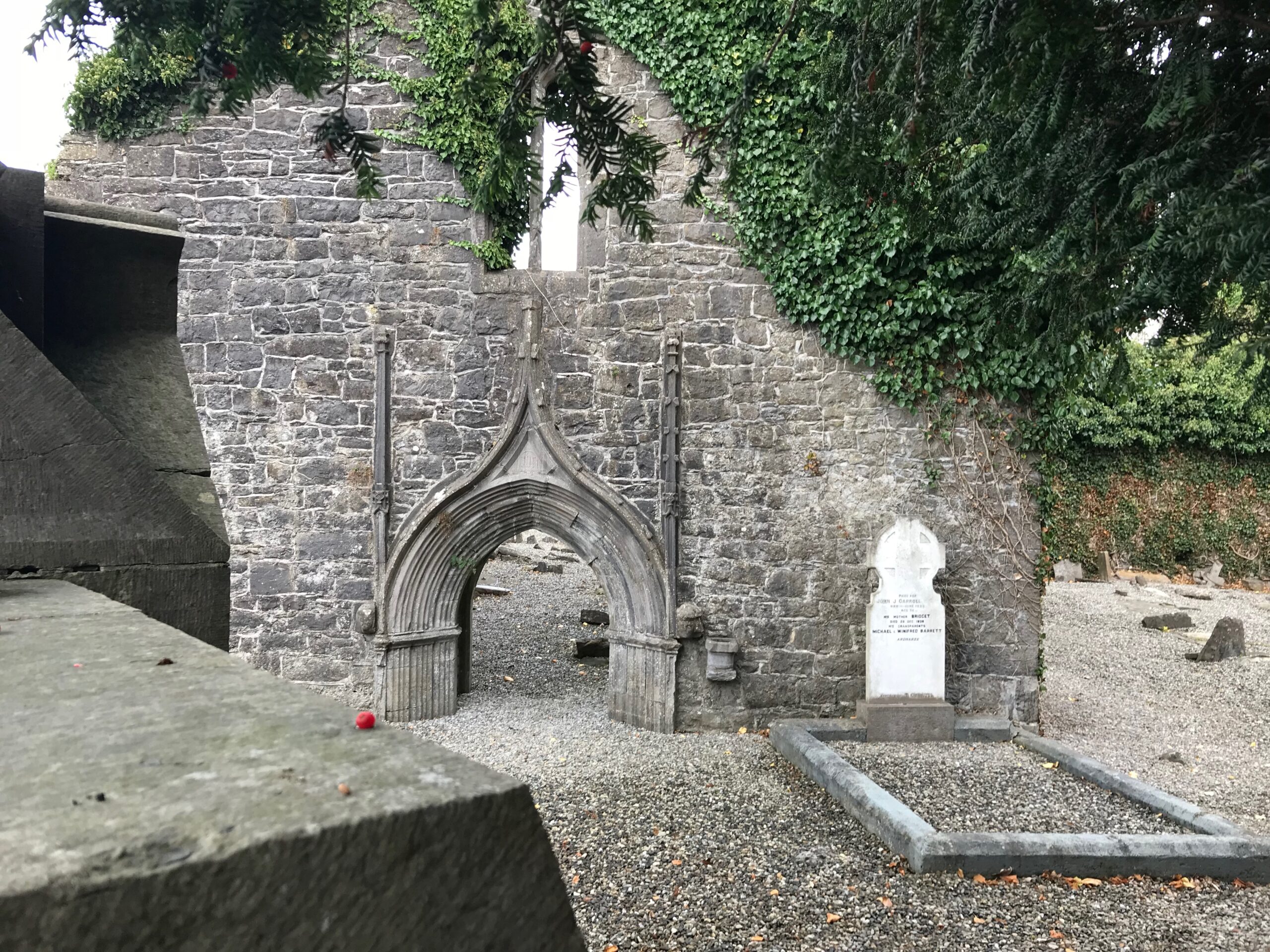
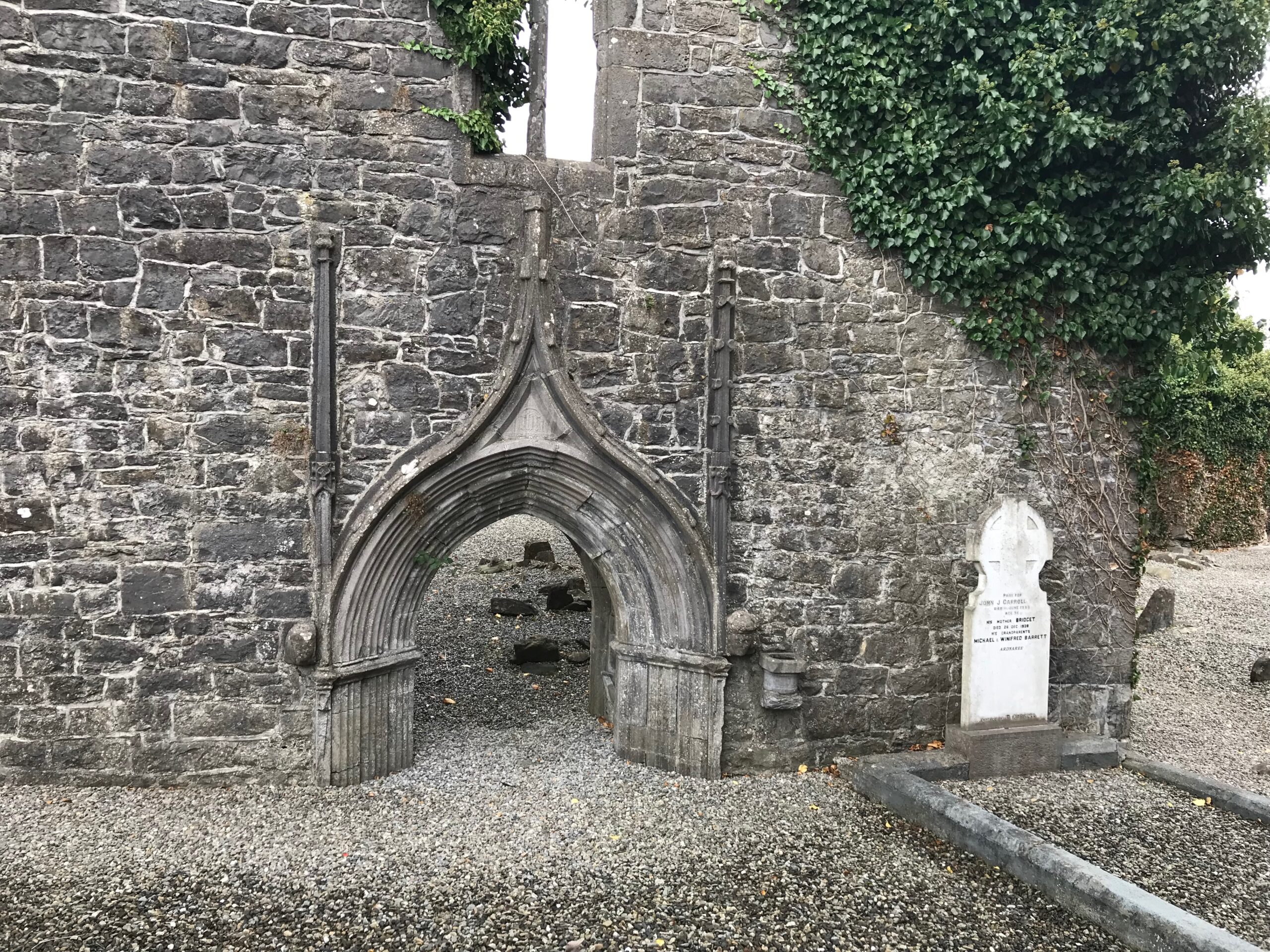
While much of the abbey has been lost to time, a striking Gothic pointed arch and a section of the original stone wall still stand — a haunting reminder of the scale and craftsmanship of the medieval building. The arch, with its finely carved stonework, marks what was likely the main entrance or a significant internal doorway of the abbey church. The surrounding graveyard, with its headstones spanning several centuries, remains as a tangible link to the community that gathered here.
A bronze plaque mounted at the site bears the inscription “Augustinian Abbey 1425” alongside the Ballina coat of arms, and the location features as stop number 14 on the Ballina Historic Town trail, with an information board detailing the abbey’s history in both Irish and English.
Significance for the O’Dubhda Heritage
The Augustinian Abbey at Ardnaree holds a unique place among the religious houses connected to the O’Dubhda. While Moyne Abbey, Rosserk Friary, and Rathfran Priory were all located within the broader O’Dubhda sphere of influence, Ardnaree was the one where the clan held direct patronage from 1371 and where at least one chief — Muircheartach — chose to be buried. It is, in many ways, the O’Dubhda abbey.
The site at Ardnaree sits close to Ardnarea Castle, built by the O’Dowds in 1447, reinforcing that this stretch of the Moy was the administrative and spiritual heart of the clan’s territory in the late medieval period.
Visiting
The abbey site is located in Ardnaree on the eastern (Sligo) side of the River Moy in Ballina. The surviving Gothic arch, graveyard, and information board are accessible on foot. For those exploring O’Dubhda heritage sites around Ballina, the abbey pairs with Ardnarea Castle just nearby, and the three great friaries of the Killala Bay coast — Moyne, Rosserk, and Rathfran — are all within a short drive to the north.
Augustinian Abbey
Mainistir Agaistíneach, Árd na Ría
54.112656°N, -9.151518°W
Ardnaree, River Moy
Ballina, County Mayo, Ireland
Augustinian Eremite monastery
14th century
Plaque dates it to 1425
1570s under Elizabeth I
Lands leased 1578
Priors appointed until 1875
Ballina Historic Town trail, stop #14
Gothic arch and graveyard survive
Information board on site
O'Dowds became patrons from 1371
Muircheartach O'Dubhda buried here 1402
Near Ardnarea Castle (built 1447)
Spiritual heart of O'Dubhda territory