How Many Castles Did the O’Dowds Actually Have? (More Than You Think — and We’re Still Counting)
April 10, 2026 2026-04-10 1:22How Many Castles Did the O’Dowds Actually Have? (More Than You Think — and We’re Still Counting)
How Many Castles Did the O’Dowds Actually Have? (More Than You Think — and We’re Still Counting)
Every year, another castle surfaces. A local farmer mentions old walls in a field. A researcher cross-references a 17th-century map with a townland name. An archaeological survey turns up foundations where nobody expected them. The story of the O’Dubhda castles is one that refuses to sit still — because we’re still writing it.
The Famous “20 Castles” — or Is It 24? Or More?
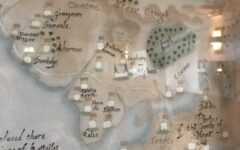
If you’ve read anything about the O’Dubhda (O’Dowd) clan, you’ve probably encountered the claim that our ancestors “ringed their territory with 20 castles.” It’s a powerful image — a network of fortifications stretching across what is now County Mayo and County Sligo, from Lough Conn to Drumcliff Bay, protecting a kingdom that endured for centuries against the Burkes, the Birminghams, and eventually the English Crown.
The clan historian Conor Mac Hale spent years researching and locating these castle sites. His work gave us a list of names and locations that has been cited ever since — from Wikipedia to genealogy forums to our own pages. But here’s where it gets complicated.
The truth is, we don’t actually know how many castles, fortifications, and strongholds the O’Dubhda maintained. The commonly cited number is 20, but Tony Dowd’s family archives reference 24 castles and 52 towns. And honestly? The exact number doesn’t really matter. What matters is the picture it paints: a clan that strategically fortified an entire kingdom across hundreds of square miles of coastline, river valleys, and rolling hills — at least 24 locations of strategic importance, likely more, forming a defensive ring around O’Dubhda lands that held for centuries.
New sites continue to surface. Some we can confirm. Some remain tantalisingly uncertain. The number keeps growing.
What Is a “Castle,” Anyway?
When most people hear “castle,” they picture towering stone walls, a drawbridge, maybe a moat. The reality of O’Dubhda fortifications is far more varied — and far more interesting. Our ancestors built, occupied, and adapted:
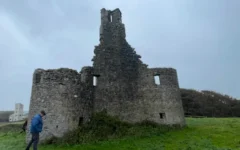
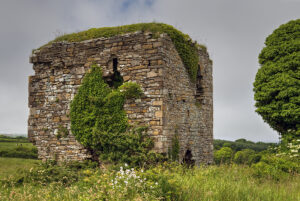
- Tower houses — the classic Irish “10-Pound Castles,” named after a subsidy granted by Henry IV in 1429. Small, sturdy, and built for defence. Castleconnor, built around 1520 by Conor O’Dowd, is a prime example.
- Fortified bawns — walled enclosures like Roslee Castle at Easkey (built 1207) and Tanrego Castle overlooking Ballysadare Bay.
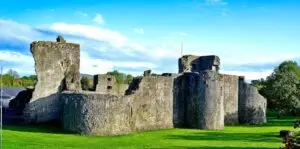
- Adapted Norman castles — fortifications originally built by Anglo-Norman invaders that the O’Dowds captured, contested, or burned. Ballymote Castle, torched by our ancestors in 1588, is the most dramatic example.
- Ancient ringforts — earthen fortifications predating any stone castle by centuries. Rath O’Dubhda in Doonfeeney, Co. Mayo, is the ancestral ringfort of the entire clan and still exists today as an earthwork.
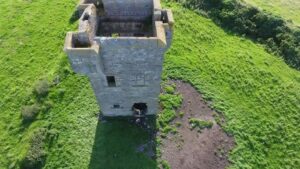
- Signal towers and strategic sites — Carrowmably in Tireragh sits on a prehistoric henge, later topped by a Napoleonic signal tower in 1804. Not a “castle” in any traditional sense, but a site of continuous strategic importance on O’Dubhda land.
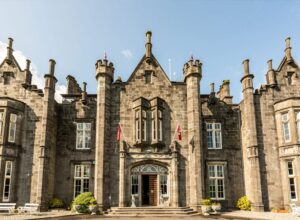
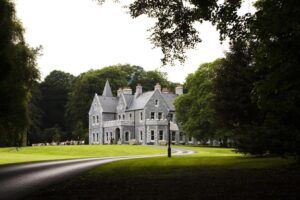
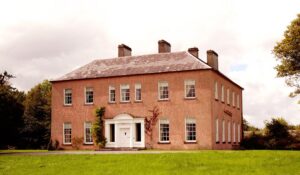
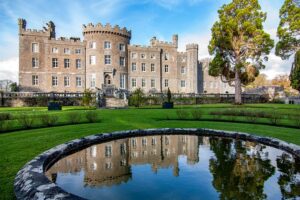
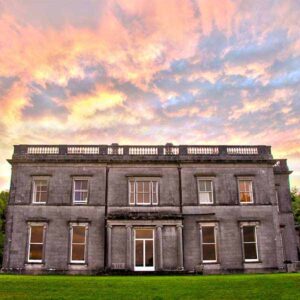
- Later manor houses — grand buildings like Belleek Castle (now a hotel) and Enniscoe House (a Georgian mansion on Lough Conn) were built centuries after the O’Dubhda era, often on or near the sites of earlier fortifications. But crucially, the current buildings are not the O’Dowd castles — and in some cases, they aren’t even on the same spot as the original.
So when we say “24 castles,” what we really mean is at least 24 locations of strategic and historical importance to the clan — some with dramatic ruins, some with later buildings standing nearby, some with nothing visible above ground at all, and some where the connection is territorial rather than through direct ownership.
The Castles We Know About
Here’s what we’ve identified so far. And we emphasise so far.
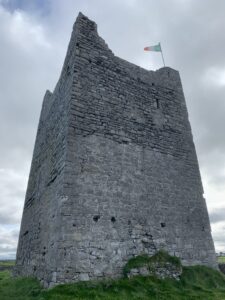
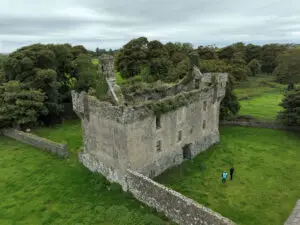
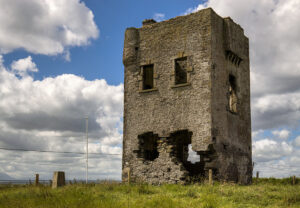
Direct O’Dubhda Castles — Ruins Still Standing
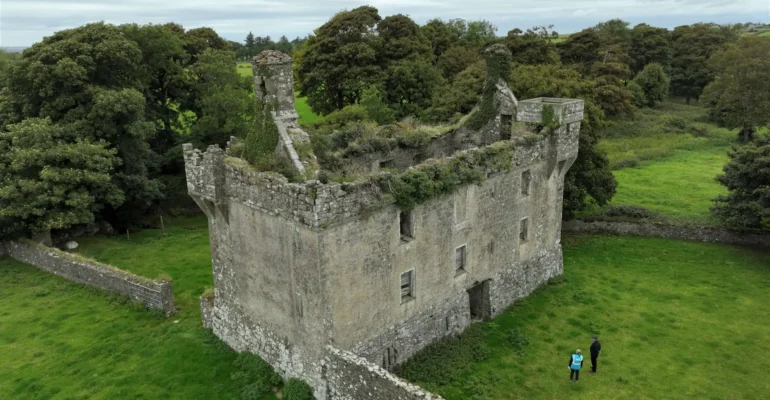
These are sites where the O’Dubhda built or directly controlled a fortification, and where physical remains survive:
O’Dubhda Territory — Later Buildings on Castle Sites
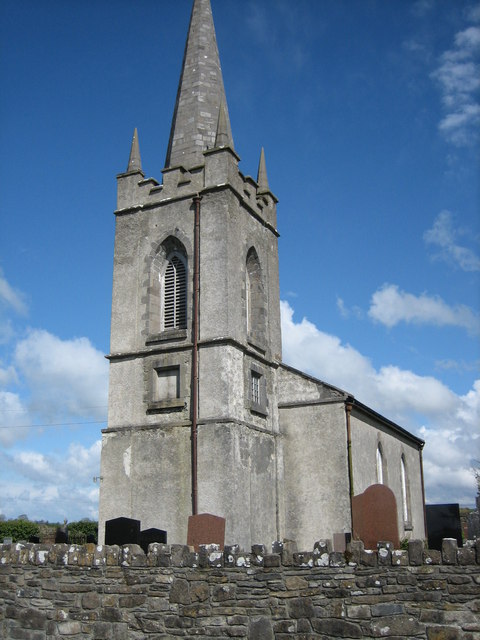
At these locations, an O’Dubhda castle or fortification once existed, but the current building is from a later era — and may not be on the exact original site:
Historic Houses in O’Dubhda Territory
These weren’t O’Dubhda castles, but they sit on our ancestral lands and are woven into the broader story:
Allied and Contested Castles
We didn’t build these, but our history is written into their walls:
Ancient Sites
The Lost Castles
- Ardnarea (Ballina, Co. Mayo) — Built in 1447. The castle has completely vanished, though the site has been rediscovered on the Sligo side of the River Moy.
- Lackan (Co. Sligo) — Listed as “Carahduff” in older records. Mapped, but the remains are unverified on the ground.
- Doonecoy — Appears on the list of castles but has never been located on any map. A true mystery waiting to be solved.
And We’re Still Counting
Here’s the thing that makes this research so compelling — and so frustrating. We keep finding more.
Literally every year, a castle or fortification that the clan was unaware of surfaces. A local historian makes a connection. Someone cross-references a placename with a Down Survey map. An elderly farmer remembers being told as a child about “the old O’Dowd walls” in a particular field. Each discovery adds another piece to a puzzle that has been assembling itself for over a thousand years.
The O’Dubhda territory stretched across what is now Mayo and Sligo — hundreds of square miles of coastline, river valleys, and rolling hills. Every parish, every townland potentially holds traces of our ancestors’ presence. And it’s not just about the castles themselves. Each one of these sites is surrounded by layers of other structures — cairns, enclosures, field systems, ecclesiastical sites, holy wells, and burial grounds. Enniscrone Castle sits in a “Castle Field” with archaeological remains dating back to 2500 BC. Carrowmably’s signal tower sits on a prehistoric henge. Lecan’s castle fragment is surrounded by the legacy of the MacFirbis scholars. Understanding the full picture at any one of these sites requires peeling back centuries of human activity.
We Want to Hear from You
Do you know something we don’t?
We are actively searching for every castle, fortification, tower house, bawn, and ruin connected to the O’Dubhda clan — and we know there are more out there. If you have any knowledge at all about old castle sites in the Mayo-Sligo area, if you’ve come across references in old documents, local histories, or family stories — or if you simply know a field with suspicious old walls in it — please share it with us. Every lead matters. Every piece of local knowledge could unlock another chapter of our shared history.
We are also exploring the possibility of commissioning professional archaeological research — bringing in experts to study historical maps, conduct field surveys, and use modern techniques like LiDAR to identify foundations and earthworks that are invisible to the naked eye. The goal is to create a comprehensive archaeological map of O’Dubhda fortifications across the entire territory, a resource that would serve not just our clan but the broader heritage of the region.
Could You Help Make This Happen?
Are you interested in helping sponsor bringing in professional archaeologists to map the O’Dubhda castle network?
We’re looking for:
- A primary sponsor — an individual, family, or organisation willing to underwrite a professional archaeological survey of O’Dubhda castle sites across Mayo and Sligo
- Castle hunters — volunteers with local knowledge, research skills, or a passion for heritage who want to help identify and document sites
- Your information — if you know of an O’Dowd-associated castle, fortification, or site that isn’t mentioned here, we want to hear about it
- Expertise — archaeologists, historians, cartographers, and heritage professionals who would be interested in collaborating on this project
Every castle we find is a piece of our shared story recovered. Every site we document is a connection to our ancestors preserved for future generations. The O’Dubhda didn’t just build castles — they built a kingdom. Help us find the rest of it.
If you’re interested in sponsoring, volunteering, or sharing information, please contact us or reach out to any member of the O’Dubhda Council.
The O’Dubhda clan website documents the heritage of the O’Dowd, O’Dowda, Dowd, Dawdy, Dowdy, Doody, and Duddy families — all descendants of Aedh Ua Dubhda, 10th-century King of Connacht. Our lineage dates back over 2,500 years. Join us.